Indoor Herb Gardening Mistakes: 9 Common Beginner Errors
Nine common beginner errors with indoor herbs, from dim shelves and calendar watering to crowded store-bought pots, with what to do instead for each.
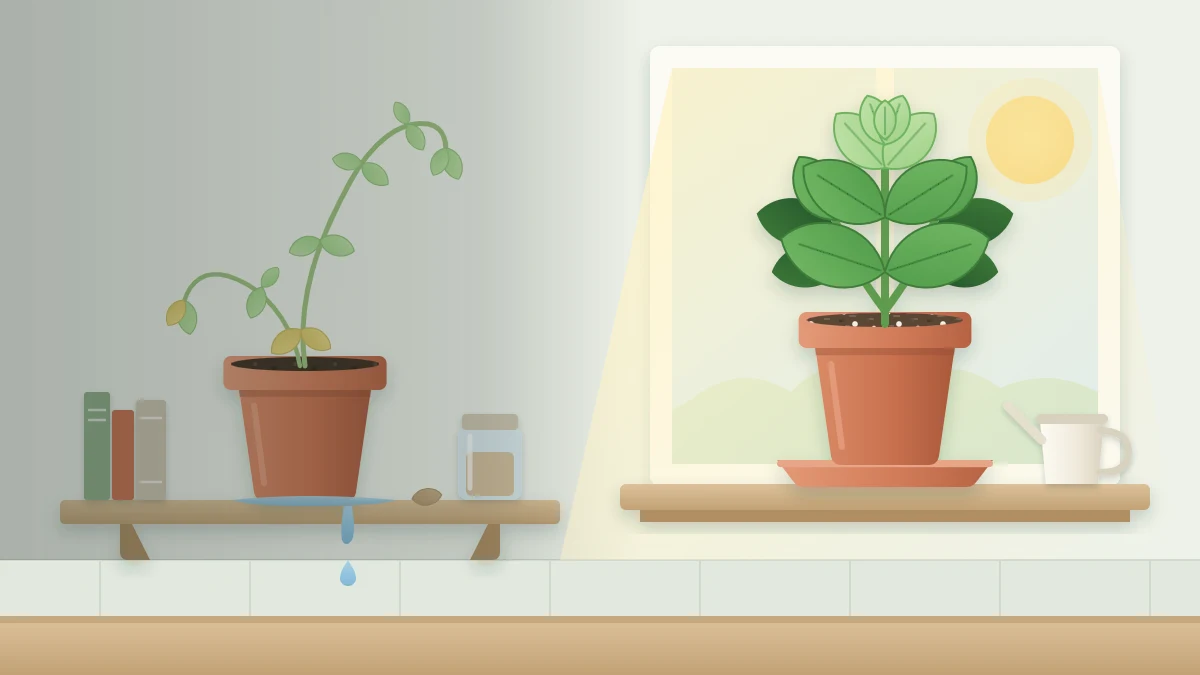
When a pot of herbs keeps struggling, the cause is usually something ordinary. Most indoor herb gardening mistakes come down to a handful of habits that seem reasonable at the time: a pretty pot with no hole in the bottom, a watering routine tied to the day of the week, a shelf that looks bright to you but is dim for a plant.
The nine below are the ones beginners run into most, grouped by the part of care they belong to. Each has a short explanation of why it matters and what to do instead. None needs special equipment to fix.
Light and water
1. Giving herbs too little light
Light is the most common limit indoors. A room that feels bright to your eyes can deliver only a fraction of what a plant would get outside, and the level drops quickly as you move away from the glass. Herbs short of light tend to grow leggy, with long weak stems, pale leaves and wide gaps between leaf pairs.
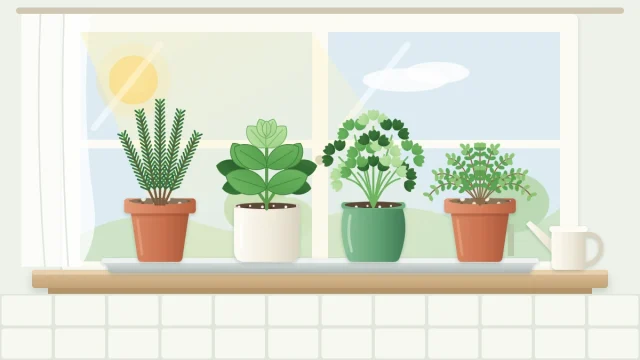
As a rough guide, around six or more hours of direct sun is commonly suggested for sun-loving herbs such as basil, thyme and rosemary, while parsley and mint cope with somewhat less. Put pots right at your brightest window, and consider a grow light if that is not enough. The guide to light for indoor herbs explains how to judge each window.
2. Watering by the calendar
A fixed routine is easy to remember, but plants do not use water at a fixed rate. How fast a pot dries depends on the herb, the size and material of the pot, the potting mix, the temperature, the light and the season.
Check instead of counting days. Push a finger about an inch (2.5 cm) into the mix and lift the pot to feel its weight. The full method is in the guide on how to water indoor herbs.
Pots and potting mix
3. Using a pot with no drainage hole
Without a drainage hole, extra water has nowhere to go. It collects at the bottom of the pot, the lower mix stays saturated and roots sitting in it can rot, even while the surface looks dry. A layer of pebbles in the base does not solve this.
Grow herbs in a pot with at least one hole and stand it on a saucer, emptying the saucer after watering. If you love a decorative container that has no hole, use it as a cachepot: keep the herb in a plain pot with holes and set that inside. See the guide to drainage for herb pots for the details.
4. Filling pots with garden soil
Soil dug from a yard behaves differently in a container. It tends to pack down, drain slowly and leave roots short of air, and it can carry insects and weed seeds indoors. Potting mix is made to stay loose and drain freely in the confined space of a pot. Use fresh bagged potting mix for every herb, and a grittier, faster-draining one for Mediterranean herbs.
5. Mixing herbs with opposite needs in one container
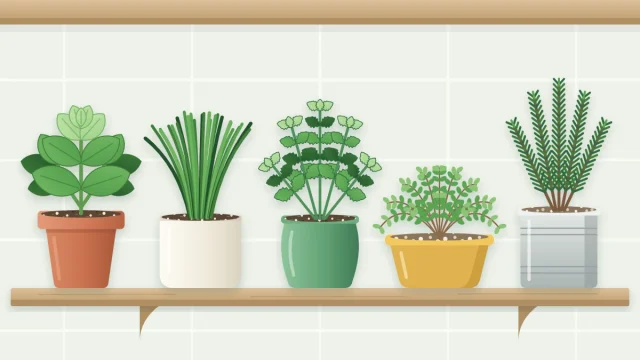
Herbs in a shared planter share one body of mix and therefore one level of moisture. Basil, parsley and mint like the mix to stay evenly moist. Rosemary, thyme, oregano and sage want the top of the mix to dry between waterings. Put basil and rosemary together and one of them stays unhappy.
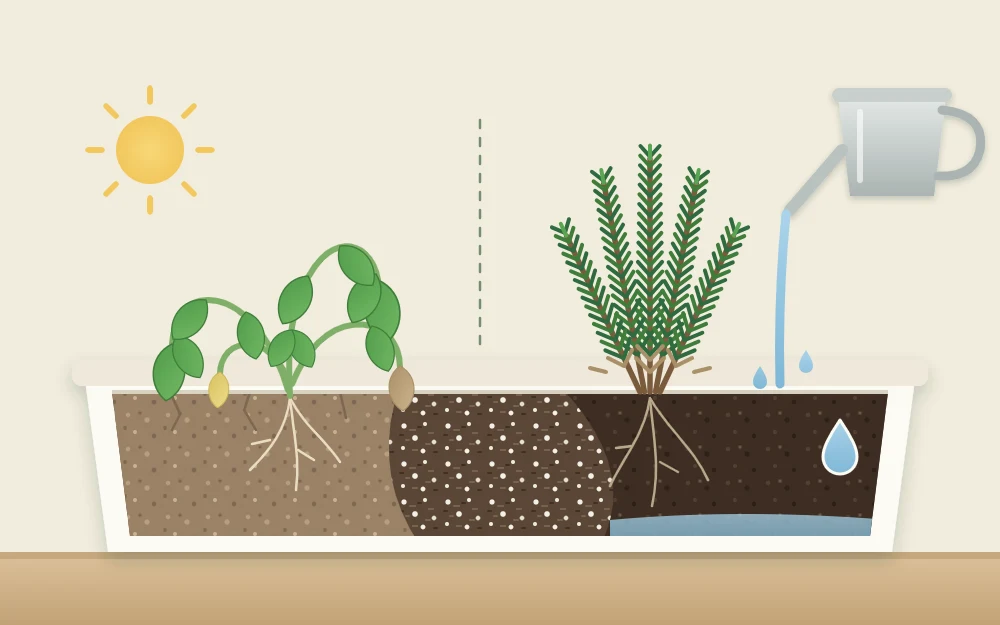
The simplest answer is one herb per pot. If you want a shared planter, group herbs with similar needs, and keep mint in its own pot because it spreads and crowds out its neighbors.
Plants and expectations
6. Leaving a crowded store-bought pot as it is
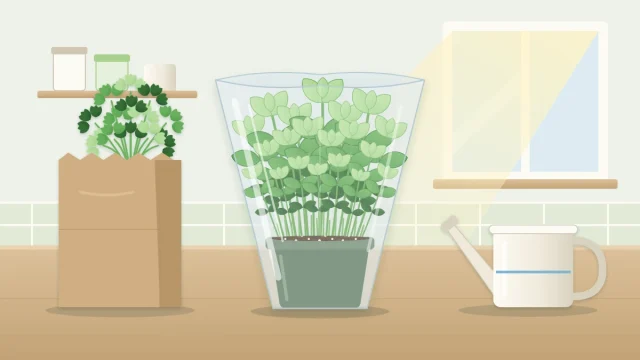
Potted herbs sold for the kitchen are often not one plant but dozens of seedlings sown thickly so the pot looks full. In that small volume of mix they compete for water, light and root space, which is a large part of why these pots commonly collapse within a few weeks.
Give them room. Gently split the root ball into a few clumps and plant each in its own pot of fresh mix, or at least move the whole thing into a larger container and thin out the weakest stems.
Tip
Water a store-bought pot well an hour or so before dividing it. A moist root ball comes apart more easily and the roots tear less.
7. Expecting annuals to last forever
Basil and cilantro are annuals. They grow, flower, set seed and finish within a single season, and no amount of care changes that. Cilantro in particular has a short leafy life before bolting, especially in a warm room.
When an annual declines after a good run, that is not a failure on your part. Sow a fresh pot every so often, so a young plant is ready as the old one fades. Perennials such as chives, mint, thyme and rosemary can carry on for years if conditions suit them.
Harvesting and feeding
8. Never harvesting, or stripping the lower leaves
Two opposite habits cause trouble here. Some people are reluctant to cut a plant at all, so it grows tall and thin and heads toward flowering. Others pick the big leaves from the bottom of each stem, which leaves a bare stalk with a small tuft at the top.
For branching herbs such as basil, mint and oregano, pinch the stem tip just above a leaf pair. The two shoots at that node then grow out, and the plant gets bushier each time you cut. Chives and parsley are cut differently, and the guide on how to harvest herbs shows where to cut for each type.
9. Feeding too heavily
More fertilizer does not mean more flavor or faster recovery. Heavy feeding tends to push soft, weak growth, and salts can build up in a small pot.
Herbs in fresh potting mix need little extra for a while. After that, feed lightly during active growth, follow the product label, and give less in winter when growth slows.
Good to know
Change one thing at a time where you can. If you move the pot, repot it and start feeding all in the same week, you will not know which change helped.
Where to start
If several of these apply, begin with light and drainage, because the other fixes work poorly without them. Then switch to watering by checking. A herb in a bright spot, in a pot that drains, watered when it needs it, will forgive most of the smaller errors on this list.
Frequently asked questions
What is the most common mistake with indoor herbs?
Too little light is the one that affects the most plants, closely followed by keeping the potting mix too wet. They often occur together, because a herb in dim light uses water slowly and the mix stays damp for longer. Moving the pot to the brightest window and watering only after checking the mix addresses both.
Can I grow several herbs together in one pot?
You can if they want similar conditions. Thyme, oregano and sage suit each other, as do basil and parsley. Avoid pairing a moisture-loving herb with one that needs to dry between waterings, and give mint a pot to itself because it spreads. Separate pots are easier for beginners to manage.
Why does supermarket basil die so fast?
Those pots usually hold many seedlings packed into a small amount of mix, raised in ideal greenhouse conditions. At home they compete for water, light and root room. Dividing the root ball into a few clumps, planting them in fresh potting mix and placing them in a bright, warm spot gives them a much better chance.