Drainage for Herb Pots: Holes, Saucers and Cachepots
Why herb pots need a drainage hole, why pebbles in the bottom do not replace one, and how to use saucers and cachepots without leaving roots standing in water.

A handsome pot or an old tin can look perfect on a kitchen windowsill, right up to the day the herb inside starts to sulk. Very often the container is the cause: it has no way to let water out. Good drainage for herb pots is less about buying special equipment and more about making sure every bit of extra water has somewhere to go.
This guide explains what a drainage hole does, why pebbles in the bottom are not a substitute, and how to use saucers and decorative outer pots so your herbs stay healthy and your windowsill stays dry.
Why a drainage hole matters
Roots need air as well as water. Potting mix is full of small spaces, and in a healthy pot those spaces hold a mixture of moisture and air. When you water, the spaces fill up. In a pot with a drainage hole, the extra water runs out of the bottom within a minute or two, and air is drawn back into the mix behind it.
In a container with no hole, that extra water has nowhere to go. It collects at the bottom, the lowest part of the mix stays saturated, and the roots sitting in it are left short of air. A plant in that state can wilt even though the mix is wet.
If you are still choosing containers, the guide to the best pots for indoor herbs compares materials and sizes. For more background on containers and drainage in general, see the NC State Extension Gardener Handbook chapter on plants grown in containers.
Why a layer of pebbles does not replace a hole
A common piece of advice is to put gravel or pebbles in the bottom of a pot without a hole “for drainage.” It sounds sensible, but it does not do what people hope.
Water does not move easily from fine potting mix down into a layer of coarse stones. It tends to stay in the mix above them, so a wet zone sits right where the roots are. The stones also take up room, leaving the plant less mix to grow in.
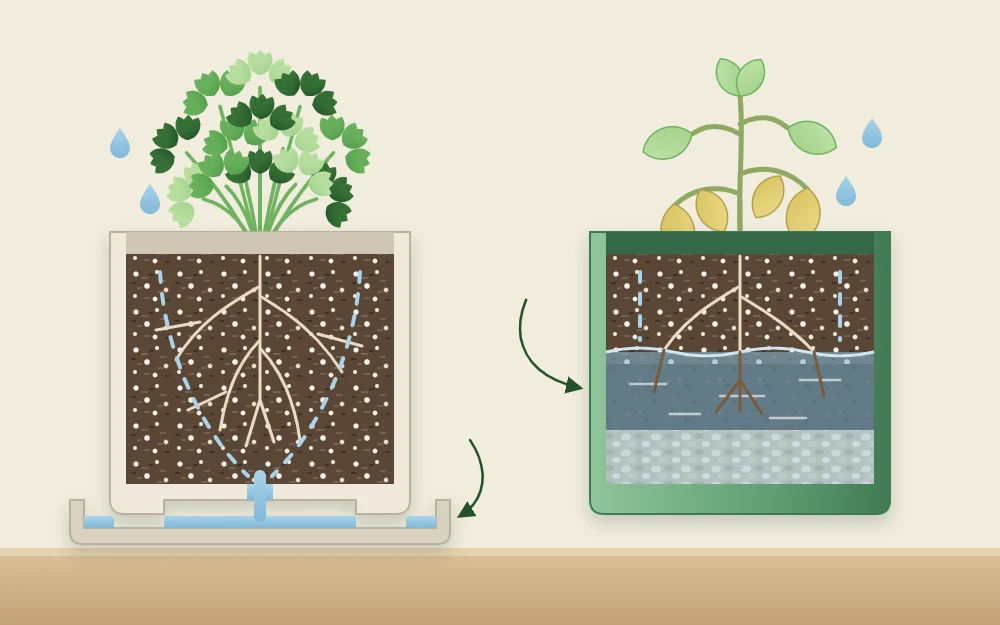
Even in a pot that does have a hole, a pebble layer is not needed. Fill the whole pot with potting mix.
Using saucers the right way
A saucer is there to catch runoff and protect the surface below. It is not a place for the pot to stand in water. When a pot sits in a full saucer, the bottom of the mix soaks the water back up and stays saturated, which undoes the work of the drainage hole.
- Water until a little runs out of the bottom of the pot.
- Leave the pot to drip for a few minutes.
- Tip the saucer out into the sink, or lift the pot and pour the water away.
For the full method, including how to tell when a herb needs water at all, see the guide on how to water indoor herbs.
Tip
Carrying pots to the sink to water them is often the tidiest option. Water them there, let them drain on the rack for a few minutes, then return them to dry saucers.
How to use a cachepot
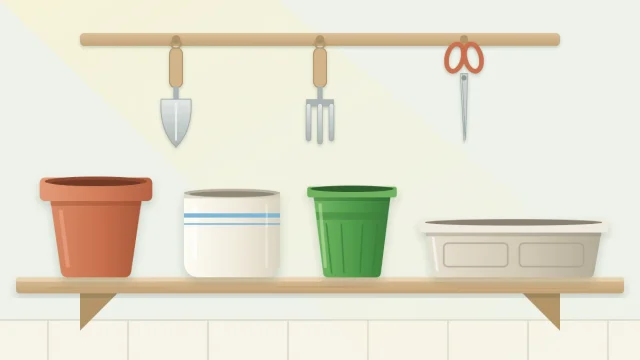
A cachepot is a decorative outer pot with no hole. It is the easy way to enjoy a container you like without giving up drainage. The herb stays in a plain nursery pot that drains, and that pot simply sits inside the decorative one.
- Choose a cachepot slightly wider and taller than the inner pot, so the inner pot lifts out easily.
- Lift the inner pot out to water it, let it drain, then put it back.
- If you water in place, check the bottom of the cachepot a few minutes later and pour out anything that has collected.
The risk with a cachepot is that you cannot see inside it. Water can build up unnoticed until the inner pot is standing in an inch (2.5 cm) of it. Make a habit of lifting the inner pot now and then to look.
What to do with a container that has no hole
You have two honest choices for a tin, jar, mug or ceramic pot with a solid base.
Have holes made
Some materials can be drilled. Thin metal tins and plastic containers are usually straightforward. Glass and thick glazed ceramic are harder and may crack, so leave them alone unless you have suitable tools and experience, or ask someone who does.
Use it only as a cachepot
Where drilling is not practical, keep the container as an outer pot and slip a draining nursery pot inside. This is the simplest answer for most decorative pieces.
Planting directly into a container with no hole and trying to water “just enough” leaves no margin for error. It is not a good choice for a beginner.
Signs that drainage is poor
None of these signs proves a drainage problem on its own, since each has other possible causes. Together they are a good reason to lift the pot and check.
- Mix that stays wet for many days. In a dim, cool room this can be normal, but in a bright window it suggests water is not leaving.
- A sour or stale smell from the mix or the bottom of the pot.
- Tiny dark flies hovering around the pot, which are often drawn to mix that stays damp.
- A pot that feels heavy long after watering, or water standing in the saucer or cachepot.
Look underneath first: a hole can be blocked by compacted mix or a mat of roots. If the plant itself looks unwell, the guide to common indoor herb problems walks through the checks that separate one cause from another.
Protecting your windowsill from drips
Good drainage means water will come out of the pot, so plan for it. Wooden and painted sills mark easily if damp sits on them.
- Give every pot its own saucer, or stand a row of pots on one long waterproof tray.
- Unglazed terracotta saucers can let moisture seep through. Put a cork mat or a glazed or plastic saucer underneath them.
- Wipe the sill dry after watering, and lift pots occasionally to check nothing is collecting beneath.

With a hole in every pot, an empty saucer beneath it and a quick look underneath from time to time, most drainage troubles never get started.
Frequently asked questions
Can I grow herbs in a pot without drainage holes?
It is possible but risky, because any extra water stays in the bottom of the container with the roots. A more reliable approach is to keep the herb in a plain nursery pot that drains and stand it inside the pot without holes, lifting it out whenever you water.
Should I put rocks in the bottom of a herb pot?
No. A layer of rocks or gravel does not help water leave the potting mix. Water tends to stay in the mix above the stones, so the roots sit in a wet zone, and the stones reduce the room available for roots. Fill the whole pot with potting mix instead.
How long can a herb pot sit in a saucer of water?
As briefly as you can manage. Let the pot drip for a few minutes after watering, then empty the saucer. A pot left standing in water soaks it back up, and the lowest part of the mix stays saturated, which leaves roots short of air.