Windowsill Herb Garden: How to Set One Up
A step-by-step setup for a small row of herbs on a kitchen windowsill: choosing the window, grouping herbs with similar needs, potting up, arranging the pots and caring for them in the first weeks.

At a glance
What you need
- Pots with drainage holes
- Saucers or a long tray
- Potting mix
- Three or four young herb plants
- Scoop or old spoon
- Small watering can
A windowsill herb garden is the simplest way to start growing herbs indoors: a few pots, a bright window and an hour of unhurried work. Nothing needs to be built or wired, and you can cook with the results as soon as the plants have settled.
The steps below take you from an empty sill to a planted row of three or four herbs, and then through the first few weeks, when small habits make the biggest difference.
Step 1: Pick the window
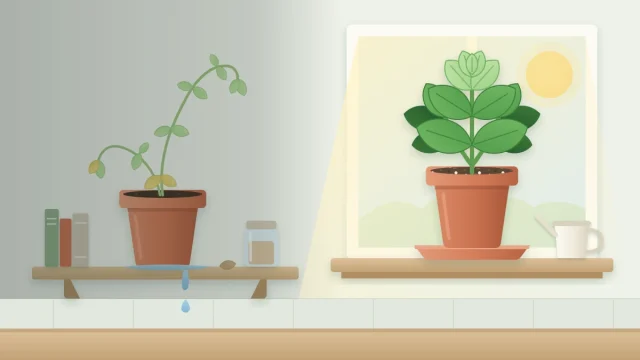
Light is the usual limit indoors, so choose the brightest window you have rather than the most convenient one. In the Northern Hemisphere, a south or southwest window generally gets the most direct sun. East and west windows can work for less demanding herbs, while a north window is rarely bright enough on its own. The guide to light for indoor herbs explains how to judge what your window really offers.
Before you commit, check three practical things:
- Depth. The sill should be deep enough for a pot and saucer to sit flat without overhanging the edge.
- Heat. A sill directly above a hot radiator or heating vent dries pots quickly and can scorch leaves.
- Cold. In winter, leaves pressed against freezing glass can be damaged. Leave a small gap between plants and the pane.
Step 2: Choose three or four herbs with similar needs
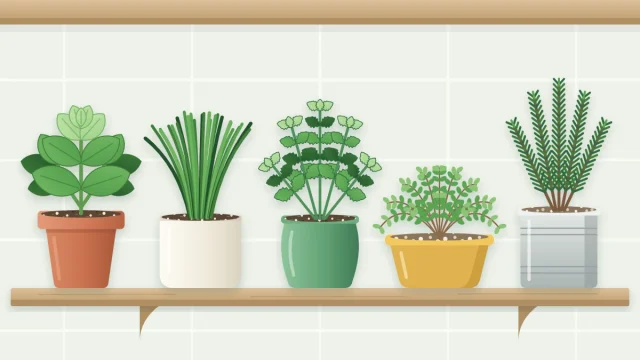
A short row is easier to look after than a crowded one, and it is easier still when the plants want roughly the same things. Herbs differ more than they look: basil wants warmth and the most light, parsley and chives cope with moderate light, and thyme, oregano and rosemary want the brightest spot and a mix that dries a little between waterings.
Two sensible starting groups:
- Leafy, moisture-loving herbs: basil, parsley and chives.
- Sun-loving Mediterranean herbs: thyme, oregano and sage.
Mint grows well on a windowsill but spreads by runners, so always give it a pot of its own. For a fuller comparison, see the best herbs to grow indoors. Buying young plants rather than sowing seed gives you a garden today instead of in a month or two.
Step 3: Gather your materials
You need very little, but each item matters:
- One pot per herb, each with a drainage hole. Something around 6 in (15 cm) across suits most young herb plants.
- A saucer for each pot, or one long waterproof tray for the whole row.
- A bag of potting mix. Garden soil packs down too tightly in pots.
- Young herb plants in their nursery pots.
- A scoop or old spoon, and a small watering can.

If you are unsure which containers to buy, the guide to the best pots for indoor herbs covers size and material. If you have a decorative pot with no hole, read about drainage for herb pots before planting in it.
Step 4: Pot up the plants
Work on a table covered with newspaper, or outdoors if you can. Water the young plants in their nursery pots an hour or so beforehand, so the root ball holds together.
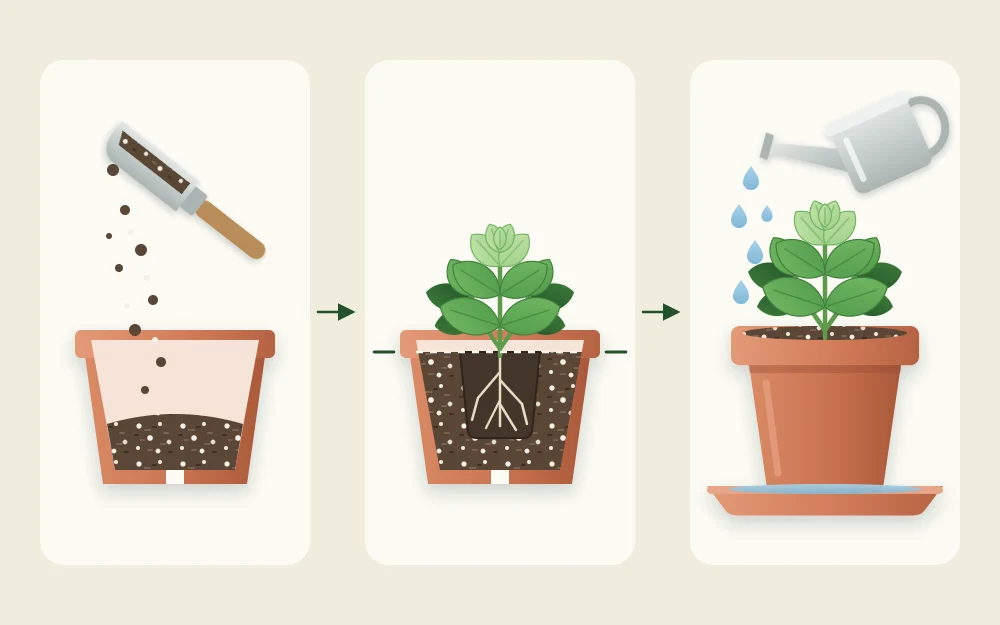
- Put enough potting mix in the new pot that the plant will sit at the right height, with the top of its root ball a little below the rim.
- Tip the plant out of its nursery pot, supporting the root ball with your hand. If roots are circling tightly, loosen the outer ones gently with your fingers.
- Set the plant in the center at the same depth it was growing before. Do not bury the stems deeper.
- Fill around the root ball with mix and firm it lightly with your fingertips. Leave about half an inch (1 cm) of space below the rim so water can pool briefly instead of running off.
- Water slowly until a little runs out of the drainage hole, let the pot drip, then empty the saucer.
Tip
Supermarket herb pots are often many seedlings crowded together. They last longer if you gently split the clump into two or three pieces and give each its own pot.
Step 5: Arrange the row
How you place the pots affects how much light each plant gets.
- Put taller herbs at the ends or to one side so they do not shade shorter ones.
- Leave a little space between pots. Air moving around the leaves helps them dry after watering.
- Keep leaves from touching the glass, which can be very hot in summer sun and very cold on winter nights.
- Make sure you can lift each pot out easily. If watering is awkward, it tends to get skipped.
The first few weeks
Newly potted herbs often pause for a week or two while their roots grow into the fresh mix. A little drooping on the first day is common and usually passes.
- Check moisture by touch. Push a finger about an inch (2.5 cm) into the mix. If it feels dry at that depth, water; if it feels damp, wait. There is no fixed schedule, because how fast a pot dries depends on the herb, the pot, the season and the room.
- Turn the pots. Plants lean toward the glass. A quarter turn every few days keeps growth even.
- Pinch the tips. Once you see clear new growth, pinch out the stem tips of branching herbs such as basil, just above a leaf pair, to encourage bushy plants.
- Harvest lightly. Take a few leaves at a time until the plants are well established.
What a windowsill cannot do
A windowsill gives light from one side only, for as many hours as the season allows. In summer that is often plenty. In a dim winter, even a good window may not provide enough for sun-loving herbs, and growth turns slow, pale and leggy however well you water.
Good to know
Leggy winter growth is commonly a light problem rather than a feeding or watering one. Moving the pots will not help if every window is dim. A grow light above the row is the usual answer.
It is also reasonable to accept slower growth in the darkest months, harvest less, and let the plants pick up again as the days lengthen.
Frequently asked questions
Which window is best for a windowsill herb garden?
The brightest one you have. In the Northern Hemisphere that is usually a south or southwest window, which gets the most direct sun. East and west windows suit herbs that manage with moderate light, such as parsley, chives and mint. A north window generally needs help from a grow light.
Can I plant several herbs together in one long planter?
You can, if the herbs want similar moisture and light, but separate pots are easier for beginners. Each herb can then be watered when it needs it, turned, moved or replaced without disturbing its neighbors. Mint should always have its own pot because it spreads by runners.
How soon can I harvest from a new windowsill herb garden?
Young plants can usually spare a few leaves almost straight away, but they establish faster if you wait until you see clear new growth. After that, take small amounts often rather than stripping a plant, and leave plenty of leaves so it can keep growing.