Grocery Store Herb Plants: How to Keep Them Growing
Why supermarket herb pots collapse so quickly at home, and a simple way to split one crowded pot into several that keep producing leaves for much longer.
At a glance
What you need
- Three or four pots with drainage holes
- Saucers or a tray
- Fresh potting mix
- Clean scissors
- A watering can
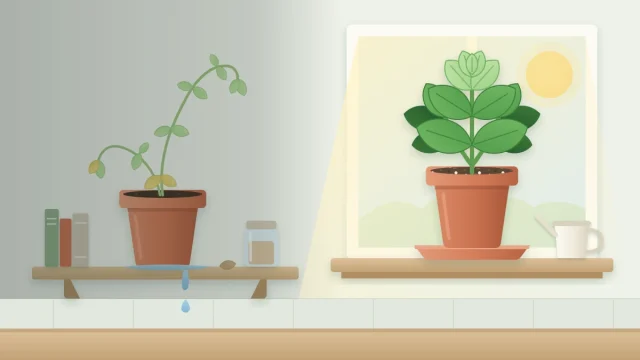
The pot of basil looked wonderful in the produce aisle: thick, glossy and tall. Ten days on your kitchen counter and it is a tangle of limp stems with yellow leaves at the bottom. It is easy to conclude that you are bad with plants.
You are probably not. Grocery store herb plants are grown to look their best on the day they are sold, not to live for months in the same pot. Once you understand how they are produced, the fix is fairly simple, and one pot can become three or four that keep giving leaves for a good while longer.
Why these pots fade so fast
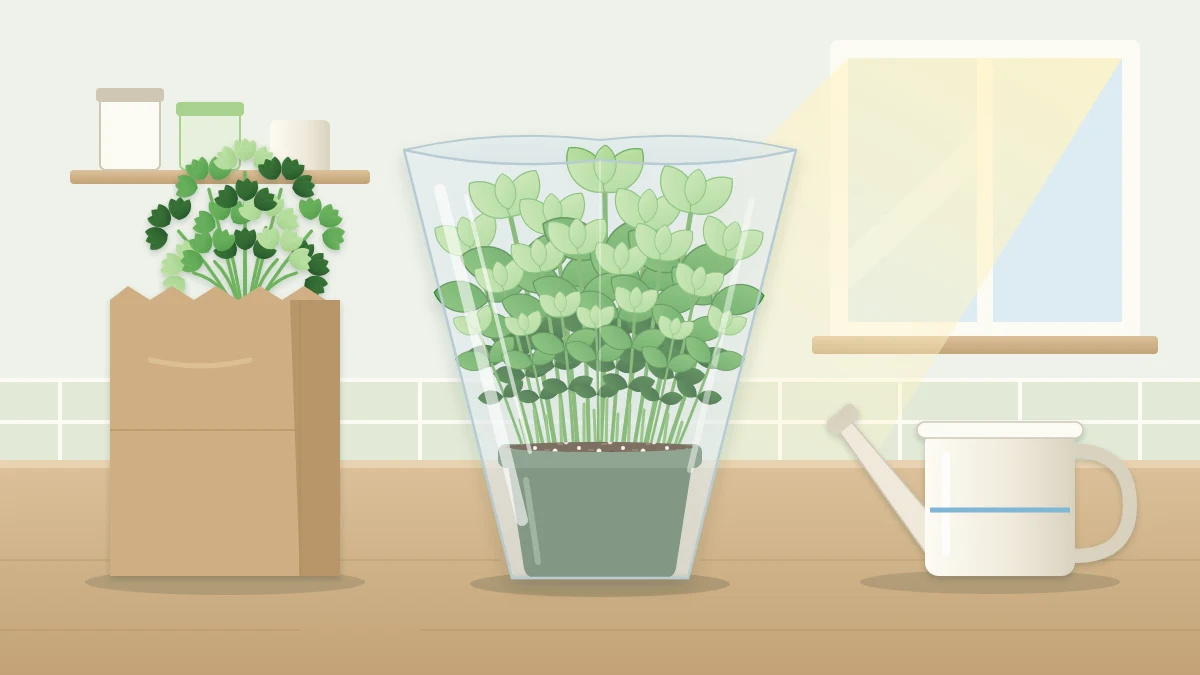
A typical supermarket herb pot is not one plant. It is usually dozens of seedlings sown very thickly into a small pot of mix, which is how the grower gets something lush and full in a few weeks.
That crowd was raised in close to ideal conditions: strong greenhouse light, steady warmth and carefully managed water. Then it moves to a kitchen, where the light is often a small fraction of what it had. Several things go wrong at once:
- Competition. Many seedlings share a few handfuls of mix, so they compete for water, nutrients and light.
- Rapid drying. So many roots in so little mix can empty the pot of water within a day.
- Low light. The stems in the middle are shaded by their neighbors and weaken first.
- Trapped moisture. The plastic sleeve and the packed stems hold damp air around the base, where leaves can start to rot.
Collapse within a couple of weeks is therefore common.
Which herbs are worth rescuing
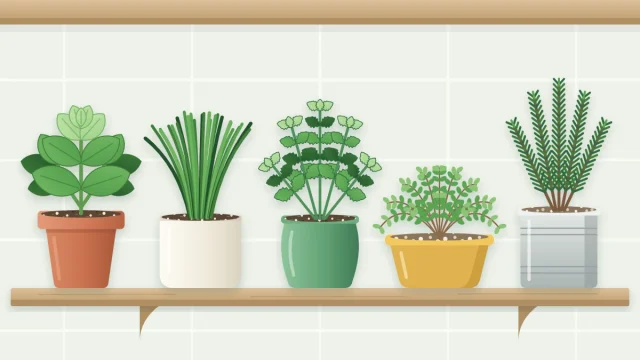
Dividing works well for basil, parsley, chives and mint. Basil responds fastest. Parsley has a taproot and dislikes disturbance, so handle its clumps gently and keep them larger. Chives and mint are clump-forming perennials and take division in their stride; give mint a pot of its own.
Cilantro is the exception. It is a short-lived cool-season annual that soon starts bolting whatever you do, and its taproot resents being moved. Use a cilantro pot as it comes, keep it cool and bright, and plan to sow your own for a steadier supply.
At the store, look for firm, upright stems and green leaves all the way down.
What you need
- Three or four pots with drainage holes, about 4 to 5 in (10 to 13 cm) across
- Saucers or a tray
- Fresh potting mix
- Clean scissors
- A watering can
An ordinary peat-free or peat-based mix for containers is fine for these leafy herbs; the guide to potting soil for indoor herbs explains what to look for.
How to split and repot the pot
- Remove the sleeve. Take off the plastic wrap as soon as you get home so air can move around the stems.
- Water and let it drain. Stand the pot in a bowl of water for a few minutes or water from the top until it runs through, then let it drain for half an hour or so. A moist root mass separates with less tearing.
- Tip the plant out. Support the stems between your fingers, turn the pot over and ease it off. You will usually find a solid mat of fine roots.
- Split the root mass into three or four clumps. Push your thumbs into the center from below and pull gently apart, letting the roots untangle instead of snapping them. Do not try to separate single seedlings.
- Pot each clump. Put a little fresh mix in each pot, set a clump in at the same depth it was growing, fill around it and firm lightly.
- Water in. Water each pot until it drains from the hole, then empty the saucers.
- Tidy up. Snip off any broken, yellow or mushy stems at the base.
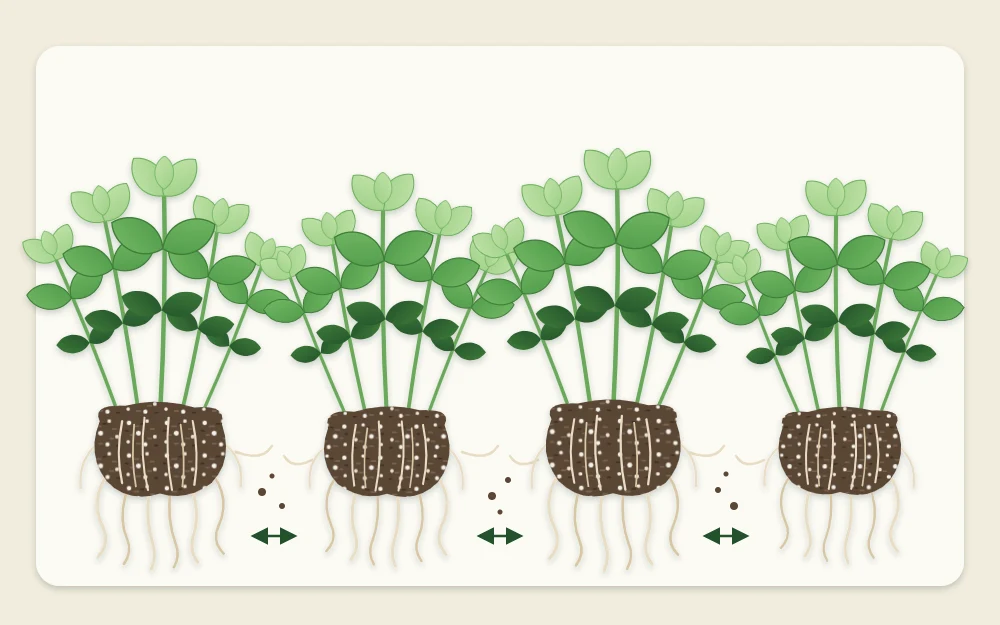
The general technique for moving a plant into fresh mix is described in more detail in the guide on how to repot herbs.
Tip
If a clump still looks very crowded after potting, thin it by cutting the weakest stems off at the base with scissors. Pulling them out disturbs the roots of the ones you want to keep.
Expect some losses
Dividing tears some roots, and the weakest seedlings will not make it. A few stems wilting, yellowing or dying off over the first week is normal and does not mean the rescue has failed. Remove them as they go so they do not rot against healthy stems.
Watch for fresh growth at the tips of the survivors.
Where to put the new pots
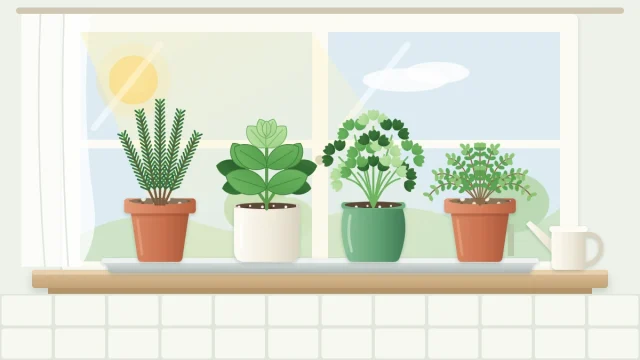
For the first few days, keep the divided pots bright but out of the hottest direct sun while the roots recover. After that, move them to the brightest spot you have. Basil in particular wants the most light and warmth you can give it and should be kept away from cold glass and drafts.
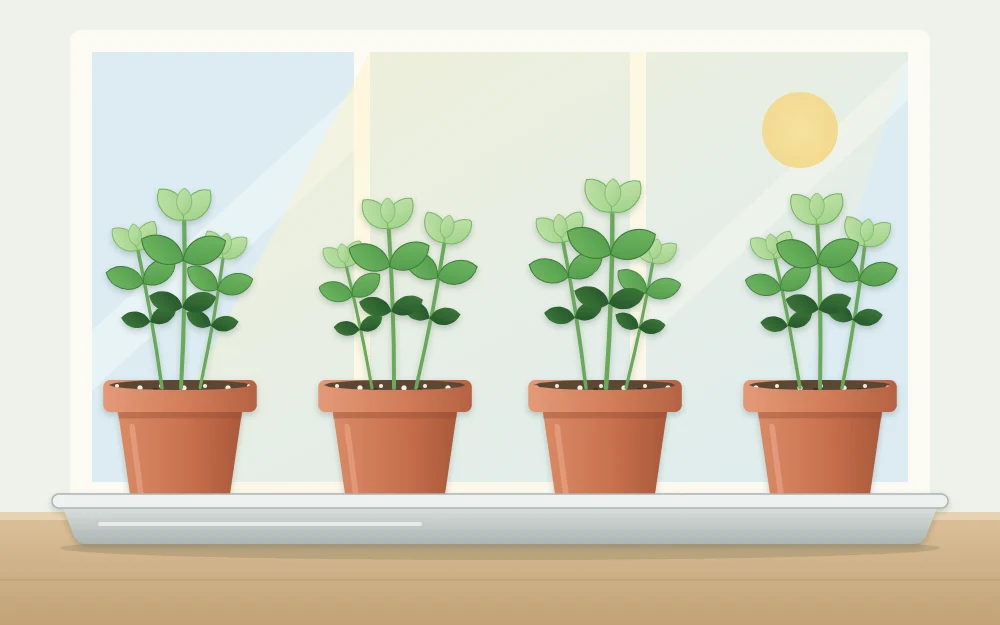
Check the mix with a fingertip before watering and water when the top feels dry. With fewer stems and more mix in each pot, the daily wilting should stop. For light, warmth and feeding over the longer term, follow the guide to growing basil indoors.
Harvest by pinching, not stripping
How you pick matters as much as how you pot. Stripping all the leaves from a stem, or plucking only the large lower leaves, leaves bare stalks that struggle to regrow.
On basil and mint, pinch or cut the tip of a stem just above a leaf pair. The small shoots at that node then grow out, and the stem branches. On parsley, cut whole outer stalks at the base and leave the young center. Cut chives an inch or two (2.5 to 5 cm) above the mix. Give the new pots a week or two to settle before you take more than a few leaves.
Honest limits
Good to know
Dividing a supermarket pot buys a longer harvest, not a permanent plant. Basil is an annual and will eventually flower and decline however well you treat it. These seedlings were also raised fast and soft, so they may never be as sturdy as plants grown slowly from your own seed.
That is still a fair return for a few minutes of work. Chives and mint, being perennials, may carry on a good deal longer if they like their spot.
Frequently asked questions
Why does my supermarket basil keep dying?
Usually because the pot holds dozens of seedlings in very little mix. They were raised in strong greenhouse light and then moved to a much dimmer kitchen, where they compete for water and light and dry out within a day. Splitting the pot into a few clumps and giving them brighter light addresses the most common causes.
Can I just move the whole pot into a bigger one?
You can, and it will help with drying out, but the seedlings will still be packed together and shading one another. Dividing the root mass into three or four clumps, each in its own pot, gives every stem more mix, more water and more light, which is why it usually works better.
How long will a divided supermarket herb last?
It depends on the herb and your light, so no honest figure fits every kitchen. Divided basil in a bright spot can often supply leaves for weeks or months before it flowers and declines. Chives and mint are perennials and may carry on much longer. Cilantro tends to be short-lived regardless.