How to Harvest Herbs Without Harming the Plant
Where to cut each type of herb and how much to take at once, so that basil, chives, parsley, thyme and the rest keep regrowing after every harvest.

At a glance
What you need
- Clean sharp scissors or snips
- A small bowl or plate for the cuttings
- A healthy, established herb plant
Standing over a healthy pot of herbs with scissors in hand, plenty of people hesitate. Cut in the wrong place, the worry goes, or take too much, and the plant will sulk or die. So the leaves stay on the plant, and the plant grows tall, thin and less useful.
Knowing how to harvest herbs comes down to two questions: where to cut and how much to take. The answer to the first depends on how the herb grows, and there are only four patterns to learn. The answer to the second is a simple rule of thumb that works across nearly all of them.
Basics that apply to most herbs
- Use clean scissors or fingertips. Sharp, clean blades make a neat cut. Soft tips on basil or mint can be pinched off between finger and thumbnail.
- Take a little and often. Once a plant is established, several small harvests are easier on it than one big one.
- Harvest regularly. Cutting prompts new growth. A herb that is never picked tends to get leggy and, in many cases, moves on to flowering sooner.
- Cut, do not tear. Pulling leaves can strip the stem or loosen the roots of a small plant.
How much to take at once
A common rule of thumb is to leave at least two thirds of the plant in place each time you harvest. The leaves are what power regrowth, so a plant left with plenty of them recovers quickly, while one cut back hard has little to rebuild with.
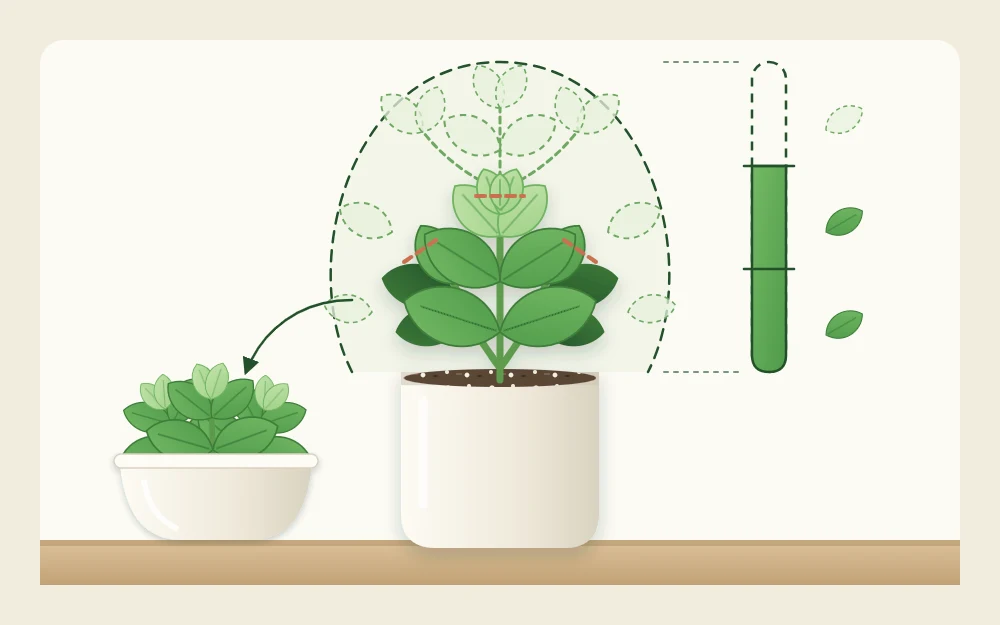
Indoors it pays to be a little more cautious than outdoors, particularly in winter. With weaker light, herbs regrow slowly, and a harvest that a plant would replace in a week in June may take much longer in December. Let the plant show clear new growth before you cut again.
Where to cut: the four growth habits
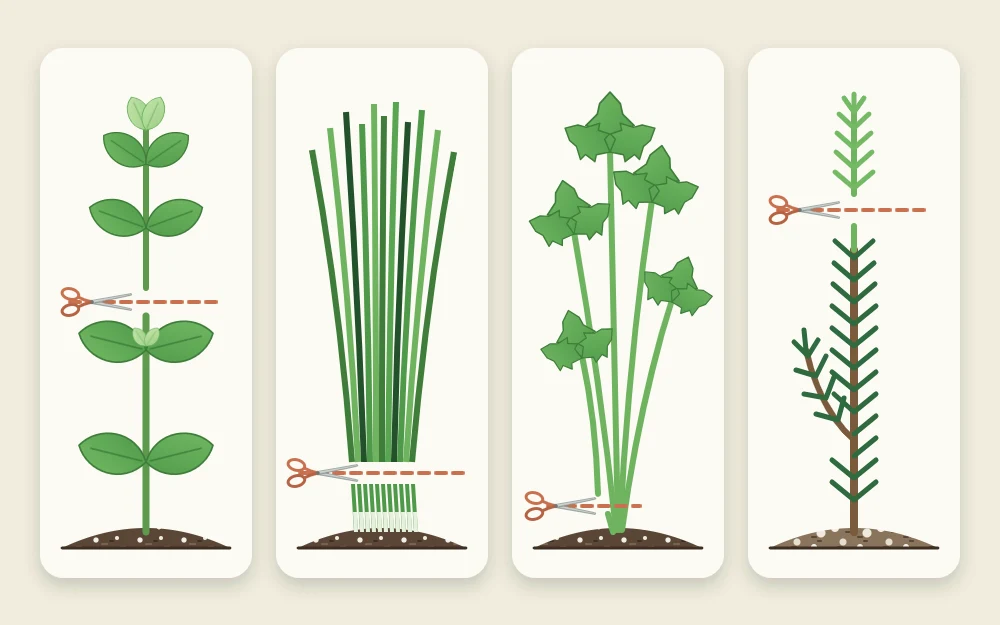
Look at how the plant is built before you cut. Almost every kitchen herb fits one of these four types.
| Type | Examples | Where to cut |
|---|---|---|
| Branching stem herbs | Basil, mint, oregano | Just above a pair of leaves |
| Clump herbs | Chives | An inch or two above the soil |
| Stalk herbs with stalks from the base | Parsley, cilantro | Outer stalks, at the base |
| Woody herbs | Thyme, rosemary, sage | Soft green tips, not old wood |
Branching stem herbs
Basil, mint and oregano carry their leaves in pairs along the stem. Each point where a pair joins the stem is a node, and tucked into it are two tiny side shoots. Cut the stem just above a leaf pair and those shoots grow out, so the stem you cut comes back as two.
Avoid picking only the big lower leaves. That leaves a bare stalk with a tuft on top. Basil rewards careful cutting more than any other herb, and the technique has its own guide on how to prune basil.
Clump herbs
Chives grow as a tuft of hollow leaves that rise straight from the base. Gather a small bunch and cut it straight across, an inch or two (2.5 to 5 cm) above the soil. New leaves push up from below.
Snipping only the tips leaves blunt brown ends and does nothing to encourage fresh leaves. Work your way around the clump over successive harvests instead of shearing the whole pot at once. There is more in the guide to growing chives indoors.
Stalk herbs
Parsley and cilantro send each leaf up on its own stalk from a central crown, with the newest leaves in the middle. Take the outer, older stalks first and cut them right down at the base. Leave the young center alone, because that is where all new growth comes from.
Cutting straight across the top of a parsley or cilantro plant removes the growing center along with the leaves and leaves a mess of stubs.
Woody herbs
Thyme, rosemary and sage have stems that turn brown and woody with age. Harvest the soft, green growth toward the tips, cutting just above a set of leaves. Do not cut down into bare old wood: it often fails to sprout again, and the branch may simply die back.
These herbs grow slowly indoors, rosemary most of all, so harvest lightly and give them time between cuts.
Let young and newly potted plants settle
A plant needs enough leaf to support itself before it can spare any. Wait until seedlings have several sets of true leaves and are growing strongly before the first real harvest. A leaf or two for a garnish does no harm; a handful for pesto can wait.
The same goes for a herb you have just repotted or divided. Its roots have been disturbed, so give it a week or two, and look for fresh growth as the sign that it has settled.
Tip
Harvest with a plan for the plant’s shape. Take the tallest or longest stems first and the pot stays compact and even instead of lopsided.
Flower buds and bolting
When you harvest, look at the tips. Basil, mint and oregano form flower buds at the ends of their stems, and pinching these out along with a little stem below them keeps the plant producing leaves for longer.
Cilantro behaves differently. It is a short-lived annual, and once it sends up a tall central stalk with feathery leaves it is bolting, which harvesting can delay only a little. The causes and what you can do are covered in the guide to herbs bolting.
After you cut
Pick herbs close to the time you plan to cook with them; that is the great advantage of growing them a few steps from the stove. Rinse them just before using them, and shake or pat them dry.
Then look after the plant as usual. Check the mix before watering, since a herb with fewer leaves uses a little less water for a while, and keep it in good light so it can regrow.
Good to know
The two-thirds guide is a rule of thumb, not a law. A vigorous mint in summer shrugs off a harder cut, while a small rosemary in a dim winter window may need you to take far less. For more on timing and technique, see University of Maryland Extension’s page on harvesting herbs.
Frequently asked questions
How much of a herb plant can I cut at one time?
A widely used rule of thumb is to leave at least two thirds of the plant, so it keeps enough leaves to regrow. Indoors, and especially in winter when light is weak and growth is slow, taking less than that and waiting for clear new growth before the next harvest is the more cautious approach.
Do herbs grow back after you cut them?
Most do, provided you cut in the right place and leave plenty of foliage. Basil, mint and oregano branch from the leaf pair below a cut, chives and parsley send up new leaves from the base, and woody herbs regrow from green stems. Cilantro is short-lived and regrows only modestly before it flowers.
When can I start harvesting a young herb plant?
Wait until it is established, with several sets of true leaves and steady new growth. Taking a leaf or two before then is usually fine, but a larger harvest can set a small plant back. Newly repotted or divided herbs also benefit from a week or two to settle before you cut much.