How to Water Indoor Herbs: When and How Much
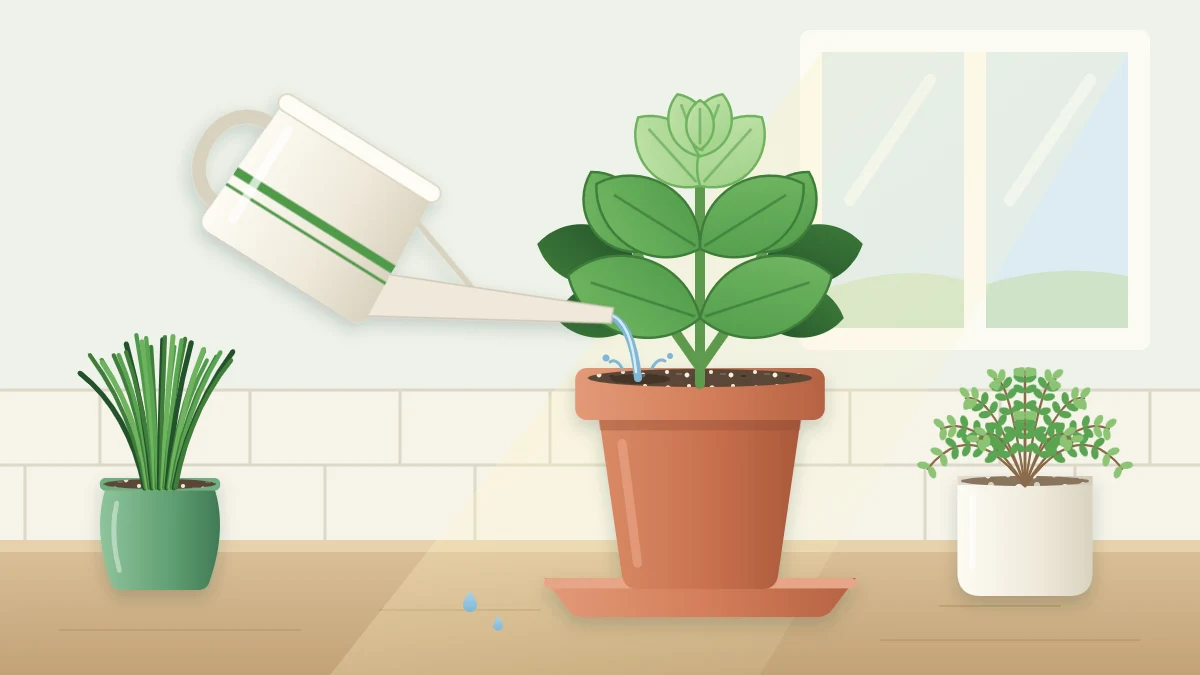
A reliable way to water herbs in pots: check the potting mix with a finger, feel the weight of the pot, then water until it runs from the drainage hole and empty the saucer.
At a glance
What you need
- Small watering can with a narrow spout
- Room-temperature water
- Pots with drainage holes
- Saucers
- A sink or tray for draining
Watering causes more worry than any other part of growing herbs inside, mostly because people look for a schedule that does not exist. The good news is that you do not need one. You need a quick way to check the pot and one dependable way to water when the check says it is time.
Learning how to water indoor herbs is really learning two things: how to tell when a plant needs water, and how to give it enough in one go. Both take a few seconds once they become habit.
Why a calendar does not work
How quickly a pot dries is set by many things at once, and they change from pot to pot and from week to week. At least ten factors are involved:
- The herb. Leafy basil drinks faster than a small woody thyme.
- Pot size. A small pot holds little potting mix and dries quickly; a large one stays moist longer.
- Pot material. Unglazed terracotta lets moisture escape through its walls, while plastic and glazed ceramic hold it in.
- Potting mix. A fine, dense mix holds more water than a coarse, open one.
- Drainage. A pot that drains freely dries faster than one that drains slowly.
- Temperature. Warm rooms dry pots faster than cool ones.
- Humidity. Dry indoor air, especially with heating on, pulls moisture out sooner.
- Light. A plant in strong light grows and uses water faster than one in a dim spot.
- Season. Herbs generally use more in the bright months and much less in winter.
- The size of the plant. A big, leafy plant in a pot full of roots empties it far sooner than a seedling does.
As an example, a small terracotta pot in a sunny window might need water every day or two in summer, while the same pot can stay moist for a week or more in a dim winter room. No fixed timetable can follow that. Checking can.
Three ways to check before you water
Use these together. Each one takes a moment, and they back each other up.
The finger test
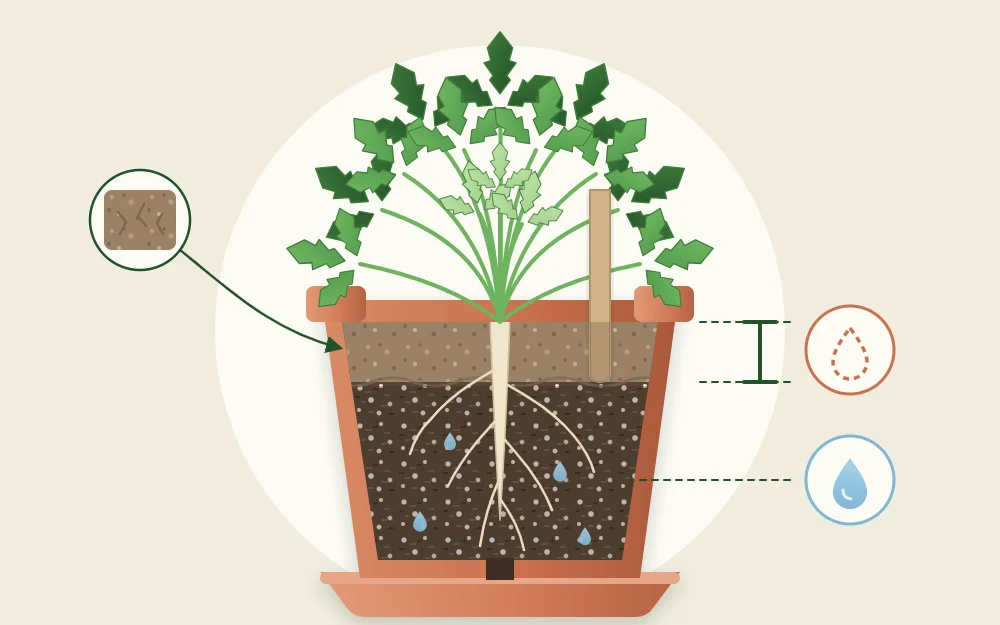
Push a finger about 1 in (2.5 cm) into the potting mix, away from the main stem. Dry and crumbly at that depth usually means it is time to water. Cool and damp means wait. The surface alone can mislead you, because it dries first while the mix underneath is still moist.
The weight test
Lift the pot just after a thorough watering and notice how heavy it feels. Lift it again when the mix has dried. The difference is easy to feel, especially with small pots, and after a while you can tell a dry pot by picking it up.
The leaves
Look at the plant. Leaves that have lost their firmness or started to droop can mean the pot is dry. Leaves alone are not proof, though, since a plant sitting in soggy mix can droop too. Always confirm with your finger before reaching for the watering can.
How to water, step by step
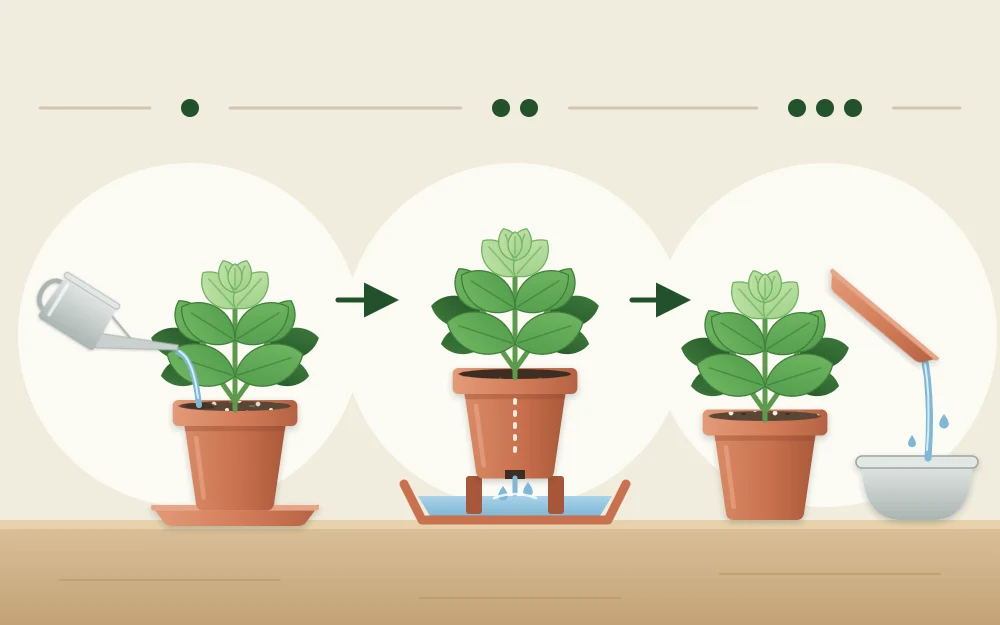
- Check first. Use the finger test and the weight of the pot to confirm the plant needs water.
- Water at the soil. Pour slowly onto the potting mix around the plant instead of over the leaves, moving around the pot so the whole surface gets wet.
- Keep going until water runs from the drainage hole. That tells you the root ball is wet all the way through, not just at the top.
- Let it drain. Leave the pot for several minutes so extra water can run out. Watering over a sink makes this easy.
- Empty the saucer. Do not leave the pot standing in water. Tip out whatever has collected in the saucer or cachepot.
All of this depends on the pot having a way to let water out. If yours does not, or if water sits on the surface for a long time, read the guide to drainage for herb pots before changing anything else.
Tip
If potting mix has dried so far that it shrinks from the sides of the pot, water may run straight down the gap and out. Water in two or three slow passes a few minutes apart so the mix has time to soak it up.
How much is enough? However much it takes for water to begin running from the drainage hole. A thorough watering followed by a wait is generally better than frequent small sips, which wet only the top of the mix.
Moisture lovers and herbs that like to dry
Herbs fall into two broad groups, and the finger test means something slightly different for each.
- Basil, parsley, mint, chives and cilantro like evenly moist potting mix that is never soggy. Water these when the top inch is just turning dry, and try not to let the whole pot dry out.
- Thyme, oregano, rosemary and sage want the top of the mix to dry between waterings. Let it dry clearly at finger depth before you water again. These herbs handle a short dry spell better than constantly wet roots.
This is why herbs from the two groups are easier to look after in separate pots. The mix matters as well: a looser, grittier blend dries faster and suits the second group. See the guide to potting mix for indoor herbs for how to adjust it.
Water temperature and time of day
Use room-temperature water where you can. Very cold water straight from the tap can be a jolt to warm-loving herbs such as basil.
Morning is a convenient time to water. The plant has the bright hours ahead to use the moisture, and any splashes on the leaves dry off during the day. If a pot is dry in the evening, water it then.
Good to know
Expect your routine to shift through the year. A pot that needed frequent watering in July may need far less in December, when growth slows. Keep checking and let the potting mix decide, not the habit you built in summer.
When something looks wrong
Yellow leaves, wilting and slow growth each have several possible causes, and too much water and too little can look surprisingly alike. Before you change how you water, check the mix with your finger and look at the roots and the light the plant is getting. The guide to common indoor herb problems walks through how to tell the causes apart.
Frequently asked questions
How often should I water indoor herbs?
There is no single schedule, because drying time depends on the herb, the pot, the potting mix, the room and the season. Check each pot instead: push a finger about an inch into the mix and water when it feels dry at that depth. Leafy herbs need checking more often than woody ones.
Should I water herbs from the top or the bottom?
Watering from the top, at the potting mix, is the simplest method and lets you see water run from the drainage hole. Bottom watering in a shallow tray also works for very dry pots, provided you lift the pot out once the surface feels moist and let it drain instead of leaving it standing in water.
Is tap water fine for indoor herbs?
In most homes ordinary tap water works for herbs. Letting it stand until it reaches room temperature avoids chilling the roots of warm-loving herbs such as basil. If you notice a pale crust building up on the potting mix or pot over time, watering thoroughly so that plenty runs out of the bottom helps.