How Much Light Do Indoor Herbs Need?
Find out how much light indoor herbs commonly need, which windows give the most, how to check a spot with the hand-shadow test and which herbs cope with moderate light.
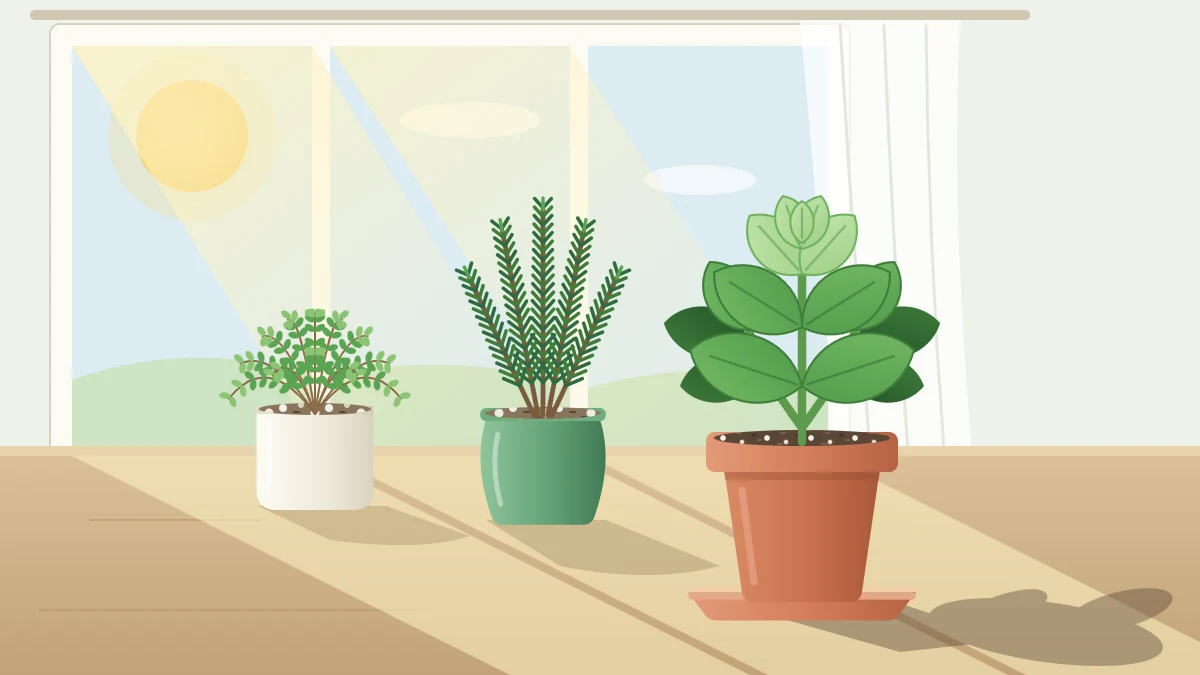
When an indoor herb struggles, light is the first thing to look at. Water, pots and potting mix all matter, but they cannot make up for a spot that is simply too dim. Indoors, light is the usual limit on how well a herb grows.
Getting enough light for indoor herbs is partly about choosing the right window and partly about reading what the plants tell you. This guide explains the commonly quoted figures, how to judge your own windows, and which herbs to pick if your light is only moderate.
How much light most herbs want
Extension guides commonly suggest around six or more hours of direct sun a day for most culinary herbs. Direct sun means the sunbeams actually land on the leaves, not just that the room feels bright.
Treat that number as a rough guide and not a rule. The strength of the sun changes with the season, the weather, your latitude and the glass itself, so six hours in June and six hours in December are not the same thing. A herb with a bit less can still grow, only more slowly and with a looser shape.
Which window is best?
Window directions here assume the Northern Hemisphere. If you live in the Southern Hemisphere, swap north and south.
- South or southwest: the best bet for herbs. These windows get the longest stretch of direct sun, especially in winter when the sun is low.
- West: direct sun in the afternoon and evening. Less than a south window gives, but often enough for the more tolerant herbs and sometimes for sun lovers in summer.
- East: gentle direct sun in the morning, then bright shade. It also gives less than a south window, and suits herbs that cope with moderate light.
- North: little or no direct sun. A north window is rarely enough for herbs without a lamp.
A big, clear window in a so-so direction can beat a small or shaded window in a good one, so judge the light you really get. For setting up the sill itself, see the guide to planning a windowsill herb garden.
What cuts the light before it reaches the leaves
Even a good window delivers less light than you might expect. Several things reduce it:
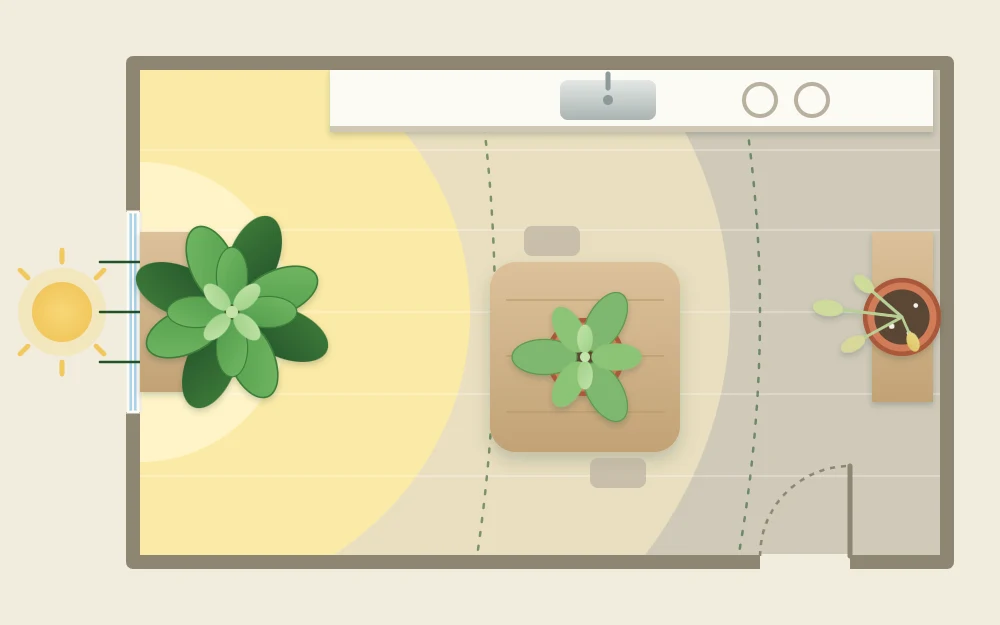
- Distance from the glass. Light falls off quickly as you move into the room. A pot on the sill gets far more than a pot on a table a few feet (about a meter) away.
- Curtains, blinds and screens. Sheer curtains and insect screens each take a share.
- Trees, buildings and overhangs. Anything outside that shades the window shortens the hours of direct sun. Trees in leaf block more in summer than in winter.
- Season. Winter days are shorter and the sun is weaker, so the same window gives much less.
- Dirty glass. A film of dust or grime on the pane blocks some light.
The hand-shadow test
You can get a rough reading without any equipment. Around midday on a clear day, hold your hand about 12 in (30 cm) above the spot where the pot would stand and look at the shadow it casts.
- A crisp, dark shadow with sharp edges suggests direct sun or very bright light, which suits the sun-loving herbs.
- A soft shadow with blurred edges suggests moderate light. The more tolerant herbs may manage here.
- A faint shadow or none at all suggests low light, too little for herbs without a lamp.
Repeat the test at a few different times of day, and again in another season. It is a rough check, not a measurement.
Signs a herb is not getting enough light
Plants respond to low light in fairly recognizable ways. Common signs include:
- long, weak stems with wide gaps between leaf pairs, often described as leggy growth
- new leaves that are smaller and paler than the older ones
- stems leaning hard toward the window
- slow growth and potting mix that stays wet for a long time

None of these proves a light problem on its own. Pale leaves can also go with watering or feeding issues, and thin growth can follow too much warmth or crowding. Light becomes the likely cause when several signs appear together and the pot sits well back from a window or in one that gets little direct sun.
Herbs for moderate light and herbs for full sun
If your best window is east- or west-facing, choose herbs that cope better with moderate light: mint, parsley and chives. They will still grow faster with more, but they hold their shape reasonably well when light is less than ideal.
The sun lovers are basil, rosemary, thyme and oregano. They want your sunniest window, right at the glass. In anything less they tend to stretch and thin out.
Good to know
The brightest spot is not always the kindest one. Glass can be very cold on winter nights and hot on summer afternoons. Keep leaves from touching the pane, and move tender basil back a little during cold spells.
Getting more from the light you have
- Move pots as close to the glass as you sensibly can. This is usually the biggest single gain.
- Rotate pots. Give each pot a quarter turn every few days so all sides get light and the plant grows upright instead of leaning.
- Clean the glass inside and out a few times a year.
- Open curtains and blinds fully during the day.
- Shift with the seasons. A pot that thrived on an east sill in summer may need the south window by late fall. The guide to keeping indoor herbs through winter covers the darker months.
Tip
For general background on judging light indoors, see University of Maryland Extension’s page on lighting for indoor plants.
When a window is not enough
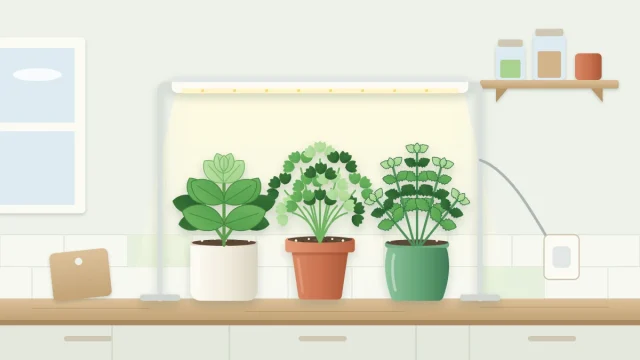
Some homes do not have a window that gives herbs what they want, and many do not in winter. That does not rule herbs out. A grow light can add to weak daylight or replace it entirely, and it lets you grow herbs on a counter or shelf far from any window.
Lamps are much weaker than the sun, so they are commonly run for long hours to make up for it. The guide to choosing and using grow lights for herbs explains what to look for and how to set one up.
Frequently asked questions
Can herbs grow in a north-facing window?
In the Northern Hemisphere a north-facing window gets little or no direct sun, so it is rarely enough for herbs by itself. Mint, parsley and chives cope best with lower light, but even they tend to grow thin there. Adding a grow light above the pots is the usual way to make a north window work.
Do indoor herbs need direct sunlight?
Most culinary herbs grow best with direct sun, and around six or more hours a day is commonly suggested as a rough guide. Basil, rosemary, thyme and oregano want the most. Mint, parsley and chives manage with moderate light, although they still grow more slowly than they would in a sunnier spot.
Why do indoor herbs grow tall and thin?
Long, weak stems with wide gaps between leaves often go with too little light, especially when the plant also leans toward the window. Warm rooms and crowded pots can add to it. Try moving the pot closer to the glass or to a sunnier window, and watch whether the new growth comes in more compact.