Best Herbs to Grow Indoors: 10 Good Choices for Beginners
Ten herbs worth trying on a windowsill, grouped by the light and moisture each one asks for, with a comparison table and advice on which herbs can share a pot.
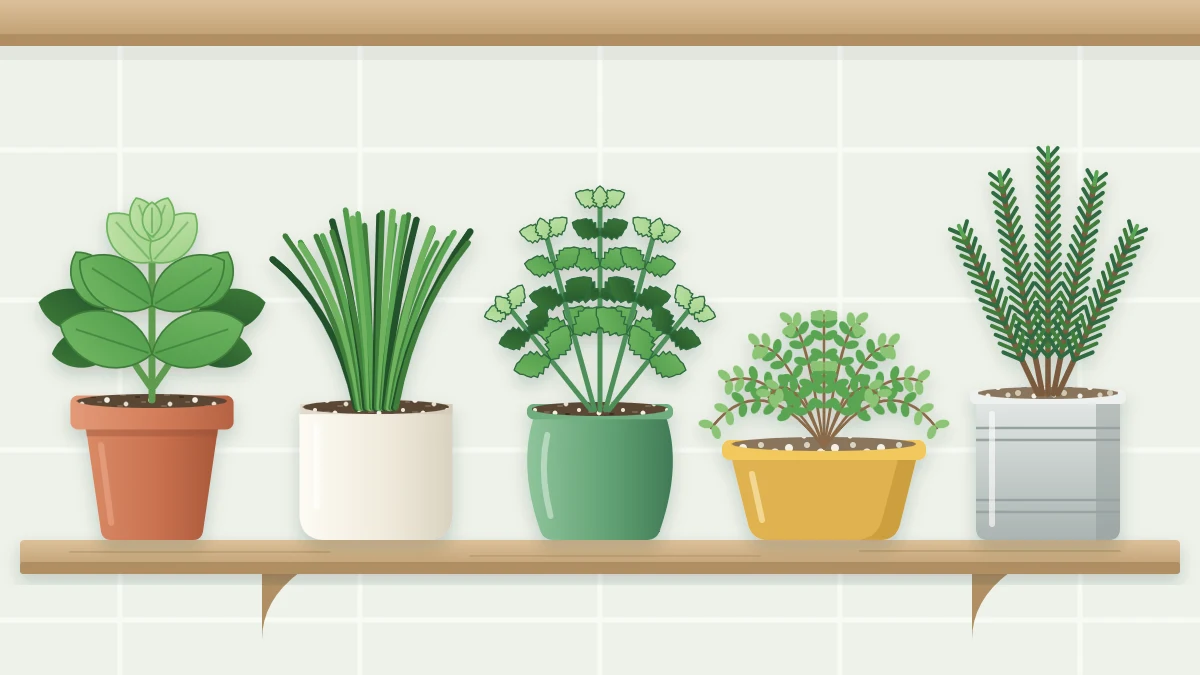
Not every herb enjoys life on a windowsill. Some put up with moderate light and a little neglect, while others sulk unless they get the sunniest spot in the house. Choosing well at the start saves a lot of frustration.
The best herbs to grow indoors are the ones that match the light and warmth you can really offer, and that you will actually use in the kitchen. Here are ten good choices, grouped by what they ask for, with a table for quick comparison.
How to choose from the list
Start with your light. If you have a window that gets direct sun for much of the day, almost everything here is worth a try. If your brightest spot gets only a few hours of sun, lean toward the more tolerant herbs in the first group, or plan to add a grow light.
Then think about how you like to water. Leafy herbs prefer potting mix that stays evenly moist, and the woody Mediterranean herbs want the top of the mix to dry out between waterings. If you are still setting up, the starting guide for beginners covers the basics that apply to all of them.
Herbs that tolerate moderate light
These three are the most forgiving when a window is good rather than great. They still grow best in bright light, but they cope better than most when it falls short.
Chives
Chives are a clump-forming perennial with thin, hollow leaves. They grow from seed or from a division of an existing clump, and they regrow after cutting when you snip the leaves a little above the potting mix. Expect them to slow down in winter. The guide to growing chives indoors has the details.
Parsley
Parsley is a biennial that is usually grown for its first-year leaves. It tolerates moderate light and prefers a slightly cooler spot. Seed is slow and uneven to sprout, so a young plant is the easier start. It forms a taproot and appreciates a deeper pot.
Mint
Mint is a spreading perennial that grows eagerly and likes more moisture than most herbs. Start it from a plant, a division or a cutting, since seed is not reliable. Give it a pot of its own, because its runners crowd out anything planted alongside. See how to grow mint indoors for more.

Basil: the warmth and light lover
Basil is a tender warm-season annual, and of all the common herbs it asks for the most warmth and light. It is sensitive to cold, so keep it away from chilly glass and drafts. In return it is quick and easy from seed and generous with leaves when you pinch the stem tips regularly.
Because it is an annual, a basil plant will not last indefinitely however well you treat it. Many growers sow a new pot every so often. The full guide to growing basil indoors explains pinching and timing.
Cilantro: cool-loving and short-lived
Cilantro is a cool-season annual. Warmth and long days push it into bolting, which means it runs to flower and the leafy harvest tails off. Indoors it does best in a cooler, bright spot.
It has a taproot and dislikes being transplanted, so sow the seed directly in the pot where it will grow. Treat it as a short crop and re-sow a fresh pot regularly for a steady supply.
Mediterranean herbs for your brightest window
Thyme, oregano, rosemary and sage are woody or semi-woody perennials from sunny, dry places. Indoors they need the brightest light you have, a free-draining potting mix and a chance for the top of the mix to dry between waterings.
- Thyme stays small and neat, which suits a narrow sill. Its seed is tiny, so most people begin with a young plant.
- Oregano is a spreading, semi-woody herb that responds well to regular trimming. A plant or a division is the simplest start.
- Rosemary is slow and unreliable from seed and is the hardest of this group to keep going indoors. Buy a plant, and give it your sunniest position.
- Sage has soft gray-green leaves and grows into a small shrub over time. It is easiest from a young plant.
Two optional extras
Lemon balm is a leafy perennial related to mint, with a similar liking for moisture and a similar tolerance of moderate light. It is easy from a plant or a division and, like mint, is better in its own pot.
Dill is a tall annual with a taproot. It should be sown in place, needs a deep pot and plenty of light, and tends to grow lanky inside. It is harder indoors than the others here, so think of it as an experiment rather than a first herb.
The ten herbs at a glance
Use this table as a rough guide.
| Herb | Light need | Moisture preference | Easiest way to start |
|---|---|---|---|
| Chives | Moderate to bright | Evenly moist | Plant, division or seed |
| Parsley | Moderate to bright | Evenly moist | Plant, or seed with patience |
| Mint | Moderate to bright | Moist, more than most | Plant, division or cutting |
| Basil | Brightest, with warmth | Evenly moist | Seed or plant |
| Cilantro | Bright but cool | Evenly moist | Seed sown in place |
| Thyme | Brightest | Top of mix dries between waterings | Plant |
| Oregano | Brightest | Top of mix dries between waterings | Plant or division |
| Rosemary | Brightest | Top of mix dries between waterings | Plant |
| Sage | Brightest | Top of mix dries between waterings | Plant |
| Lemon balm or dill | Moderate to bright; dill brightest | Evenly moist | Lemon balm: plant; dill: seed sown in place |

Group herbs with similar needs
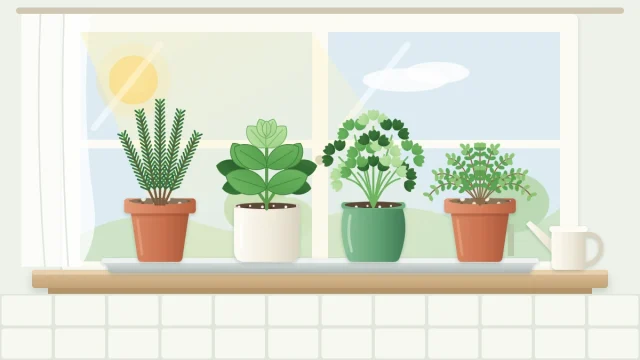
If you want several herbs in one container or along one sill, group them by what they like. Basil and parsley get along as neighbors because both want evenly moist potting mix. Thyme, oregano and sage suit each other because all three prefer to dry a little between waterings.
Do not plant thirsty and dry-loving herbs in one pot. Whatever you do with the watering can, one of them ends up too wet or too dry. Separate pots are the simplest answer.
Good to know
If you share your home with animals, check before you choose. The ASPCA lists some common herbs, chives among them, as toxic to dogs and cats, so look up each herb in the ASPCA plant list, keep pots out of reach and contact a veterinarian if a pet eats a plant.
Frequently asked questions
What is the easiest herb to grow indoors?
Chives and mint are among the most forgiving, because both tolerate moderate light and regrow readily after cutting. Parsley is also tolerant once established. Basil is easy from seed but needs more warmth and light than those three, so it suits a sunny, warm window best.
Which herbs can grow in the same pot?
Combine only herbs that like similar moisture. Basil and parsley can share because both prefer evenly moist potting mix, and thyme, oregano and sage suit each other because they like to dry a little between waterings. Mint spreads strongly and is better kept in a pot of its own.
Which herbs are hardest to grow indoors?
Rosemary is usually the most demanding, since it needs very bright light and careful watering. Dill is also tricky because it grows tall and has a taproot that needs a deep pot. Cilantro is not difficult, but it is short-lived and bolts in warmth, so it needs regular re-sowing.