Indoor Herb Gardening for Beginners: A Simple Starting Guide
A plain starting guide to growing herbs indoors: the four basics that decide most outcomes, whether to begin with seed or a young plant, how many herbs to start with and what to realistically expect.
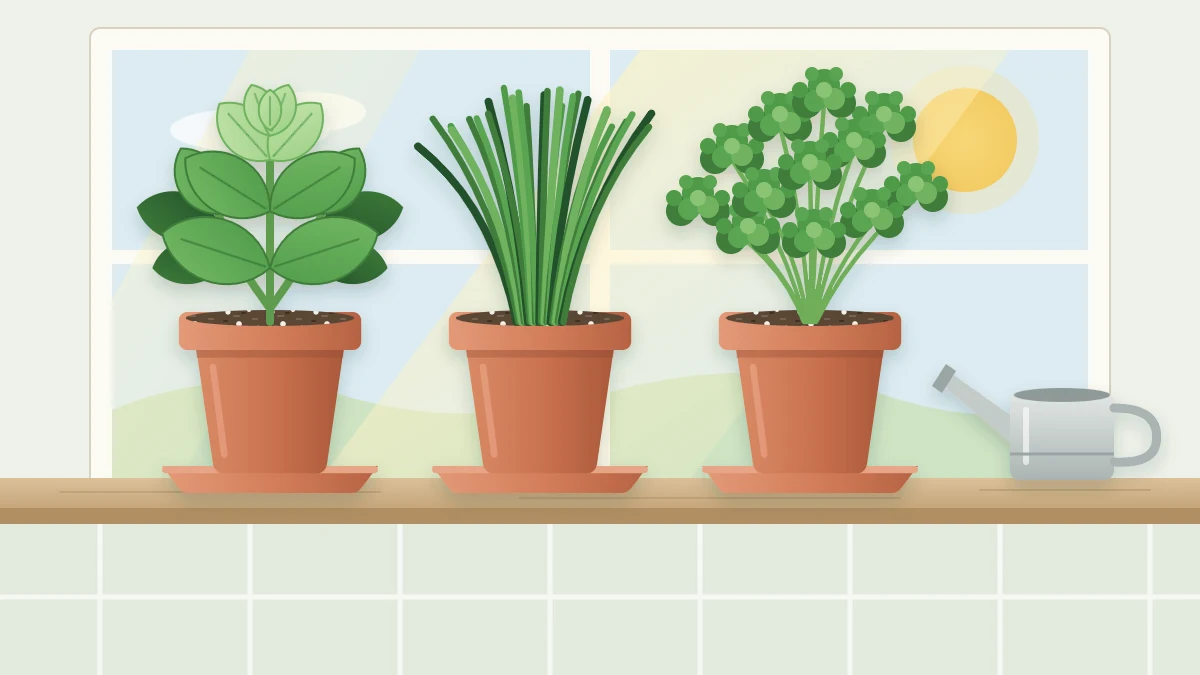
A few pots of herbs near the kitchen are one of the most approachable ways to start growing anything. You do not need a garden, special equipment or a big budget, and a small mistake usually costs you one plant rather than a whole season.
Indoor herb gardening for beginners comes down to a short list of decisions that matter and a longer list of details that can wait. This guide covers the decisions, sets fair expectations, and points you to the detailed guides when you are ready for them.
The four things that decide most outcomes
Herbs grown indoors live in a much smaller, dimmer world than herbs in a garden bed. Nearly every success or disappointment traces back to four basics: light, the pot, the potting mix and how you water.
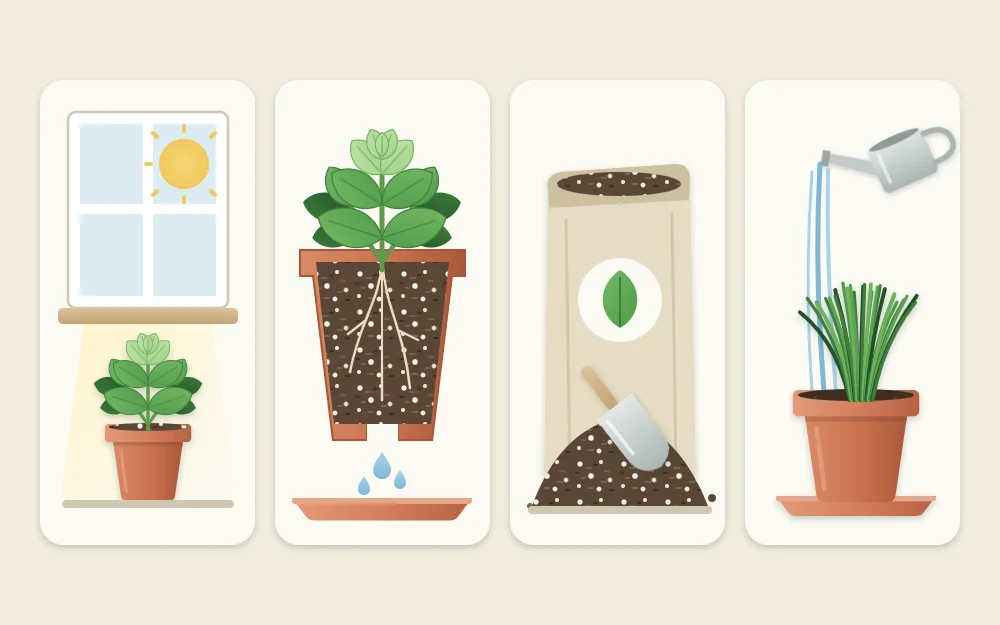
1. Enough light
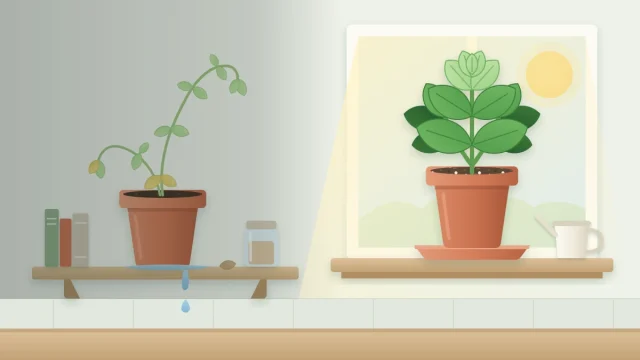
Light is the usual limit indoors. A room that looks bright to your eyes can still be dim for a plant, and most culinary herbs come from open, sunny places. Your brightest window is the place to start, and a grow light can fill the gap if you do not have one.
Before you buy anything, spend a day noticing where direct sun actually lands in your home and for how long. The guide to how much light indoor herbs need explains how to judge a window and which herbs cope with less.
2. A pot with a drainage hole
Roots need air as well as water. A pot with at least one drainage hole lets extra water run out instead of collecting at the bottom, where it pushes the air out of the potting mix. Set the pot on a saucer to protect the sill, and empty the saucer after watering.
If you love a decorative container with no hole, use it as a cachepot: keep the herb in a plain pot that drains and slip that pot inside. For size, material and shape, see the guide to choosing pots for indoor herbs.
3. Bagged potting mix, not garden soil
Soil dug from outdoors tends to pack down hard in a container, drain poorly and bring insects or weed seeds inside with it. A bagged potting mix is made for pots. It stays loose, so it can hold moisture and air at the same time.
4. Watering by checking, not by the calendar
There is no schedule that works for every herb in every home. How fast a pot dries depends on the plant, the pot, the room and the time of year, so the reliable habit is to check the potting mix before you water.
Push a finger about 1 in (2.5 cm) into the mix. If it feels dry at that depth, water thoroughly until water runs from the drainage hole. If it still feels moist, wait and check again later. The full method is in the guide on when and how much to water indoor herbs.
Tip
If you can only improve one thing, improve the light. A herb in good light forgives small watering mistakes far more readily than a herb sitting in a dim corner.
Seed or a young plant?
You can begin either way, and many people do both.
- Young plants are quicker. You can start picking a few leaves once the plant has settled in and put on new growth. They are the practical choice for slow or woody herbs such as rosemary and thyme, and for mint, which is normally started from a plant, a division or a cutting rather than from seed.
- Seed is cheaper and gives you many plants from one packet. It suits basil, cilantro and chives well. Basil often sprouts quickly in warm potting mix, and cilantro prefers to be sown directly in the pot where it will grow because it has a taproot that dislikes being moved.
Sprouting times differ a great deal from one herb to another, and temperature, moisture, seed age and variety all shift them. The seed packet is the best guide for the herb in your hand.
Start with two or three herbs
It is tempting to fill a windowsill with ten kinds at once. Two or three is a better beginning. You will learn how quickly each pot dries and how each plant responds to your window, and you will have room on the sill to give every pot its share of light.
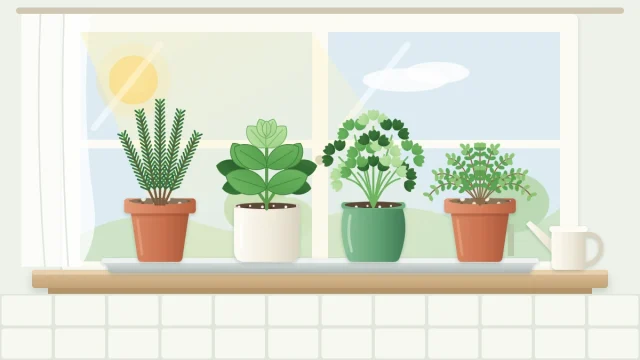
Choose herbs you actually cook with, and match them to the light you have. Chives, parsley and mint are more tolerant of moderate light, while basil, thyme and rosemary want the sunniest spot available. The list of the best herbs to grow indoors compares ten options side by side.
Give each herb its own pot at first. Herbs differ in how moist they like their potting mix, and separate pots let you water each one as it needs.
What to expect from indoor herbs
Honest expectations make the hobby more enjoyable.
- Slower, smaller growth. Even a sunny window gives a plant far less light than open sky. Indoor herbs grow more slowly and stay smaller than the same herbs outdoors, so plan on regular small harvests rather than big bunches.
- Some herbs are short-lived by nature. Basil is a tender annual and cilantro is a cool-season annual that runs to flower, which gardeners call bolting, especially in warmth. When they fade after some weeks or months, that is their life cycle and not a failure on your part. Sowing a fresh pot now and then keeps a supply going.
- A slow winter. Shorter days mean less light, and many herbs slow down or pause until spring.
A simple first setup
Here is one sensible way to begin without overthinking it:
- Find your brightest window and clear a space on or right beside the sill.
- Pick two or three herbs you use often.
- Get a pot with a drainage hole and a saucer for each one, plus a bag of potting mix.
- Pot each herb, water it well and let the pot drain fully.
- Check the potting mix with a finger every day or so for the first few weeks, and water only when it feels dry at that depth.
- Turn the pots now and then so every side gets light.
Pick lightly at first, taking a few stems at a time so the plant keeps enough leaves to keep growing. When a question comes up, change one thing at a time so you can see what helped.
Frequently asked questions
Can I grow herbs indoors all year?
Often, yes, as long as they get enough light. Growth usually slows in winter when days are short, and some herbs, such as basil and cilantro, are short-lived by nature and need re-sowing. A bright window or a grow light makes the biggest difference to how well herbs carry on through the darker months.
Is it better to start herbs from seed or buy plants?
Young plants are quicker and suit slow or woody herbs such as rosemary and thyme, as well as mint. Seed costs less and works well for basil, cilantro and chives. Many beginners buy one or two plants for an early harvest and sow a pot of basil alongside them.
How many herbs should a beginner start with?
Two or three is a comfortable number. That is enough to learn how quickly each pot dries and how each plant responds to your window, without crowding the sill. Once those are growing steadily, adding another herb or two is easy and you will already know what your space can support.