Best Pots for Indoor Herbs: Size, Material and Shape
How to choose containers for kitchen herbs: why a drainage hole comes first, what size and depth each herb needs, and how terracotta, ceramic, plastic and self-watering pots compare.
A pot does more than hold a plant upright. Its size, material and shape decide how quickly the potting mix dries, how much room the roots have and how forgiving the whole setup is when you water a little too much or too little.
The best pots for indoor herbs are rarely the fanciest ones. They are the ones that drain, fit the plant and suit the way that particular herb likes its moisture. Here is how to choose.
Start with a drainage hole
Before anything else, turn the pot over. A drainage hole in the base lets extra water escape, so air can return to the potting mix around the roots. Without one, water gathers at the bottom where you cannot see it, and roots sitting in it commonly begin to fail.
Pair each pot with a saucer to catch the runoff and protect your sill, and empty the saucer after watering. If a container you like has no hole, there are workable options, which the guide to drainage for herb pots explains in detail.
What size pot does a herb need?
Many single herbs do well starting in a pot roughly 6 in (15 cm) across. That is enough potting mix to hold a reasonable reserve of water while still fitting on most sills.
Some plantings want more room:
- Rosemary grows into a woody shrub and is better in a larger pot as it matures.
- Mint spreads by runners and quickly fills whatever space it has, so a wider pot gives it longer before it becomes root-bound.
- Mixed plantings with two or three herbs together need a larger container so the root systems are not competing from the first week.
Both extremes cause trouble. A tiny pot dries out fast, sometimes within a day in a sunny window, and leaves little margin if you miss a check. A huge pot holds far more wet potting mix than a small plant’s roots can use, so it stays wet for a long time.
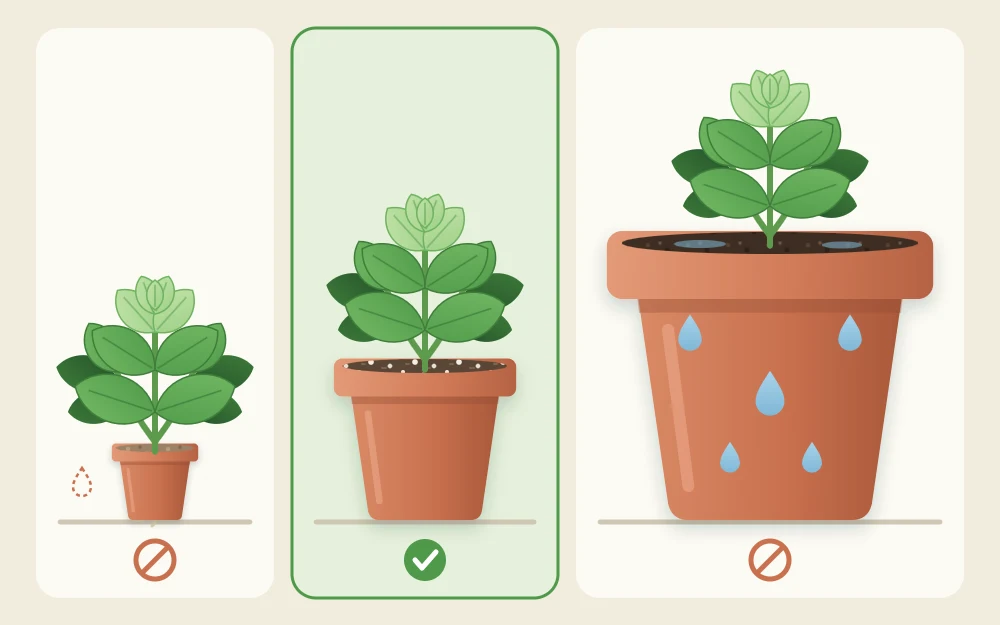
A good rule of thumb is to match the pot to the plant you have now and move up gradually. When roots circle the inside of the pot or grow out of the drainage hole, it is time for the next size. The guide on how to repot herbs shows the steps.
Depth matters for taprooted herbs
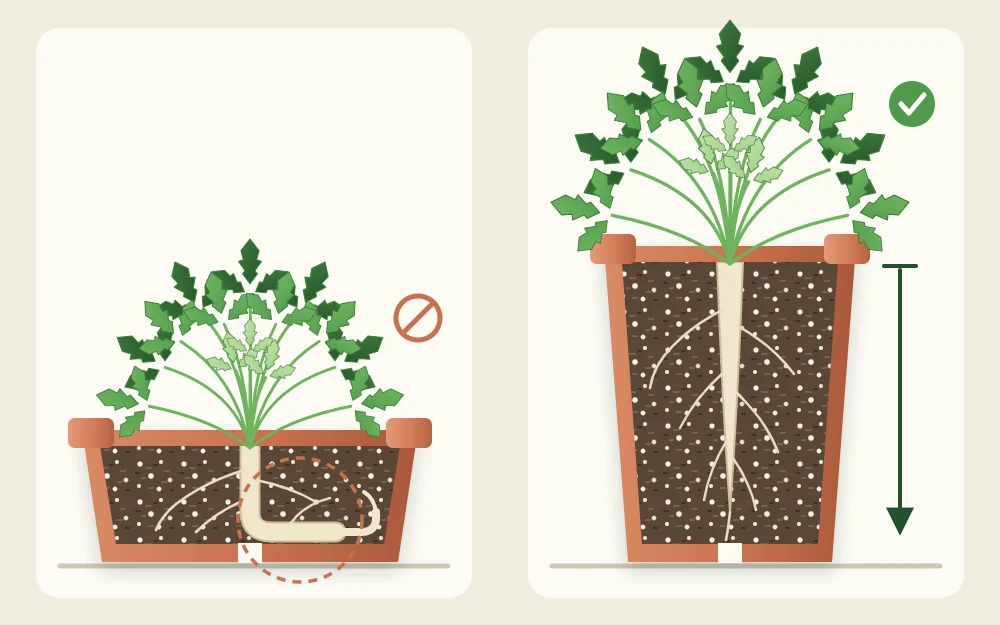
Most herbs have fibrous roots that spread through whatever shape of pot they are given. Parsley, cilantro and dill are different. Each grows a taproot, a main root that heads straight down, and in a shallow container it soon hits the bottom.
For these three, choose a pot that is deeper than it is wide, or at least as deep as a standard pot of its width. Avoid shallow bowls and low trays. Since cilantro and dill also dislike being transplanted, it helps to sow them directly in the deep pot where they will stay.
Pot materials compared
Material changes how fast a pot dries, and that is the main thing to match to the herb.
| Material | How it handles moisture | Suits | Keep in mind |
|---|---|---|---|
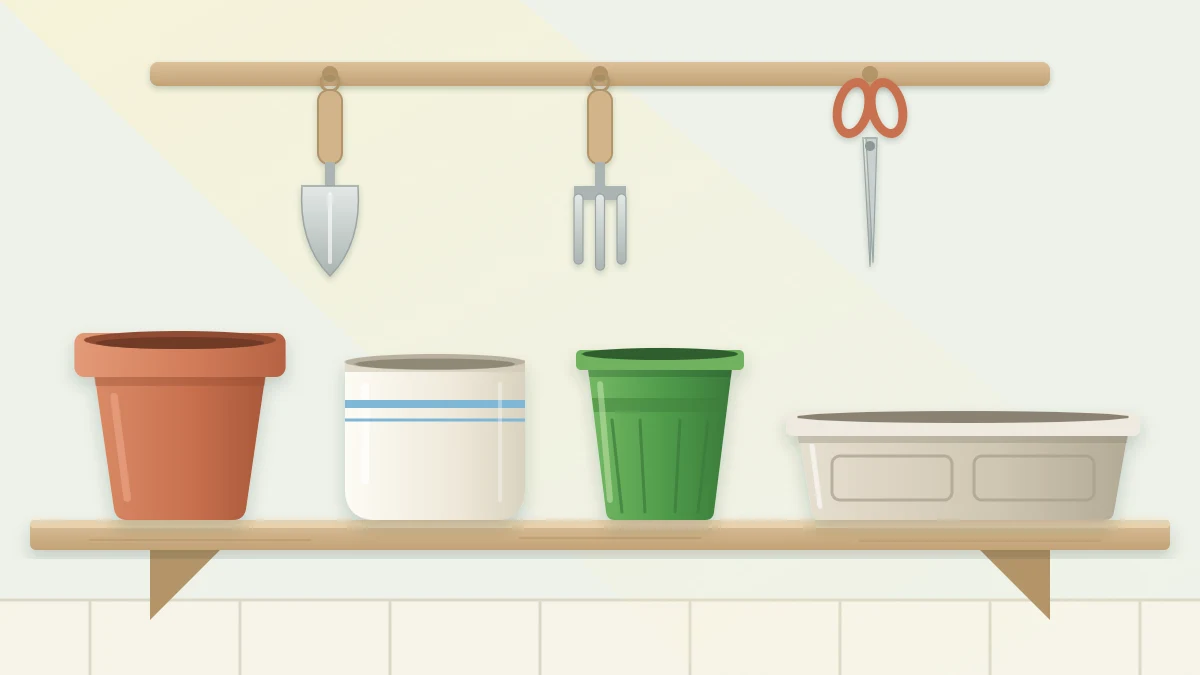
| Unglazed terracotta | Porous walls let moisture escape, so the mix dries faster | Thyme, rosemary, oregano | Heavier and breakable; needs checking more often in sun |
| Glazed ceramic | Holds moisture | Basil, parsley, mint | Heavy; confirm it has a drainage hole |
| Plastic | Holds moisture | Basil, parsley, mint | Light and inexpensive; can tip when a plant gets tall |
| Metal tins and wooden boxes | Depends on the container; often no way for water to leave | Use as an outer container | Need holes added or an inner pot that drains |
None of these is right or wrong. A dry-loving thyme can live in plastic if you let it dry well between waterings, and basil can live in terracotta if you check it more often. The table simply shows which pairings make your job easier.
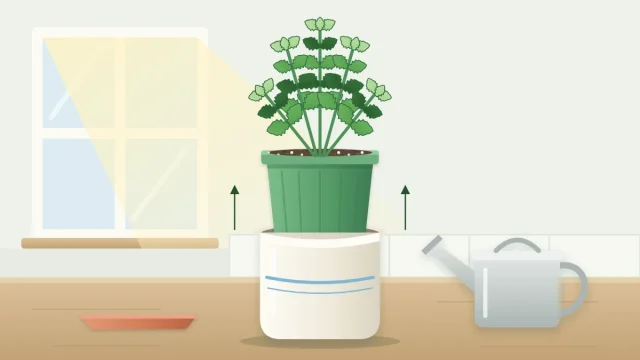
Metal tins and wooden boxes look good in a kitchen, but treat them as cachepots unless they have holes. Keep the herb in a plain pot that drains, set it inside, and lift it out to water or tip out any water that collects in the bottom.
Tip
The pot and the potting mix work together. A moisture-holding pot filled with a dense mix stays wet longest, and a terracotta pot with a free-draining mix dries fastest. See the guide to potting mix for indoor herbs to choose the other half of the pairing.
Shape and stability
A pot that is wider at the rim than at the base makes it easy to slide the root ball out when the time comes to repot. Pots that narrow at the neck look elegant but can trap a root ball, so they are better avoided for plants you will move up in size.
Think about balance as well. Taller herbs can become top-heavy, and a light pot on a narrow sill tips easily. A heavier pot or a wider base helps.
Window boxes and one-pot plantings
A long window box or a wide bowl can hold several herbs and makes good use of a sunny sill. The catch is that every plant in it gets the same watering, so only combine herbs with similar water needs.
- Basil and parsley both like evenly moist potting mix and can share.
- Thyme, oregano and sage all prefer the top of the mix to dry between waterings and can share.
- Keep mint on its own. Its runners spread through the whole container and crowd out its neighbors.
Window boxes need drainage holes along their length and a tray underneath, just as single pots need a saucer.
Are self-watering pots a good idea?
A self-watering pot has a reservoir in the base and a wick or channel that draws water up into the potting mix, keeping it steadily moist. That suits the moisture lovers, such as basil, parsley and mint, and it can help if you are away for a few days.
It does not suit the dry-loving herbs. Thyme, oregano, rosemary and sage want the top of the mix to dry between waterings, and a reservoir that keeps the mix constantly damp works against that.
Good to know
A self-watering pot still needs attention. Let the reservoir run empty now and then before refilling it, and check the potting mix with a finger from time to time, since it can stay wetter than you expect in a cool or dim room.
Frequently asked questions
What size pot is best for indoor herbs?
Many single herbs do well starting in a pot roughly 6 inches (15 cm) across. Rosemary, mint and mixed plantings need something larger. Avoid going far too big for a small plant, because the extra potting mix stays wet for a long time, and move up a size once roots fill the pot.
Is terracotta or plastic better for herbs?
It depends on the herb. Unglazed terracotta dries faster, which suits thyme, rosemary and oregano. Plastic and glazed ceramic hold moisture, which suits basil, parsley and mint. Either can work for any herb as long as the pot drains and you adjust how often you check the potting mix.
Can I grow herbs in a pot without a drainage hole?
It is much harder, because extra water has nowhere to go and collects around the roots. The simpler approach is to use the container as a cachepot: grow the herb in a plain pot with a hole, set it inside the decorative one, and tip out any water that gathers after watering.