Growing Basil Indoors: Light, Warmth and Pinching
Basil needs the brightest spot you have, steady warmth and regular pinching. Here is how to give it all three, start it from seed and keep a plant productive for months.
Basil is the herb most people try first and the one most people lose first. A pot comes home looking lush, and a few weeks later it is tall, thin and dropping leaves. The plant is not difficult, but it is particular: growing basil indoors goes well when you give it what a summer garden would, and poorly when you treat it like a houseplant.
Three things decide most of the outcome: light, warmth and regular pinching. Get those roughly right and a basil plant can keep you in leaves for months.
What kind of plant basil is
Basil is a tender, warm-season annual. In nature it grows fast in summer heat, flowers, sets seed and dies, all within one season. Indoors you can stretch that season, but you cannot turn basil into a long-lived plant.
This matters for your expectations. A healthy indoor basil plant lasts months, not years. When an older plant becomes woody, sparse and determined to flower, it has not been neglected; it is finishing its natural life. The practical answer is to start new plants now and then, so a young one is always coming along behind.
Light: the brightest spot you have
Basil needs more light than almost any other common kitchen herb. Around six or more hours of direct sun is the commonly suggested guide, which indoors usually means an unshaded south or southwest window in the Northern Hemisphere.
When light is short, basil becomes leggy: the stems stretch, the gaps between leaf pairs widen, and the leaves turn small and pale. If that describes your plant and the window is the best you have, a grow light above it is the usual fix. As a rough guide, herbs under a lamp are commonly given about 12 to 16 hours of light a day. The guide to light for indoor herbs covers windows and lamps in detail.
Warmth: keep it away from the cold
Basil likes the same steady warmth people do, and it dislikes cold more than most herbs. Chilly air, roughly below 50°F (10°C), can blacken the leaves, and the damage does not reverse.
Indoors, the cold usually comes from places you might not think about:
- a windowsill on a winter night, especially with leaves touching the glass;
- drafts from a door or an open window;
- a cold car or a walk home from the store in winter.
Good to know
On cold nights, move basil a little way back from the glass or onto a nearby counter, and return it to the window in the morning. A few steps can make a real difference in temperature.
Starting basil from seed
Basil is one of the easiest herbs to raise from seed, which makes re-sowing painless.
- Fill a small pot with moist potting mix and level the surface.
- Scatter a few seeds and cover them very shallowly with a thin layer of mix.
- Keep the pot warm and the mix evenly moist.
- Move the pot into bright light as soon as the seedlings appear.
In warm mix, basil often sprouts in about 5 to 10 days. Temperature, moisture, seed age and variety all change that, so treat the seed packet as your best guide. Seedlings open two rounded seed leaves first, then the first pair of true leaves, which look like small basil leaves. Once they have true leaves, thin them so the remaining plants have room.
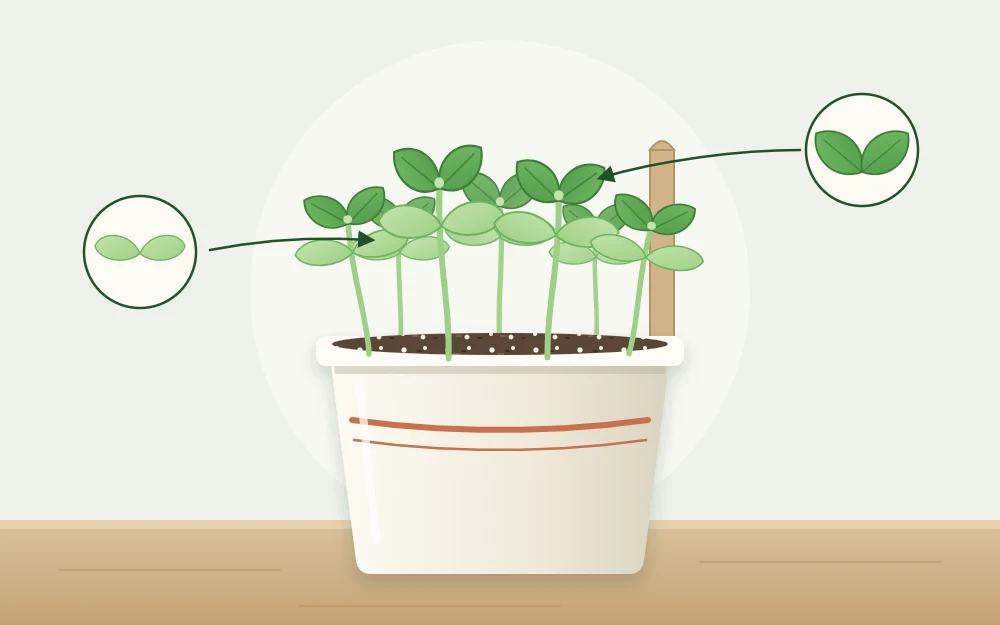
For the full method, see the guide to starting herbs from seed indoors. University of Maryland Extension’s page on growing basil has more detail on the plant in general.
Pot, potting mix and water
Use a pot with a drainage hole and ordinary bagged potting mix. Basil has a fairly large root system for its size, so a plant crammed into a tiny pot dries out fast and stalls. Moving a young plant into a pot a size or two larger often produces a visible burst of growth.
Basil wants evenly moist mix that is never soggy. Check with a finger and water when the top inch (2.5 cm) of the mix feels dry, then let the extra drain away and empty the saucer. How often that turns out to be depends on the pot, the season and the room, so check rather than count days. Water the mix rather than the leaves where you can.
A plant in fresh potting mix needs little feeding at first. Later, feed lightly during active growth, follow the product label, and feed less in winter.
Pinching and removing flower buds
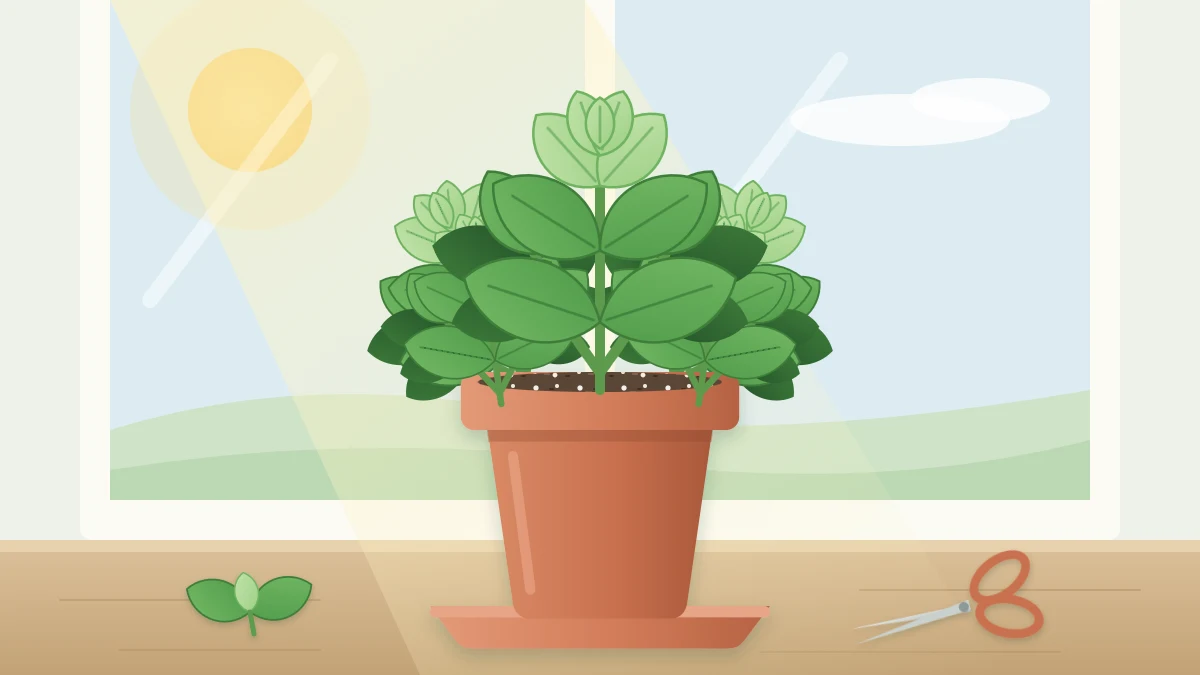
Left alone, basil grows as a single tall stem and then flowers. Pinching changes that. At the base of every leaf, where it joins the stem, sits a tiny shoot. When you remove the stem tip just above a pair of leaves, the two shoots at that leaf pair grow out, and one stem becomes two.
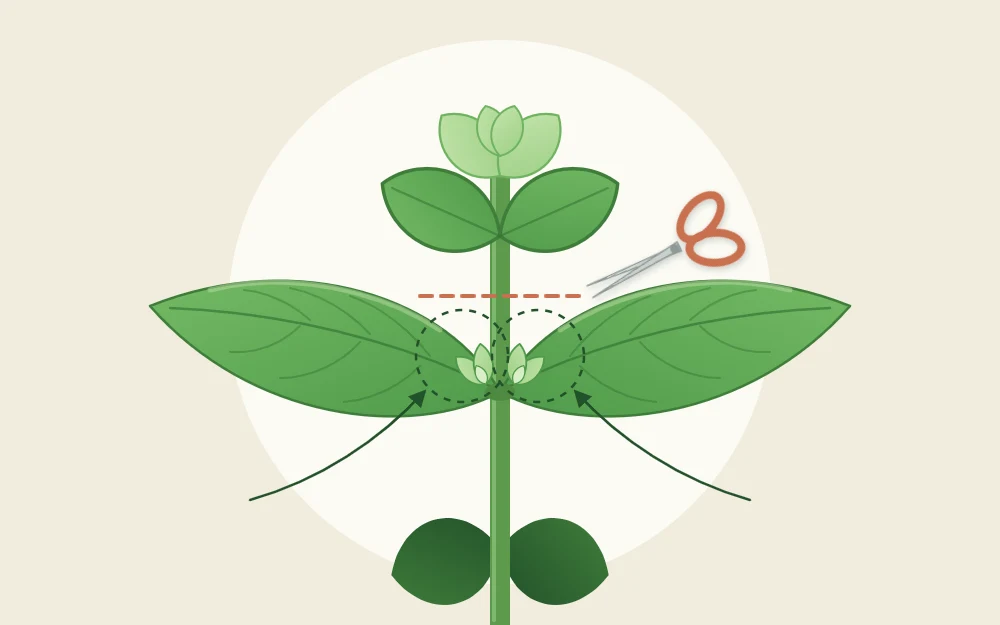
Start once the plant has several pairs of leaves, and repeat on the new stems as they grow. The pinched tips are your harvest. Also nip out flower buds as soon as you see them forming at the stem tips, since a basil plant that is allowed to flower puts less into new leaves. The guide on how to prune basil shows exactly where to cut.
Tip
Take whole stem tips rather than plucking single large leaves from low on the plant. Tip harvesting makes the plant bushier; leaf plucking leaves bare stems.
Common troubles in brief
Each of these has more than one possible cause, so check before you act.
- Leggy, pale growth. Often too little light. Compare the plant’s position with the brightest spot available, and consider a lamp.
- Wilting. Feel the mix. If it is dry, the plant commonly recovers within hours of watering. If it is wet, waterlogged mix is one possibility: check that the drainage hole is clear and the saucer is empty, and let the mix dry somewhat.
- Blackened leaves. Commonly cold damage, particularly after a cold night by the glass.
Basil and pets
The ASPCA entry for basil lists it as non-toxic to dogs and cats. That is not a reason to let a pet chew it, so keep the pot out of reach anyway and contact a veterinarian if a pet eats a plant and seems unwell.
Frequently asked questions
How long does a basil plant live indoors?
Basil is an annual, so even a well-kept indoor plant usually lasts months rather than years. Pinching stem tips and removing flower buds keeps it leafy for longer. For a steady supply, sow a new pot every so often so a young plant is ready when the old one fades.
Why does store-bought basil die so quickly?
Store pots usually hold many seedlings crowded into a small pot, raised in ideal light. At home they often face less light, cooler air and fast-drying mix. Dividing the clump into a few larger pots and giving them your brightest, warmest spot commonly helps them last.
Can basil grow indoors in winter?
It can, but winter is the hardest season for it. Days are short, window light is weak and sills get cold at night. A grow light and a spot away from cold glass and drafts make the biggest difference. Expect slower growth than in summer.