Grow Lights for Herbs: The Basics of Supplemental Light
A jargon-free guide to supplemental light for herbs: when a lamp helps, which types suit a home, how close to place it, how long to run it and how to read your plants.

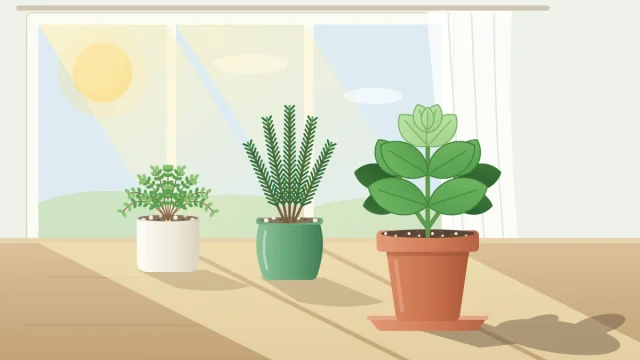
Some homes simply do not have a bright enough window. The only sill faces north, a neighboring building blocks the sun, or winter cuts the day short just when you want fresh leaves most. A lamp is the fix, and it is a simpler piece of equipment than the packaging tends to suggest.
This guide covers the ideas behind grow lights for herbs in plain terms: when a lamp is worth having, which kinds suit a home, how close to put one, how long to run it and how to tell from the plants whether you have it right. It deals in concepts, not products, so you can judge any fixture you come across.
When a lamp helps
Light is the usual limit on herbs indoors. If you have not yet worked out whether your window is enough by itself, start with the guide on how much light indoor herbs need. A lamp earns its keep in three common situations:
- North-facing or shaded windows. In the Northern Hemisphere, a north window rarely gives sun-loving herbs enough, and trees, buildings or deep overhangs can dim any window.
- Winter. Days are short and the sun is weak, so even a good window delivers far less.
- Seedlings. Young plants stretch quickly in poor light and are hard to rescue once they have.
A lamp can add to window light or replace it entirely, which also frees you to grow herbs on a counter or shelf away from the glass.
Types of lamp in plain terms
You do not need specialist knowledge to choose. Three kinds of bulb come up, and two of them are useful.
| Type | How it behaves | Use for herbs |
|---|---|---|
| LED | Runs cool and uses little electricity | A usual home choice |
| Fluorescent | Runs fairly cool; often long tubes | A usual home choice |
| Ordinary incandescent | Gives more heat than useful light | Poor choice |
LED and fluorescent fixtures run cool enough to sit close to leaves, which matters a great deal, as the next section explains. An ordinary incandescent bulb turns most of its energy into heat, so by the time it is close enough to help, it can scorch the plant.
Shape is a practical matter. A long bar or tube covers a row of pots evenly; a single bulb suits one or two.
White light is fine
Some fixtures glow purple or pink because they combine red and blue light. Herbs can grow under them, but you do not need that color. Lamps described as “full-spectrum” or plain white work well for herbs and are much easier on the eye in a kitchen or living room. Under white light you can also see the true color of the leaves, which makes it easier to notice yellowing or pests early.
Distance: closer than you expect
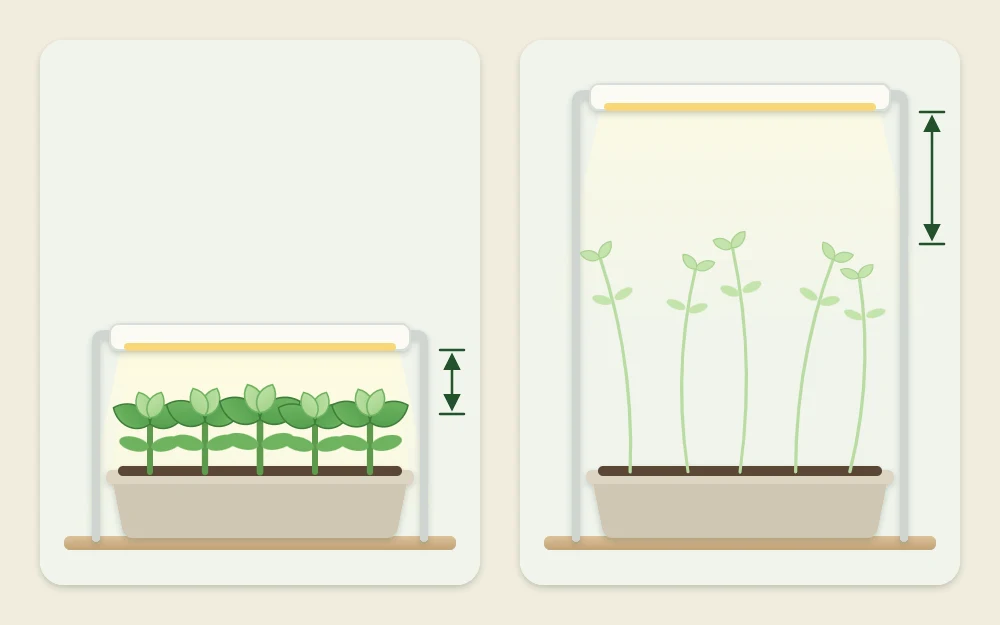
Light falls off quickly with distance. A lamp that looks bright to you from across the room delivers only a small part of its light to a plant a few feet below it. That is why grow lamps sit close: commonly a few inches to about a foot (30 cm) above the leaves, depending on the fixture.
The right distance for your lamp is the one its maker gives, so follow that guidance first. Then keep adjusting. Plants grow toward the lamp, and a gap that was right last month may now be too small. Raise the lamp, or lower the pots, as the herbs gain height. A fixture on an adjustable stand or chain makes this easy.
How long to leave it on
When a lamp is the main source of light, sources commonly suggest running it for roughly 12 to 16 hours a day. Treat that as a rough guide, not a rule. A lamp that only tops up a decent window can run for fewer hours, timed to extend the day in the morning or evening.
Plants also need darkness. Leaving a lamp on around the clock does not help, so give your herbs a dark period every night. Be aware, too, that long days encourage some herbs, cilantro among them, to bolt sooner.
A plug-in timer is the simplest way to keep the hours regular. Set it once and the lamp switches on and off at the same times each day, whether or not you are home. For more background, see University of Maryland Extension’s page on lighting for indoor plants.

Reading the plants
Your herbs will show you whether the setup is working. Look at them every few days and adjust one thing at a time.
- Stretching. Long, thin stems with wide gaps between the leaves, or plants leaning toward the lamp, commonly mean they want more light. Move the lamp closer, within the maker’s guidance, or lengthen its hours.
- Bleached or scorched tips. Pale, bleached or crisp patches on the leaves nearest the lamp often mean it is too close. Raise it a little.
- Compact, well-colored growth. Short gaps between leaf pairs and leaves of normal size and color suggest the balance is about right.
Good to know
These signs have other possible causes. Pale leaves can also come from watering or feeding problems, and crisp edges from dry air or a dry pot. Check the potting mix and the room before blaming the lamp alone.
Practical setup notes
A few habits keep a lamp useful and trouble-free:
- Keep fixtures, plugs and timers away from splashes, and water pots carefully or move them to the sink.
- Expect the mix to dry faster under a lamp than it did in a dim corner, and keep checking it by touch.
- Wipe dust from the fixture now and then, since a dusty lamp gives less light.
- Follow the maker’s instructions for mounting and ventilation.
Where a lamp matters most
Two moments reward a lamp more than any other. The first is seed starting: seedlings need strong light from the day they emerge, and a lamp close above the tray is the most reliable way to give it, as described in the guide to starting herbs from seed indoors.
The second is the dark part of the year. A lamp cannot turn December into June, but it can keep sun lovers such as basil, thyme and rosemary growing instead of merely hanging on. The guide to growing herbs indoors in winter covers the other seasonal changes, including watering and cold windows.
Frequently asked questions
Do I need a purple grow light for herbs?
No. Purple or pink fixtures combine red and blue light, and herbs can grow under them, but white or full-spectrum lamps work well too. White light is easier to live with in a kitchen and shows the true color of the leaves, which helps you notice yellowing or pests sooner.
How close should a grow light be to herbs?
Closer than most people expect, because light falls off quickly with distance. Lamps commonly sit a few inches to about a foot above the leaves, depending on the fixture. Follow the maker's guidance, raise the lamp as plants grow, and move it up if the nearest leaves start to look bleached.
How many hours a day should a grow light stay on?
When a lamp is the main light, roughly 12 to 16 hours a day is commonly suggested as a rough guide. A lamp that only supplements a window can run for less. Herbs need a dark period each night, so avoid leaving it on constantly; a plug-in timer keeps the routine steady.