Indoor Herb Problems: A Symptom-by-Symptom Guide
A symptom table for struggling indoor herbs, with the common possible causes of each and a short checking routine to work out which one applies.
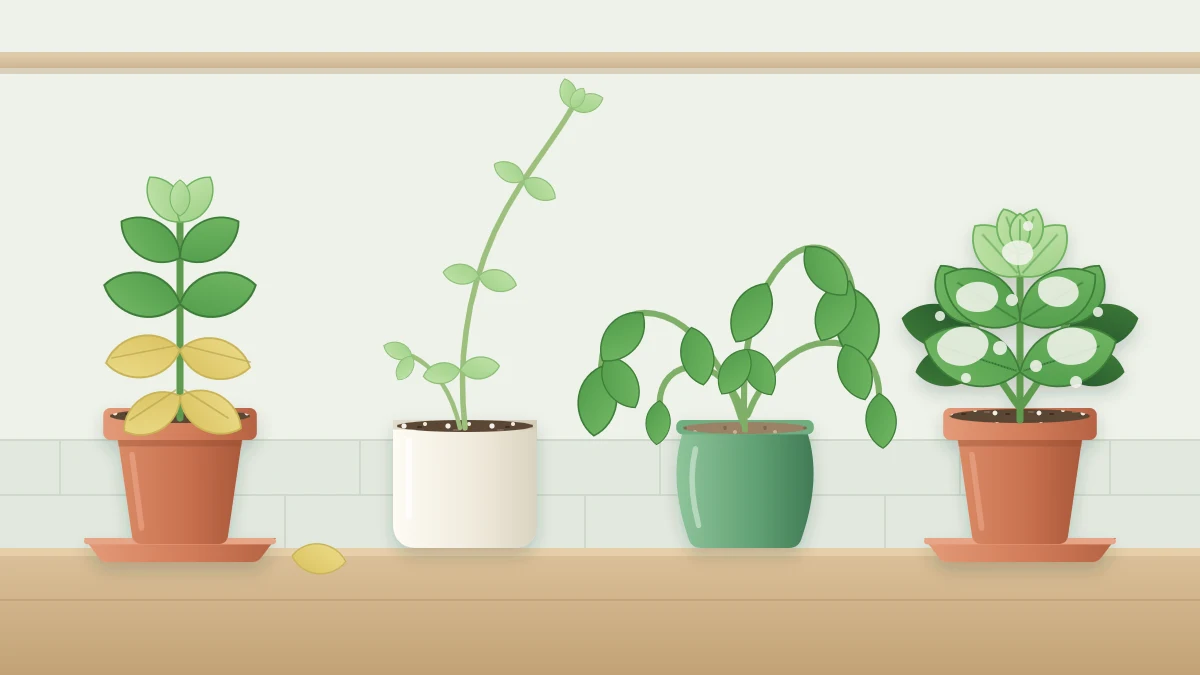
A herb that looked fine last week now has yellow leaves, or a droop, or a strange dusty coating. Most indoor herb problems show up as one of a small set of symptoms, and each of those symptoms has more than one possible cause. That is why guessing from a single leaf so often leads to the wrong fix.
Use this page as a starting point. The table matches what you see to the usual suspects and tells you what to check first. The routine that follows helps you narrow it down before you change anything.
Symptoms, possible causes and first checks
| What you see | Common possible causes | Check first |
|---|---|---|
| Long, weak, leaning stems | Too little light; sometimes crowding or excess warmth | Distance from the window and hours of sun |
| Yellowing lower leaves | Mix kept too wet, low light, a root-bound plant, hunger, or normal aging | Moisture an inch down; roots at the drainage hole |
| Wilting with wet mix | Roots short of air or rotting; blocked drainage | Drainage hole, saucer, smell and color of roots |
| Wilting with dry mix | Thirst; a root-bound pot that dries fast | Pot weight; gap between mix and pot wall |
| Brown, crispy tips or edges | Drying out, hot dry air near a vent, fertilizer buildup | Nearby heat sources; recent feeding |
| Dark patches on basil | Cold: chilly glass, a draft or a cold trip home | Night temperature at the window |
| White powdery coating | Often powdery mildew | Spacing and air movement around the plant |
| Tiny flies around the soil | Often fungus gnats in constantly wet mix | How long the surface stays damp |
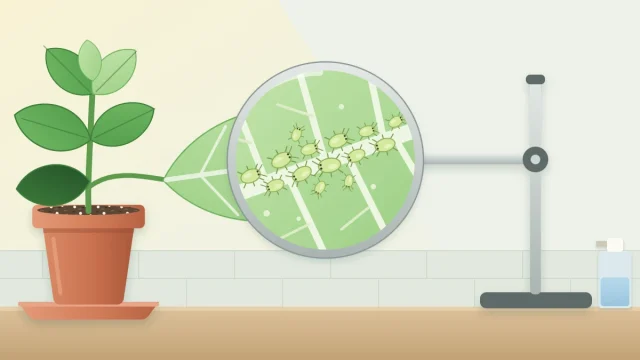
| Sticky leaves or clusters of small insects | Sap-feeding pests such as aphids or whiteflies | Stem tips and the undersides of leaves |
| Sudden flowering | Bolting, from maturity, warmth, day length or stress | Which herb it is and its age |
The middle column lists possibilities, not a verdict.
A short checking routine
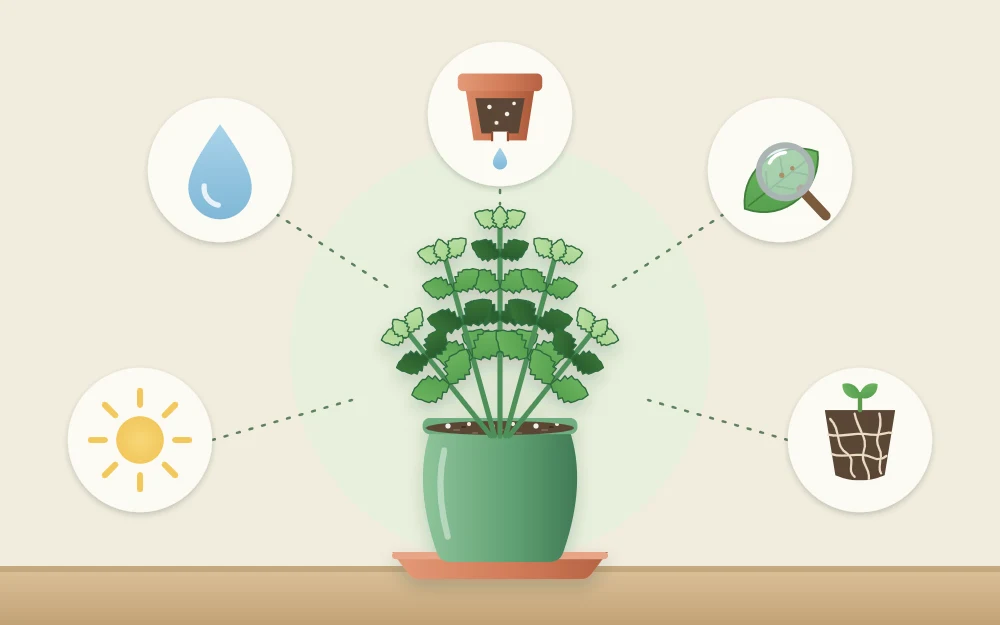
Before you water, feed, repot or move anything, spend five minutes going through these in order.
- Light. Where does the pot sit, and how many hours of direct sun reach it? Has the season changed since it last grew well?
- Moisture at depth. Push a finger about an inch (2.5 cm) into the mix. The surface can be dry while the mix beneath is wet.
- Drainage hole and saucer. Is there a hole, is it clear, and is water standing in the saucer or cachepot?
- Under the leaves. Turn several leaves over and look closely at the stem tips for insects, webbing or residue.
- Roots. Slide the plant out of its pot. Pale, firm roots are a good sign. Brown, soft roots with a sour smell point to mix that has stayed too wet. A dense mat circling the pot means it is root-bound.
- Recent changes. A move, a repotting, a cold night, new heating or a change in how you water can all show up a week or two later.
Wilting: check the mix before you water
Wilting is the symptom most often misread. A drooping plant looks thirsty, so the natural response is more water. If the mix is already wet, that makes things worse, because roots that sit in saturated mix cannot take up water properly and the plant wilts anyway.
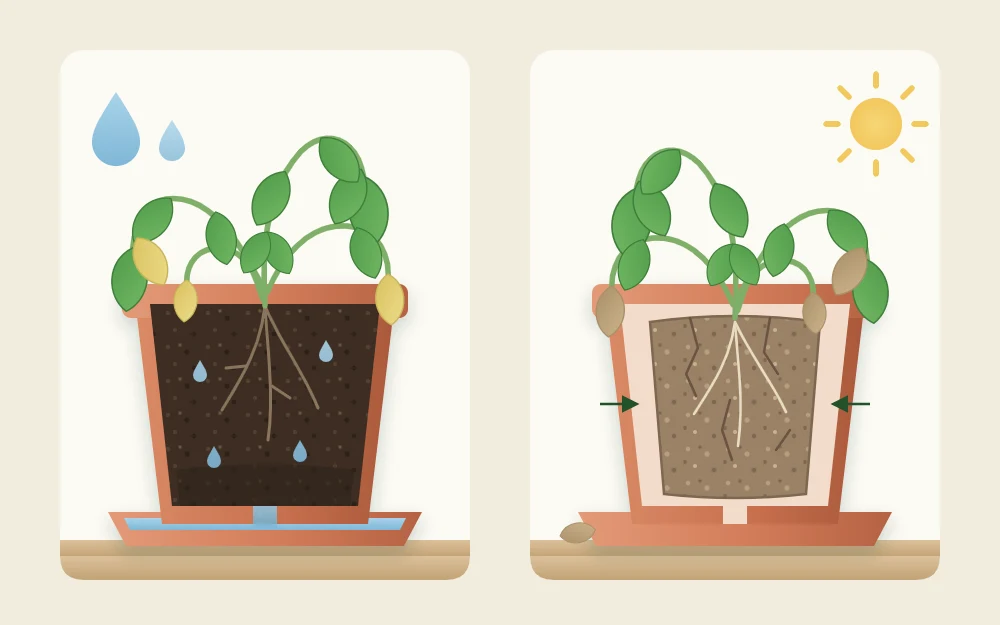
If the mix is dry and the pot feels light, water thoroughly and the plant will often perk up within hours. If the mix is wet, empty the saucer, make sure the hole is clear and let the pot dry before watering again. The guide on how to water indoor herbs covers both situations.
Leggy stems and yellow leaves
Long, pale, leaning stems are most commonly a response to low light. The plant stretches toward the brightest source it can find. Moving it closer to the glass or adding a lamp helps new growth come in more compact, although stems that have already stretched will not shorten. See the guide to light for indoor herbs for how to judge a window.
Yellow lower leaves have the longest list of causes. Wet mix and low light are the two to rule out first. Keep in mind that some lower-leaf loss is normal: as a herb grows, it sheds its oldest leaves, particularly where they are shaded by newer growth. A few yellow leaves at the base of an otherwise healthy plant are rarely worth worrying about.
Tip
Look at the new growth. If the youngest leaves are a good color and a normal size, the plant is usually coping, whatever the old leaves are doing.
Brown edges and dark patches
Crispy brown tips often follow a spell of drying out or a position in a stream of hot, dry air. Check for a heat vent or radiator close by.
Dark, water-soaked or blackened patches on basil commonly appear after cold. Basil is tender, and leaves touching cold glass or sitting in a winter draft can be damaged in one night. Remove the damaged leaves and move the pot somewhere warmer.
White powdery coating
A white or gray dusting that looks like flour on the leaf surface is often powdery mildew, a fungal problem that tends to develop where plants are crowded and the air is still. The first steps are physical: remove the affected leaves, give the plant more space and improve airflow around it. For more detail, see University of Maryland Extension’s page on powdery mildew on indoor plants.
Insects and sudden flowering
Tiny flies rising from the soil, sticky leaves and clusters of small insects each call for a closer look at what is actually living on the plant. Identification and first steps are in the guide to pests on indoor herbs.
Sudden flowering is bolting, the plant’s shift from leaves to seed. It is a natural stage, not an illness, and what you can do depends on the herb.
Good to know
One symptom rarely has one cause, and two causes often overlap: a herb in dim light also dries slowly, so it ends up both stretched and too wet. Fix the most likely cause, then give the plant a week or two before judging the result.
When the same trouble keeps returning
If each new plant ends up with the same symptoms, the cause is probably in the setup and not in the plant. The list of common indoor herb gardening mistakes is a useful way to review your pots, potting mix, light and watering habits as a whole.
Frequently asked questions
Why are the leaves on indoor herbs turning yellow?
There are several possibilities. Potting mix that stays wet and too little light are the most common, followed by a root-bound pot or a plant that has used up what the mix offered. Old lower leaves also yellow and drop naturally. Check moisture an inch down, the drainage hole and the roots before deciding.
Should I water a wilting herb straight away?
Only after feeling the mix. If it is dry and the pot is light, a thorough watering is the right response. If the mix is already wet, more water will make things worse. Empty the saucer, check that the drainage hole is clear and let the pot dry out first.
Can a struggling herb recover?
Often it can, if the cause is corrected and the plant still has firm roots and some healthy new growth. Recovery shows in the new leaves, not the damaged ones, so allow a week or two. A short-lived annual such as basil or cilantro that is badly weakened is sometimes easier to replace.