Growing Oregano Indoors: Sun, Drainage and Regular Trimming
Oregano thrives on a sunny sill when it has direct light, a fast-draining mix and a regular trim. Learn how to start it, water it by checking the mix and keep it dense instead of rangy.

Oregano earns its place on a sunny sill. It is a vigorous plant that keeps sending out new stems, and a single pot can give you sprigs for the kitchen through much of the year, as long as it gets enough sun and is not kept wet.
The basics of growing oregano indoors fit in one sentence: strong direct light, a mix that drains quickly, water only after the top of the pot has dried, and a regular trim. The rest of this guide fills in the detail, including the one thing oregano does that surprises new growers, which is how fast it turns rangy when nobody cuts it.
Getting to know the plant
Oregano is a spreading Mediterranean perennial. It has soft oval leaves set in pairs along square stems, and it widens over time as stems creep outward and root where they touch the mix. Older stems become semi-woody toward the base.
Like its relatives from the same dry, sunny region, it is adapted to bright light and lean, well-drained ground. It tolerates a missed watering far better than it tolerates wet roots.
Sweet marjoram is a close relative with a milder, sweeter flavor. It is cared for in much the same way but is more tender, so it is quicker to suffer from cold drafts and chilly windowsills.
Light comes first
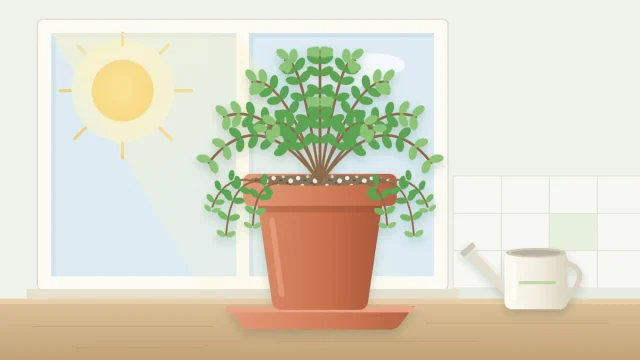
Give oregano bright, direct light. In the Northern Hemisphere a south- or southwest-facing window is usually the best place, and around six or more hours of direct sun is the commonly quoted rough guide for sun-loving herbs.
In weaker light the plant survives but changes character: stems stretch, the gaps between leaf pairs lengthen and the leaves come in smaller and paler. If you are not sure your window is up to the job, the guide on how much light indoor herbs need shows simple ways to judge it. Turn the pot regularly so growth stays even.
Pot and potting mix
Choose a pot with a drainage hole and set it on a saucer. Oregano spreads sideways more than it roots deeply, so a pot that is a little wider than it is tall suits it well. Terracotta is a helpful choice because it lets the mix dry faster.
Use a free-draining potting mix. Blending in some perlite or coarse sand opens up a standard mix so water passes through quickly. Avoid heavy, moisture-holding blends and never use a pot without drainage; a cachepot is fine as long as you tip out any water that collects in it.
Watering
Water once the top of the mix has dried. Test with a finger about an inch (2.5 cm) down, or lift the pot and learn how light it feels when dry. Then water thoroughly, let it drain and empty the saucer.
How long that takes varies with pot size, pot material, light, temperature and season, so there is no schedule worth memorizing. Expect the gaps between waterings to lengthen noticeably in winter, when growth slows and the mix dries more slowly.
Feed sparingly. Oregano does not need rich conditions; if you fertilize, follow the product label, feed lightly and feed less in winter.
Plant, division, cutting or seed?
For a pot whose flavor you already know, start from a nursery plant, a division or a stem cutting. All three are copies of the parent, so what you taste before you take the cutting is what you will grow.
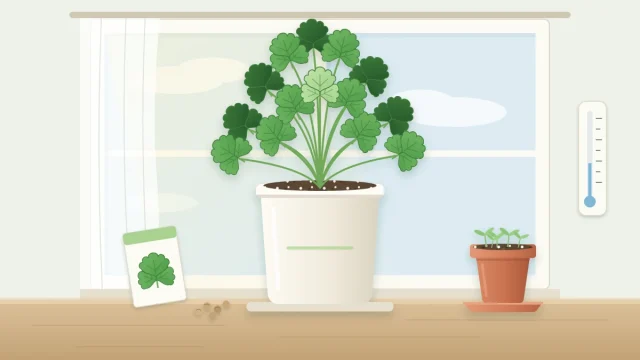
Seed is cheaper but less predictable, because flavor varies between plants raised from seed. Some seedlings turn out pungent and others quite mild. If you sow, keep these points in mind:
- The seed is tiny and needs light to germinate, so press it onto the surface of moist mix and do not bury it.
- Keep the surface evenly moist with a fine spray or by watering from below, so the seed is not washed away.
- It often sprouts in about one to two weeks, though temperature, moisture, seed age and variety change that. The seed packet is the best guide.
- Once seedlings are large enough to handle, thin them and keep the ones whose scent you like best when a leaf is gently rubbed.
Trim often to keep it dense
This is the step that separates a tidy mound from a tangle. Left alone, oregano sends out long stems that flop over the rim, with leaves spaced far apart. Trimming changes that. Snip stem tips just above a leaf pair and the plant usually responds by branching from the buds at that node, so each cut stem becomes two.
Do it little and often rather than in one hard cut. Work around the whole plant, shortening the longest stems first, and leave plenty of leaves behind so it can keep growing. If flower buds form at the stem tips, pinch them off when you want the plant to keep putting its effort into leaves.

Every trim is also a harvest. For how much to take at one time and where to cut different kinds of herbs, see the guide on how to harvest herbs without weakening the plant. Rinse sprigs just before using them.
Good to know
The ASPCA lists oregano as toxic to dogs, cats and horses, noting mild stomach upset; details are in the ASPCA entry for oregano. Keep the pot where pets cannot reach it, and contact a veterinarian if a pet eats the plant.
Common troubles and what to check
Most oregano problems indoors trace back to light or water, but one symptom alone will not tell you which.
- Long, sparse stems: often too little light, sometimes simply a lack of trimming. Check how many hours of direct sun the pot really gets, then cut back the tips.
- Yellowing lower leaves: commonly mix that stays wet, though crowding and age can do it too. Feel the mix and check that the drainage hole is clear.
- Limp growth: one possibility is a dry pot, another is damaged roots in soggy mix. The moisture check tells them apart.
Companions on the same sill
Oregano is easiest to look after next to herbs with the same habits. Thyme wants the same strong sun, free-draining mix and drying-out between waterings, so the two can share a windowsill and a routine; the guide to growing thyme indoors covers its small differences. Keep each herb in its own pot, though, since oregano spreads and will crowd a slower neighbor.
Frequently asked questions
Should I grow oregano from seed or buy a plant?
A nursery plant, division or stem cutting gives you a known flavor, because each is a copy of its parent. Seed is inexpensive but flavor varies from one seedling to the next. If you sow, press the tiny seed onto the surface of moist mix without burying it, since it needs light to germinate.
Why is my indoor oregano long and straggly?
Two things commonly cause it: too little direct light and too little trimming. Check how much sun the pot really receives and move it to a brighter window or add a lamp if needed. Then snip the stem tips just above a leaf pair, a little at a time, so the plant branches and fills in.
How do I know when to water oregano in a pot?
Check rather than follow a calendar. Push a finger about an inch into the potting mix and water only when that layer has dried, then let the pot drain and empty the saucer. Drying time changes with pot size and material, light, temperature and season, and it lengthens in winter.