Growing Thyme Indoors: Bright Light and a Light Hand With Water
Thyme indoors is usually lost to wet potting mix, not neglect. This guide covers the bright light, free-draining mix, terracotta pot and careful watering it needs, plus how to trim it without cutting into old wood.
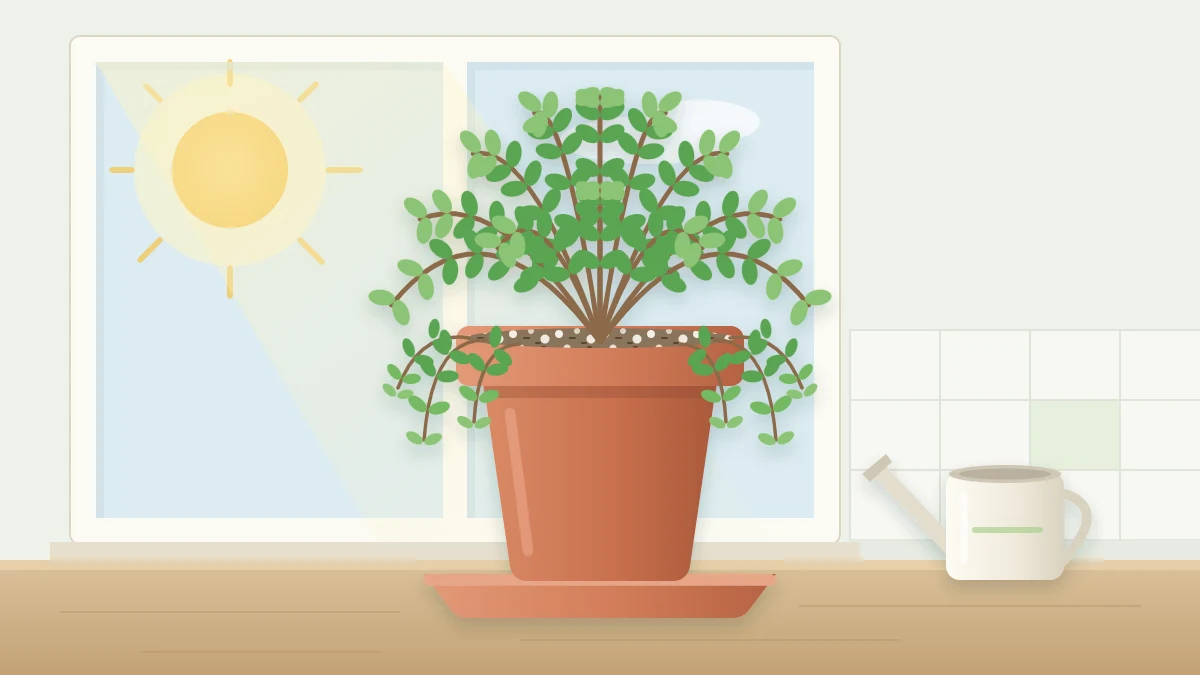
Thyme looks delicate, with its wiry stems and tiny leaves, but it is a tough little shrub from dry, sunny hillsides around the Mediterranean. Indoors, it rarely dies from neglect. It far more often dies from kindness: a pot that never dries, a rich heavy mix and a spot that is a bit too dim.
So growing thyme indoors is mostly a matter of holding back. Give it the brightest place you have, a mix that drains fast and water only when the top of the pot has dried, and it can stay compact and useful for a long time.
What kind of plant thyme is
Thyme is a low, woody perennial. The stems start out soft and green at the tips and turn brown and woody toward the base as they age. The leaves are small, which is one reason the plant copes with dry spells better than leafy herbs such as basil or parsley.
That background explains its needs. Thyme is built for strong sun, lean gritty ground and roots that never sit in water for long. A pot indoors should copy those conditions as closely as it can.
Give it your brightest spot
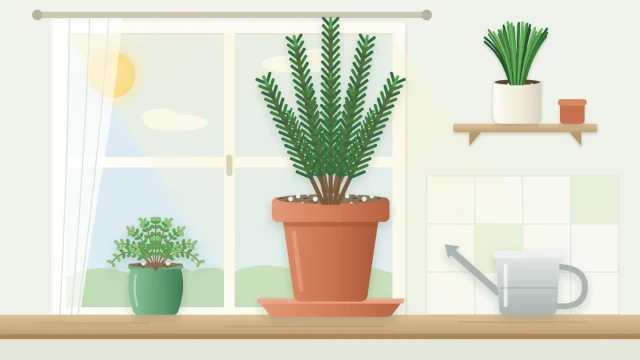
Thyme belongs with the sun lovers. Put it in the brightest window you have; in the Northern Hemisphere that is usually a south- or southwest-facing one. As a rough guide, extension sources commonly suggest around six or more hours of direct sun for herbs like this.
If the stems grow long and thin with wide gaps between the leaves, low light is one likely reason, especially in winter. Moving the pot closer to the glass or adding a grow light above it often helps. Turn the pot now and then so all sides get their share.
A free-draining mix and a pot that dries
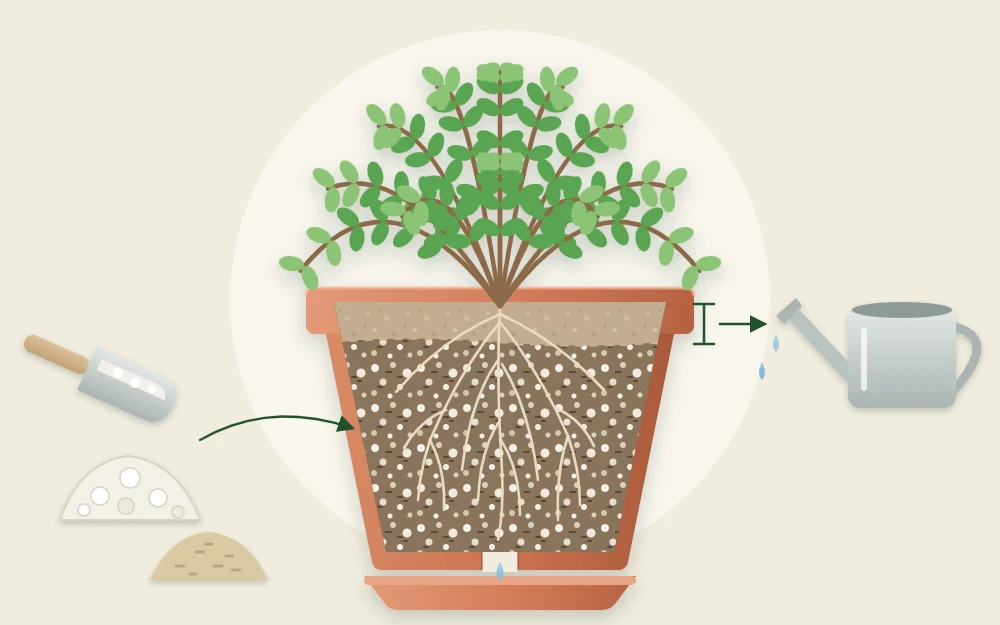
Ordinary potting mix holds more water than thyme wants. Open it up by blending in perlite or coarse sand so that water runs through quickly and air stays around the roots. The guide to potting soil for indoor herbs explains what goes into a free-draining blend and why garden soil is a poor choice in pots.
The pot matters too. Terracotta is a good match because the clay is porous and lets moisture escape through the sides, so the mix dries more readily than it does in plastic or glazed ceramic. Whatever you choose, it needs a drainage hole. Keep the pot modest in size: a small plant in a large pot is surrounded by wet mix it cannot use.
Water with a light hand
Let the top of the mix dry before you water again. Push a finger about an inch (2.5 cm) into the pot: if it still feels cool and damp, wait. When it feels dry, water thoroughly until some runs out of the drainage hole, then empty the saucer so the pot is not standing in water.
There is no fixed timetable for this. A small terracotta pot in a sunny window might dry within a day or two in summer, while the same pot can stay moist for a week or more in a dim winter room. Checking tells you far more than the calendar does, and the guide to watering indoor herbs walks through the checks in full.
Good to know
Wilting does not always call for more water. Thyme with rotting roots can droop and brown in mix that is still wet. Feel the mix before you reach for the watering can; if it is damp, let it dry and look at drainage and light instead.
Air around the plant
Thyme likes moving air. Dense growth packed tightly among other pots in a still, humid corner stays damp for longer, which commonly leads to trouble. Leave a little space around the pot, and thin out any dead or matted stems in the center so air can pass through the plant.
How to start a pot of thyme
The easiest way is to buy a young nursery plant and move it into a free-draining mix. A cutting from a soft green stem or a division of an established clump also gives you a usable plant far sooner than seed.
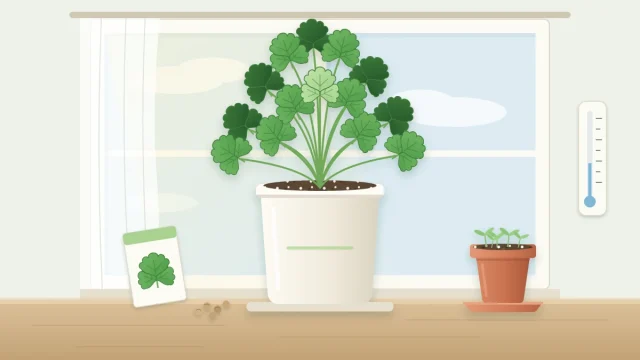
Seed is possible, but it asks for patience. Thyme seed is tiny, so it is sown on the surface of moist mix and left uncovered or barely covered. It is slow, often taking two to three weeks to sprout, and the seedlings stay small for a good while afterward. Temperature, moisture, seed age and variety all shift that range, so treat the seed packet as your best guide.
Harvesting and trimming
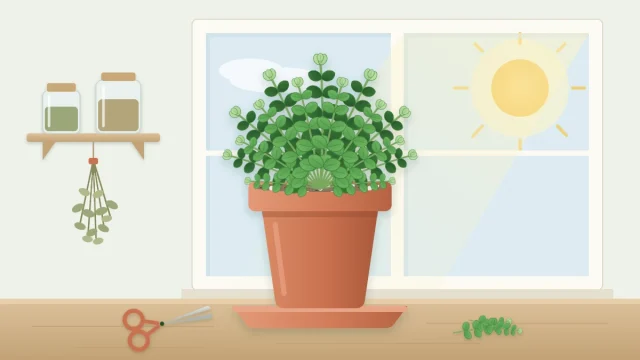
Harvest by snipping the soft green tips. Cut just above a pair of leaves on the green part of the stem, and new shoots will usually branch from below the cut. Avoid cutting down into the old, bare, brown wood near the base, because those leafless sections often do not sprout again.
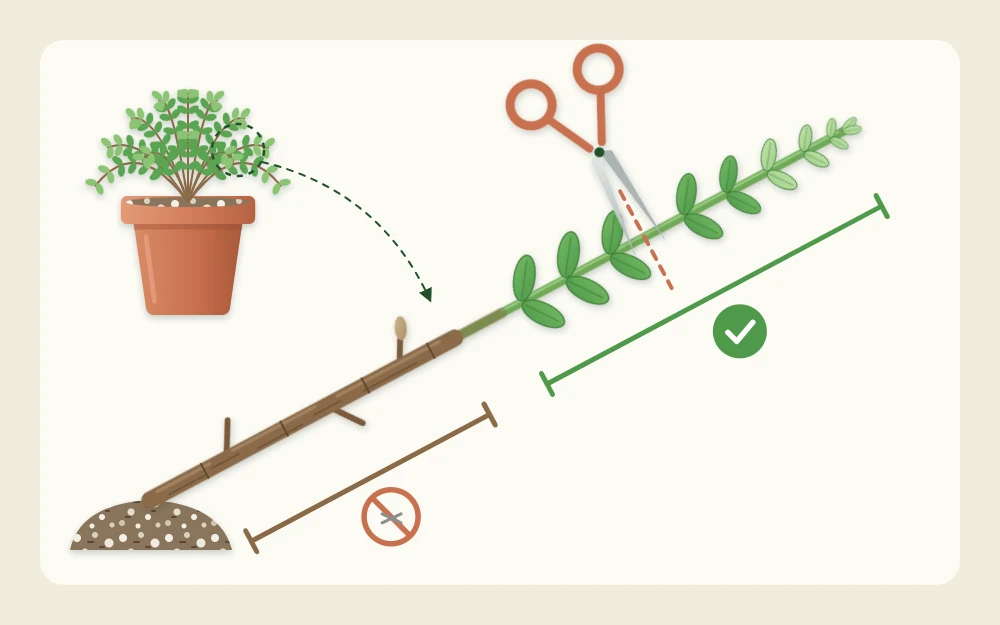
Regular light trimming does two jobs at once. It gives you sprigs for the kitchen and it keeps the plant compact, since each trimmed stem tends to branch. Take a little from all over the plant rather than shearing one side, and never remove so much that only bare stems remain.
If the plant has stretched over winter, tidy it gradually once stronger light returns, shortening the green growth a bit at a time.
Thyme, oregano and pets
Thyme shares its tastes with the other Mediterranean herbs, so it sits happily on the same bright sill and follows the same watering rhythm as oregano. If you would like a companion pot, the care in the guide to growing oregano indoors will feel familiar.
For households with animals, the ASPCA lists thyme as non-toxic to dogs, cats and horses, as shown in the ASPCA entry for thyme. A pet still should not be chewing on the plant, so keep the pot out of reach and contact a veterinarian if a pet eats a plant and seems unwell.
Frequently asked questions
Why does my indoor thyme keep dying?
Wet potting mix is the most common reason indoors, but it is not the only one. Thyme also declines in dim light or after a long dry spell. Feel the mix an inch down, check that the pot drains freely and look at how much direct sun it gets before changing anything.
Is it better to grow thyme from seed or from a plant?
A nursery plant, a cutting or a division is the easier route. Thyme seed is tiny, is sown on the surface and is slow, often taking two to three weeks to sprout and growing slowly after that. Seed works if you are patient, and the packet gives the best guidance for your variety.
Where should I cut thyme when I harvest it?
Snip the soft green tips, cutting just above a pair of leaves on the green part of the stem. New shoots usually branch from below the cut. Avoid cutting into the bare brown wood near the base, because those older leafless sections often do not produce new growth.