Growing Cilantro Indoors: Sow Often, Keep It Cool
Cilantro is a short-lived, cool-season herb that flowers quickly in warmth. Learn how to sow it in place, keep it cool and bright, and re-sow pots so there are always fresh leaves to cut.
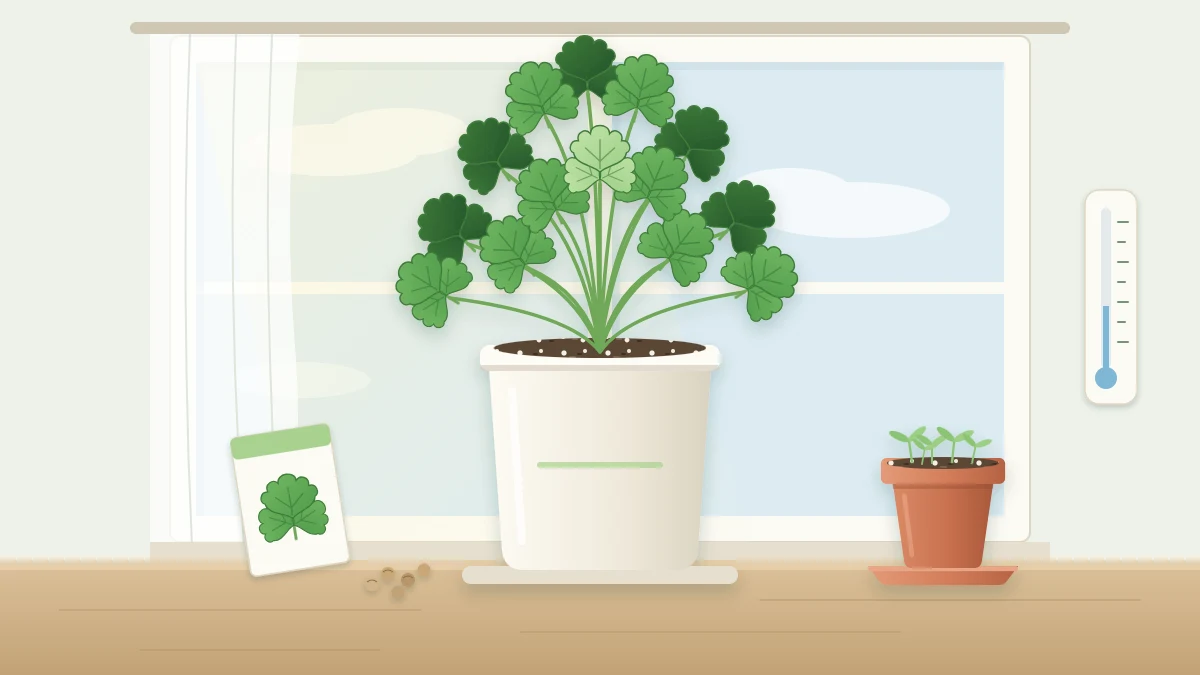
Cilantro has a reputation for being difficult, and most of that reputation comes from one habit: a pot looks lush for a few weeks, then sends up a thin stalk, flowers and stops making the leaves you wanted. If that has happened to you, the plant was not sick and you did not do anything unusual. It was simply being cilantro.
The trick to growing cilantro indoors is to stop treating it like a long-lived houseplant. It is a short-lived, cool-season annual, so the plan that works is to keep it cool, give it bright light, and sow a fresh pot regularly so a young one is always coming along behind the old one.
Why cilantro is short-lived
Cilantro grows leaves for a while, then switches to making flowers and seed. That switch is called bolting, and in cilantro it is pushed along by warmth and long days. Once it starts, the stems lengthen, the new leaves turn fine and feathery, and leaf production drops.
A warm room, a hot windowsill in summer and a lamp left on for very long hours can all bring bolting on sooner. So can stress, such as a cramped pot or mix that has dried out hard. The guide to why herbs bolt and what you can do about it covers the triggers in more depth.
The honest limit is this: you can delay bolting, but you cannot switch it off. Cutting the flower stalk away rarely brings back leafy growth for long. Planning for a short harvest from each pot is far less frustrating than fighting to keep one plant going.

Sow it where it will stay
Cilantro grows a taproot, a single main root that heads straight down and dislikes being disturbed. Seedlings that are lifted and moved often sulk or bolt early. For that reason, sow the seed directly in the pot the plants will live in rather than starting them in a tray.
A deeper pot gives that root room. Something around 6 to 8 in (15 to 20 cm) deep is a reasonable starting point, and it must have a drainage hole with a saucer underneath. Fill it with fresh potting mix and moisten the mix before you sow.
Each round “seed” in the packet is really a small dry fruit that holds two seeds, so one of them can give you two seedlings. Sowing goes like this:
- Scatter the seed fairly thickly over the surface, leaving a little space between each one.
- Cover lightly with mix, following the depth given on the seed packet.
- Water gently so the seed is not washed into one corner.
- Keep the mix evenly moist, not soaked, until sprouts appear.
Cilantro often sprouts in about one to two weeks. Temperature, moisture, seed age and variety all change that, and the seed packet is the best guide. If you are looking at bare mix and wondering whether to wait, compare your pot with the ranges in the herb seed germination guide. For the general sowing method, including covering pots to hold moisture, see the step-by-step guide to starting herbs from seed indoors.
Light and temperature
Give cilantro bright light. A sunny window works well in the cooler months, and a lamp can fill in where the window is dim. Seedlings that lean hard toward the glass and grow long, weak stems are often short of light, so move the pot closer to the window or turn it regularly.
Temperature matters as much as light. Cilantro prefers a cooler room than basil does, and it tends to do better in a spot that stays on the cool side of comfortable than on a sill above a radiator or beside the stove. In summer, a bright window that misses the hottest afternoon sun is often a kinder place than a baking south-facing one (window directions here assume the Northern Hemisphere).
Tip
Seed packets sometimes describe a variety as slow to bolt. These varieties still flower in the end, but they are worth choosing for a warm home because they usually give you a longer run of leaves first.
Watering
Cilantro likes evenly moist potting mix. Letting it dry out completely is a stress that can hurry bolting, while mix that stays soggy can rot the roots. Check with a finger about an inch (2.5 cm) into the mix and water when that top layer feels dry, letting the extra drain into the saucer and emptying it afterward.
How often that turns out to be depends on the pot, the room and the season, so let the check decide rather than the calendar.
Sow a new pot regularly
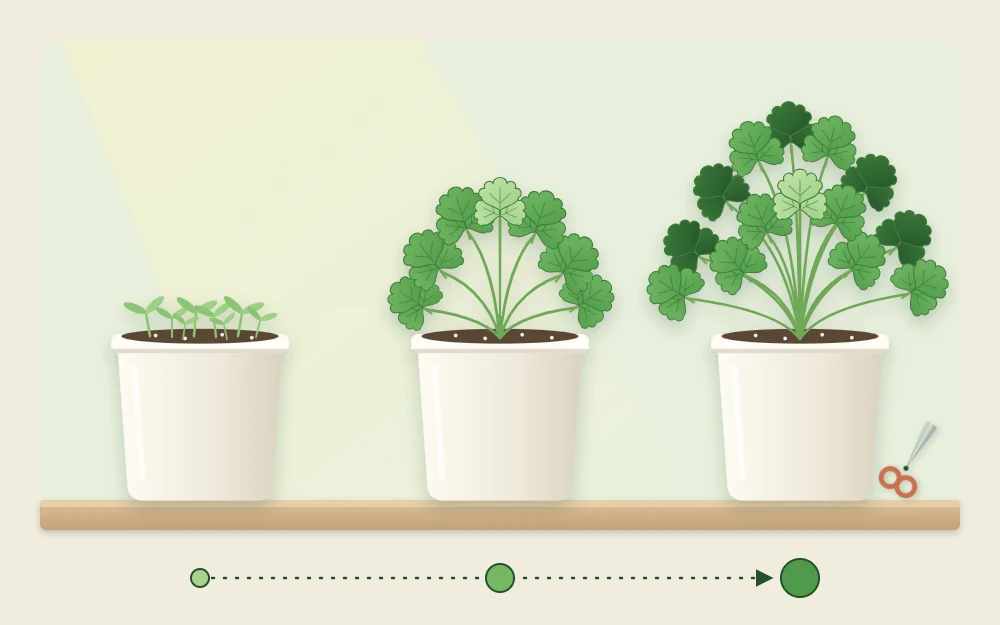
This is the habit that makes the biggest difference. Instead of asking one pot to last for months, sow a new one every few weeks. By the time the oldest pot starts to bolt, the next is ready to cut and a third is just coming up.
Two or three pots in rotation are enough for most kitchens. When a pot has bolted and the leaves have thinned out, empty it, refill it with fresh mix and sow again. If you would rather let one plant flower and set seed, that is fine too; it just will not give you many more leaves.
Harvesting the leaves
Start cutting once the plants are a few inches tall and have plenty of leaves. Take the outer, older leaves first, snipping each stalk near the base, and leave the young growth in the center to carry on. Cutting a little and often gives you a steadier supply than stripping the pot at once.
Harvest promptly. Cilantro does not improve by waiting, and a pot left untouched in a warm room will often bolt before you have used much of it. Rinse the leaves just before using them.
Cilantro and pets
The ASPCA lists cilantro as non-toxic to dogs, cats and horses; see the ASPCA entry for cilantro. That listing is not an invitation for a pet to graze on the pot, so keep it out of reach and contact a veterinarian if a pet eats a plant and seems unwell.
Frequently asked questions
Why does my indoor cilantro flower so quickly?
Cilantro is a cool-season annual, and warmth and long days push it to bolt, meaning it runs to flower. A hot windowsill, a warm room, a cramped pot or mix that dried out can all bring it on sooner. You can delay it by keeping the pot cool and evenly moist, but every plant flowers eventually.
Can I transplant cilantro seedlings into a bigger pot?
It is better not to. Cilantro grows a taproot that dislikes disturbance, and moved seedlings often stall or flower early. Sow the seed directly in a deeper pot where the plants will stay. If you must move a plant, keep the whole root ball intact and expect it to sulk for a while.
How do I keep a steady supply of cilantro indoors?
Sow a new pot every few weeks instead of relying on one plant. Each pot gives leaves for a limited time before it flowers, so two or three pots at different ages overlap nicely. When the oldest one bolts and thins out, empty it, refill it with fresh potting mix and sow again.