Pests on Indoor Herbs: What to Look For and Gentle First Steps
How to recognize aphids, spider mites, whiteflies and fungus gnats on kitchen herbs, and the physical first steps to take: isolate, rinse, pinch and prune.
Finding insects on a herb you were about to cook with is unpleasant, but it is a common part of growing plants in a home. Pests on indoor herbs arrive on new plants, through open windows or on pots brought in from outside, and a warm room with no rain or predators lets them multiply.
Because you eat these plants, the sensible first response is physical: separate the pot, rinse, pinch and prune. Those steps deal with most small outbreaks. Start by working out which of the usual four you are looking at.
The four pests you are most likely to see
Aphids
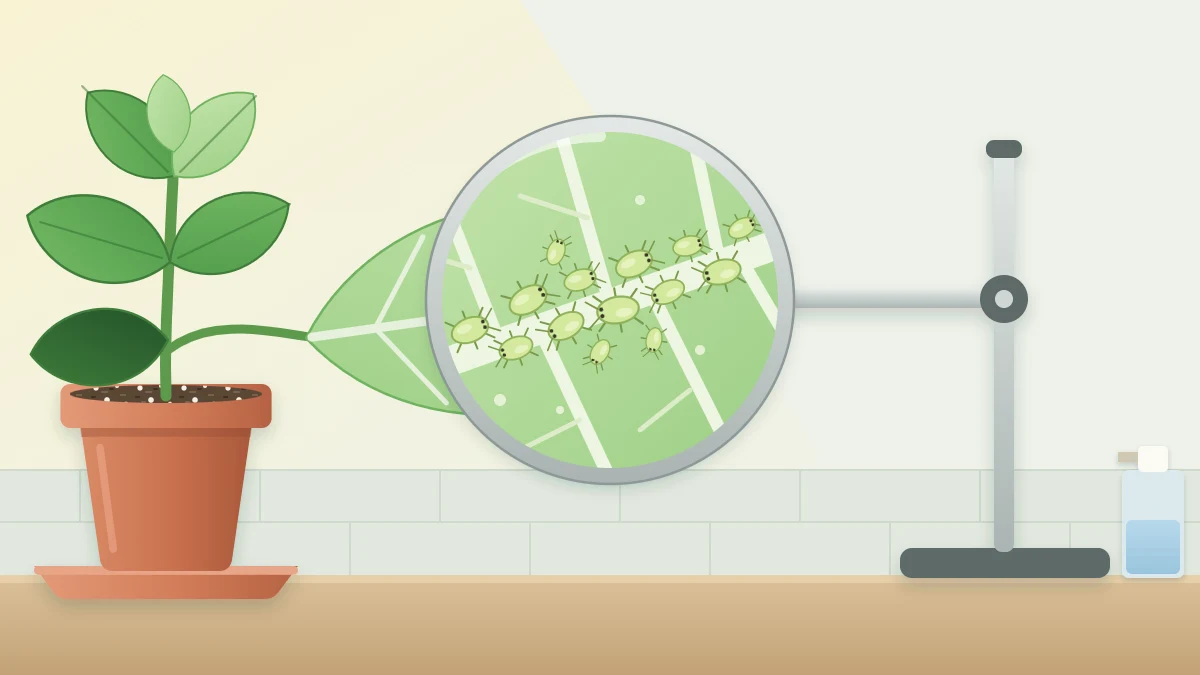
Aphids are small, soft-bodied insects, often green but sometimes black, yellow or pinkish. They cluster on tender stem tips and under young leaves, where they feed on sap. Look for groups of them packed along a stem, curled new leaves and a sticky residue on the leaves or on the sill below. University of California IPM’s page on aphids has more detail.
Spider mites
Spider mites are tiny and hard to see without magnification. What you usually notice first is the damage: fine pale stippling on the upper leaf surface, a dull or dusty look and, in heavier cases, faint webbing between leaves and stems. They tend to be worse in warm, dry air, so heated rooms in winter suit them.
Whiteflies
Whiteflies are tiny white insects that rest on the undersides of leaves. The giveaway is what happens when you brush the plant: a small cloud flies up, then settles again. Like aphids, they feed on sap and can leave leaves sticky.
Fungus gnats
Fungus gnats are small dark flies that hover around the pot and walk across the surface of the mix. The adults are mostly a nuisance. Their larvae live in the mix, and they thrive where it stays constantly wet. A steady supply of gnats is often a hint that the pot is being kept too damp.

How to inspect a plant
Good light and a few minutes are enough. A magnifying glass helps with mites.
- Turn leaves over. Most pests feed on the underside.
- Look closely at the youngest stem tips and where leaves join the stem.
- Tap a stem over a sheet of white paper and watch for tiny moving specks.
- Brush the foliage and see whether anything flies up.
- Check the surface of the mix and the rim of the pot.
Not every mark is a pest. Yellowing, spots and wilting have several other possible causes, covered in the guide to indoor herb problems.
Gentle first steps
- Isolate the pot. Move it well away from your other plants straight away, so the insects cannot walk or fly across.
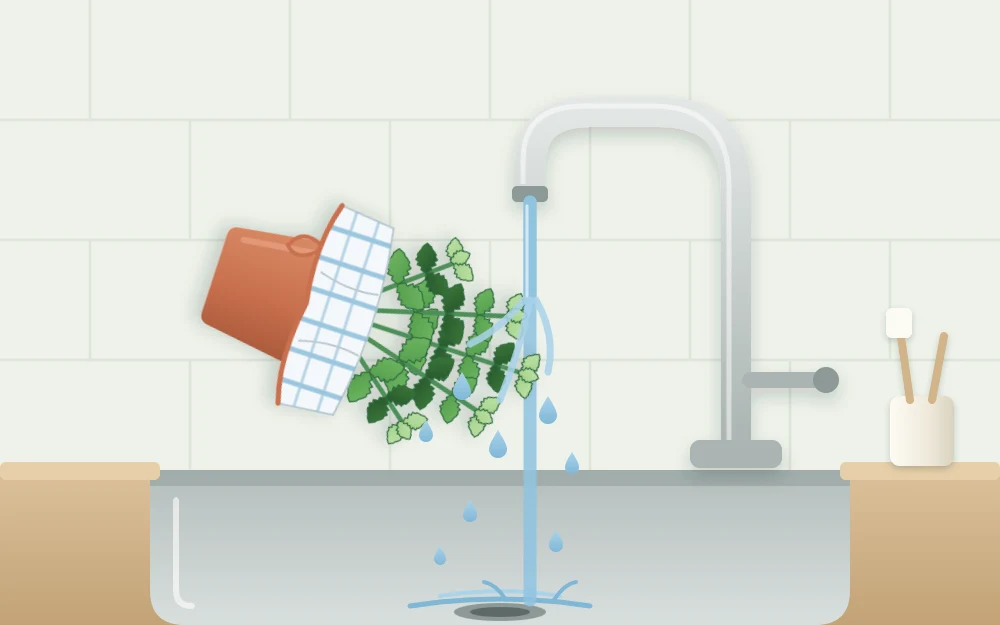
- Rinse the foliage. Hold the plant at an angle over the sink and run a gentle stream of lukewarm water over the leaves, especially the undersides. Cover the mix with a cloth or your hand so it does not wash out. This knocks off many aphids, mites and whiteflies.
- Wipe or pinch off clusters. Remove visible groups of insects with your fingers or a damp cloth, or pinch off the stem tip they are sitting on.
- Cut away badly affected growth. Prune heavily infested or damaged stems back to a healthy leaf pair, seal the trimmings in a bag and put them in the trash.
- Repeat. One rinse seldom ends it, because eggs and missed insects remain. Check the plant every few days and rinse again as needed for a couple of weeks.
Tip
Yellow sticky cards placed near the pot catch flying adults such as fungus gnats and whiteflies. They are mainly a monitoring tool: they show whether numbers are rising or falling, but they will not clear an infestation by themselves.
Extra step for fungus gnats
Rinsing leaves does little for gnats, because the larvae are in the mix. Let the top of the mix dry out more between waterings, empty the saucer and make sure the drainage hole is clear. Drier conditions at the surface make the pot far less suitable for them. The guide on how to water indoor herbs explains how to judge when a pot really needs water.
If you are thinking about a pest-control product
Herbs are grown to be eaten, which makes this different from treating a houseplant. Many products sold for ornamental plants are not intended for anything you will put on a plate.
Good to know
If you consider any pest-control product, use only one whose label lists use on edible herbs and indoor use, and follow the label exactly, including any waiting time before harvest. If the label does not mention edible herbs, do not use it on them.
This page deliberately gives no home-made mixtures. Physical removal, repeated patiently, is the approach to try first.
When replacing the plant makes sense
Some infestations are not worth the fight. A basil or cilantro plant is an inexpensive annual with a short life in any case. If it is heavily covered, badly weakened or keeps relapsing, bagging it and starting a fresh pot is a reasonable choice, and it removes a source of pests for your other plants.
If you do this, discard the old mix as well, wash the pot before reusing it and inspect the neighboring plants.
Prevention
- Inspect new plants before they join the others, and keep them apart for a couple of weeks if you can.
- Check pots coming in from outside. Herbs that spent summer outdoors often carry passengers; the guide to bringing outdoor herbs indoors covers how to clean them up first.
- Avoid overwatering. Constantly wet mix invites fungus gnats.
- Give plants space. Crowded foliage lets insects move from pot to pot and makes them harder to spot.
- Look often. A glance under the leaves each time you water catches most problems while they are still small.
Rinse herbs just before using them, as you would with any fresh produce.
Frequently asked questions
How do pests get onto herbs kept indoors?
Most arrive with new plants, including potted herbs from a store, or on pots that spent time outside. Some fly in through open windows or doors. Fungus gnats can also come in with potting mix. Checking every new plant before it joins the others is the most useful single habit.
Will rinsing with water get rid of aphids?
A gentle stream of water knocks off many aphids, and repeating it every few days often brings a small outbreak under control. It seldom works in one go, because some insects are missed. Combine rinsing with pinching off crowded tips and keep the pot apart from other plants meanwhile.
Should I throw away a herb with a lot of pests?
For a short-lived annual such as basil or cilantro that is heavily covered or badly weakened, replacing it is reasonable and protects your other plants. Bag the plant and its mix and wash the pot. A long-lived perennial such as rosemary or chives is more often worth pruning hard and rinsing repeatedly.