Herbs Bolting: Why Herbs Flower and What to Do
Why basil, cilantro and other herbs suddenly shoot up and flower, what triggers it in each herb, and which steps delay it and which do not.
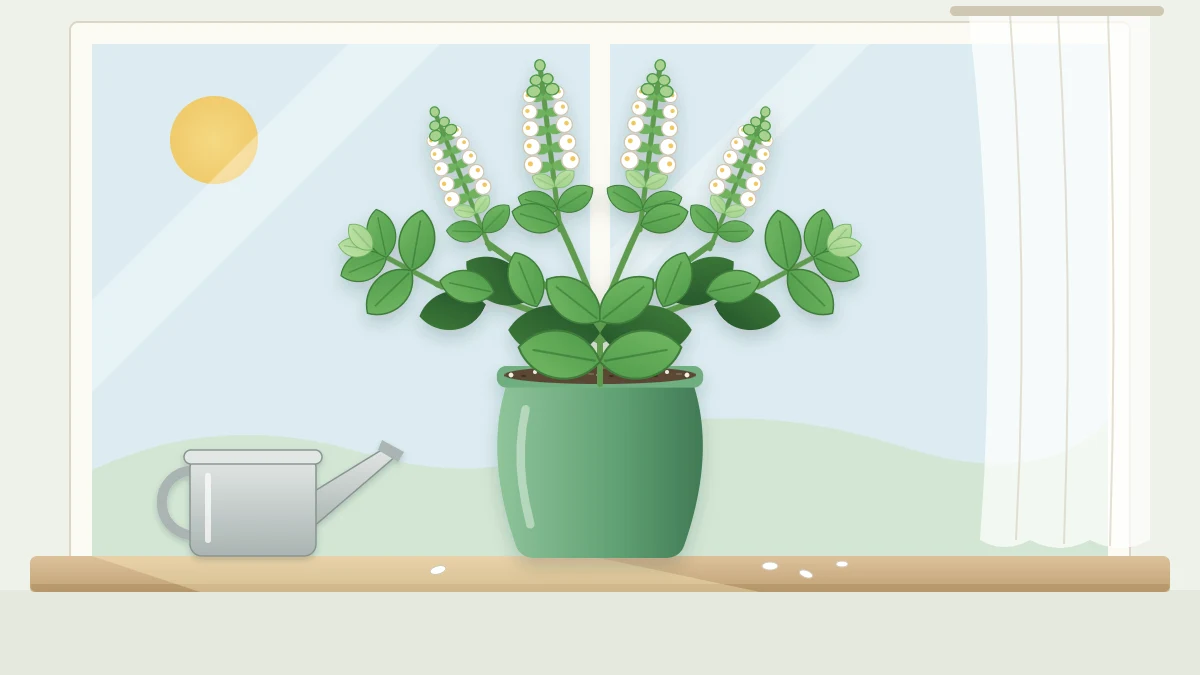
One week your basil is a tidy, leafy mound. The next, a stem has shot upward and the tip has turned into a tight green spike. This is what gardeners mean by herbs bolting: the plant has stopped putting its energy into leaves and started making flowers and seed instead.
Bolting is not a disease, and it does not mean you did something wrong. It is the normal next stage in the life of many herbs. What you can do about it depends on which herb it is and how far the change has gone, so it helps to know what set it off.
What bolting looks like
A plant that is bolting changes shape before any flowers open. The early signs are usually these:
- Stems lengthen quickly, with wider gaps between each leaf pair.
- New leaves come in smaller and sparser than the older ones lower down.
- The tip of a stem ends in a cluster of buds instead of a fresh pair of leaves.
- On cilantro and dill, the new leaves turn fine and feathery and a central stalk rises from the middle of the plant.
Flavor often shifts at the same time. Leaves from a bolting plant commonly taste stronger, sharper or more bitter than they did a few weeks earlier, although how much they change varies with the herb and the variety.
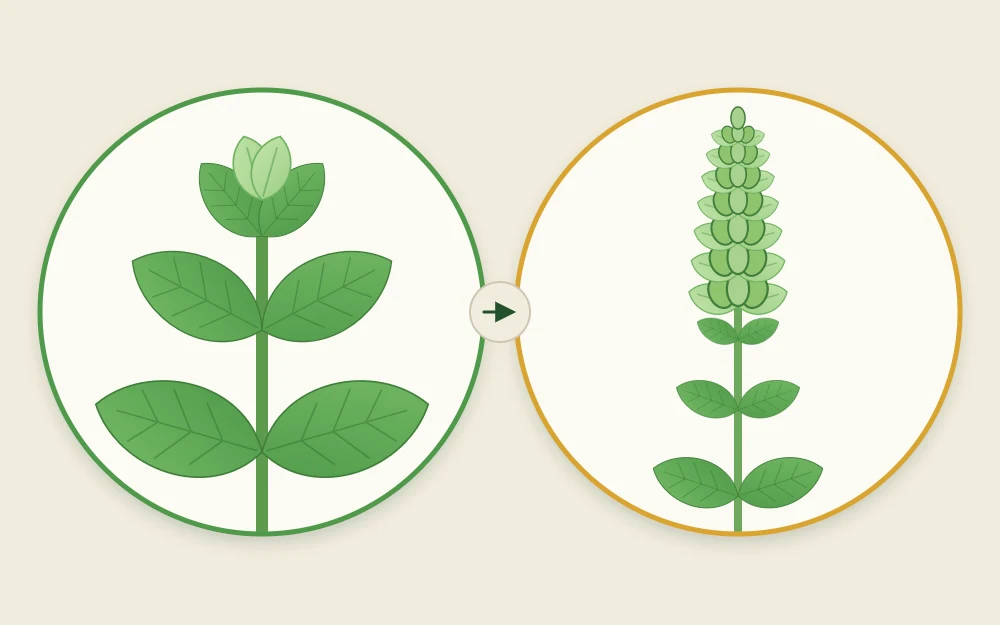
A leggy herb is also tall and thin, but it still ends in leaves, while a bolting herb ends in buds.
Why herbs bolt: the triggers differ by herb
There is no single cause that applies to every pot on the windowsill. Each herb has its own signal for when to flower.
| Herb | What commonly triggers flowering | What you can do |
|---|---|---|
| Basil | Maturity; sooner when the plant is stressed | Pinch buds early and often |
| Cilantro | Warmth and lengthening days | Keep it cool and watered; re-sow regularly |
| Dill | Warmth and lengthening days | Harvest young; sow again |
| Parsley | Its second year of growth | Start new plants |
| Chives | Normal seasonal flowering | Nothing needed; cut the stalks if you like |
Cilantro and dill are cool-season annuals. Warm rooms and the longer days of late spring and summer tell them the season is moving on, and they respond by running to seed. Basil is different: it flowers as it matures, whatever the season, and gets there faster when something is stressing it.
Parsley is a biennial. It spends its first year making leaves and, as a rule, flowers in its second. A parsley plant that sends up a stalk after a good long run has simply reached the end of its natural cycle.
Stress speeds things up
Stress does not cause bolting by itself, but it can hasten it. Two of the most common kinds indoors are a cramped pot, where the plant has become root-bound, and potting mix that is allowed to dry out hard between waterings. A plant under pressure tends to rush toward seed. Steady moisture, enough root room and stable temperatures all help a herb stay leafy for longer.
Basil: pinch the buds early and often
Basil is the herb where your actions make the biggest difference. Watch the stem tips, and as soon as you see a bud spike forming, pinch or snip it off. Cut just above a leaf pair lower down the stem, not only the bud itself, so the two small shoots at that node can grow out and replace the tip you removed.
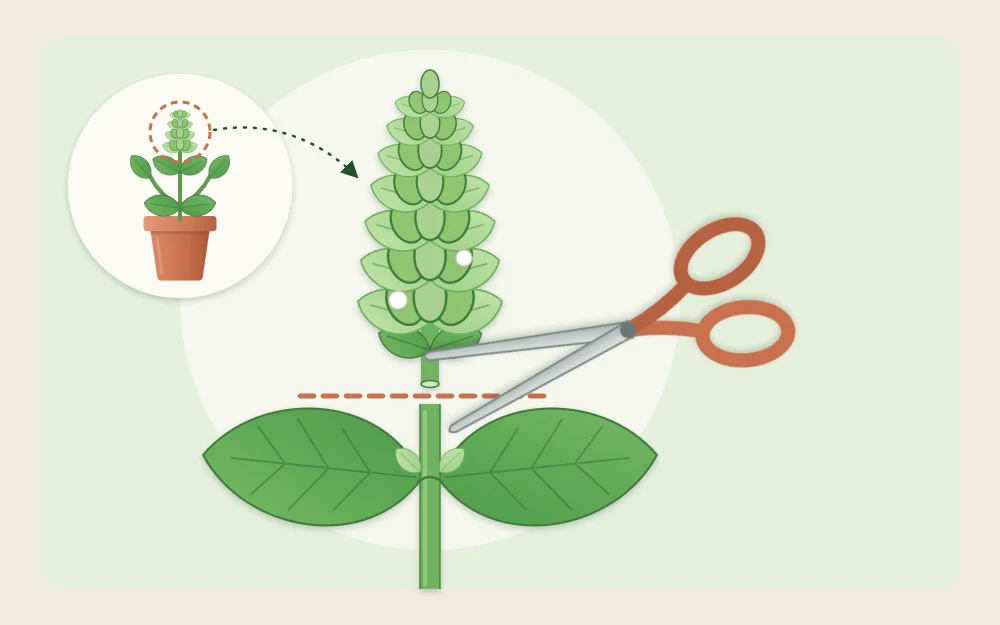
One round of pinching is rarely enough. A mature basil plant will keep trying, so check it every few days and take the buds off while they are still small. Regular harvesting from the tips does the same job as pinching, which is why a plant that is picked often tends to stay bushy. The full routine is in the guide to growing basil indoors.
Tip
If a basil plant has already opened its flowers, it is still worth cutting the flowering stems back to a leaf pair. The plant often makes some new side shoots, although it may not return to its earlier pace.
Cilantro: keep it cool and keep sowing
With cilantro, prevention is mostly about conditions. A cooler spot, potting mix that stays evenly moist and steady picking can all delay the flower stalk. They will not stop it for good. Cilantro has a short leafy life even when everything goes well.
The practical answer is to re-sow. Starting a new small pot every few weeks means a young batch is coming along as the older one finishes. Because cilantro has a taproot and dislikes being moved, sow the seed directly in the pot it will grow in. The guide to growing cilantro indoors covers the timing in more detail.
What does not work
It is tempting to treat a bolting cilantro the way you would treat basil and cut the stalk off. Unfortunately, once cilantro has sent up a flower stalk, cutting it rarely brings back leafy growth for long. The plant usually just sends up another one. The same is broadly true of dill.
Extra fertilizer does not reverse bolting either, and neither does heavy watering.
Good to know
You cannot fully prevent bolting in annual herbs. You can only delay it. A pot of cilantro or basil that eventually flowers has run its course, and replacing it is part of growing these herbs.
Chives are the exception
Chives are perennials that grow as a clump, and flowering does the clump no damage. The flower stalks are tougher than the leaves, so many growers cut them off at the base, but the plant will go on producing leaves either way. There is no need to worry when a pot of chives blooms.
When letting a herb flower makes sense
Flowering is only a problem if leaves are all you want. If you would like to collect seed, let the plant carry on, and sow or buy a young one for the kitchen.
A steady harvest is the best habit
Across most leafy herbs, picking little and often from the stem tips keeps a plant in leaf-making mode for as long as its nature allows. Plants that are left untouched for weeks tend to grow tall and move toward flowering sooner. For where to cut on each type of herb and how much to take at a time, see the guide on how to harvest herbs.
Frequently asked questions
Can you still use the leaves of a herb that has bolted?
You can still pick and cook with them, but expect a change. Leaves on a flowering plant are often smaller and may taste stronger or more bitter than before. Try one first. If you do not like the flavor, use the plant for seed or flowers and start a fresh pot for the kitchen.
Does pinching off flowers stop bolting for good?
No. On basil, removing bud spikes early and repeatedly keeps the plant leafy for a good while longer, but a mature plant keeps trying to flower. On cilantro and dill, cutting the stalk rarely restores leafy growth for long. Pinching delays the change in some herbs; it does not cancel it.
Why does cilantro bolt so quickly indoors?
Cilantro is a cool-season annual that responds to warmth and lengthening days by running to seed. A warm room, a sunny late-spring window, a cramped pot or mix that dried out can all bring the flower stalk on sooner. Keeping it cooler and evenly moist helps, and sowing a new pot regularly is the dependable fix.