Transplanting Herb Seedlings: When and How to Pot Them On
How to tell when herb seedlings are ready to move, the gentle step-by-step way to pot them on, which herbs dislike being disturbed, and how to look after them for the first few days.
At a glance
What you need
- Small pots with drainage holes
- Fresh potting mix, moistened
- A teaspoon or small stick
- A pencil for making holes
- A watering can with a gentle pour
- Saucers or a tray
A tray of seedlings that came up thickly looks like success for about two weeks. Then the stems start leaning on each other, the mix dries out faster than you can keep up with, and it becomes clear they cannot all stay where they are. Moving them feels risky when each plant is thinner than a thread.
Transplanting herb seedlings is less dangerous than it looks, provided you pick the right moment and handle them by the right part. Most losses come from moving too early, tugging on the stem, or putting freshly moved plants straight into hot sun. All three are easy to avoid.
When seedlings are ready to move
Two signs together tell you a seedling can be potted on.
The first true leaves have appeared. The very first leaves to open are the seed leaves. They are usually smooth, simple and rounded or strap-shaped, and they look nothing like the herb you sowed. The true leaves come next, from the center, and have the shape you recognize: toothed and puckered on basil, divided on parsley.
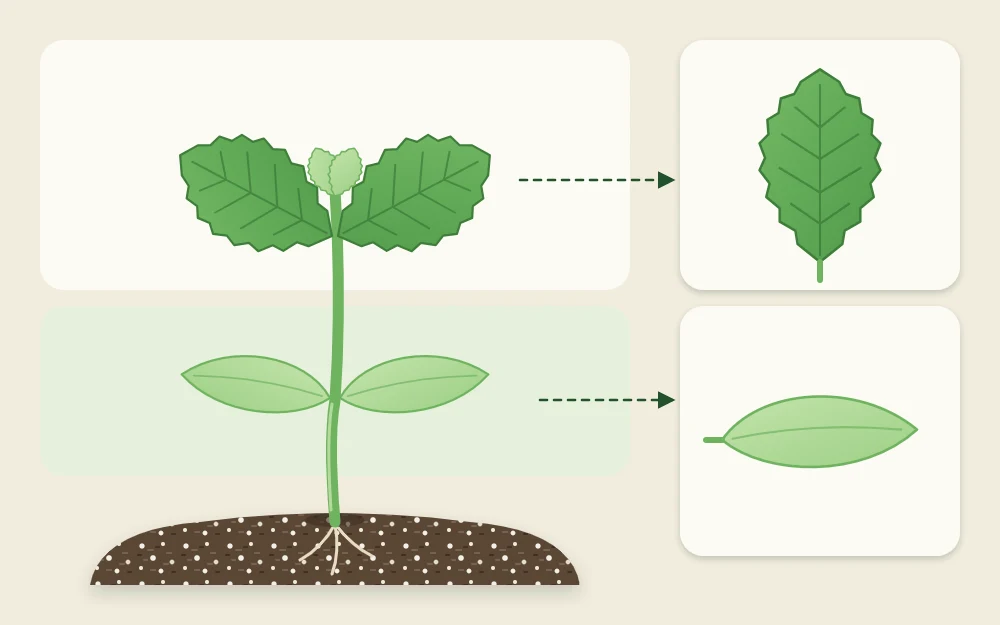
The roots hold the mix together. When you ease a seedling up, the mix around it should come out as a small plug and not crumble away from bare roots. If it falls apart, give the tray another few days.
Waiting much longer has its own cost: crowded seedlings grow leggy and their roots knit together.
Which herbs move well and which do not
Herbs differ a good deal here, so check before you start.
- Basil and chives transplant easily and can be moved as small clumps of a few seedlings, with no need to separate every plant.
- Thyme, oregano and sage can be moved once they are big enough to handle; their seedlings start tiny, so be patient.
- Cilantro and dill grow a taproot that dislikes disturbance. They are better sown directly in the pot where they will stay.
- Parsley also has a taproot. It can be moved while young, but once past that stage it resents it.
If you do need to move a taprooted herb, lift the whole root ball with as much mix around it as you can, keep it intact, and set it straight into its new hole without teasing anything apart. Sowing in place is covered in the guide to starting herbs from seed indoors.
What to prepare before you start
Have everything ready so the roots are exposed to air for seconds, not minutes.
- Small pots with a drainage hole, roughly 3 to 4 in (8 to 10 cm) across
- Fresh potting mix, moistened so it holds together when squeezed but does not drip
- A teaspoon, a plant label or a small stick for lifting
- A pencil or fingertip for making planting holes
- A small watering can or cup with a gentle pour
Water the seedlings about an hour before you begin. Moist mix clings to the roots and comes out in one piece; dry mix falls away and takes the fine root hairs with it. If you are unsure what to fill the new pots with, see the guide to potting soil for indoor herbs.
How to move a seedling, step by step
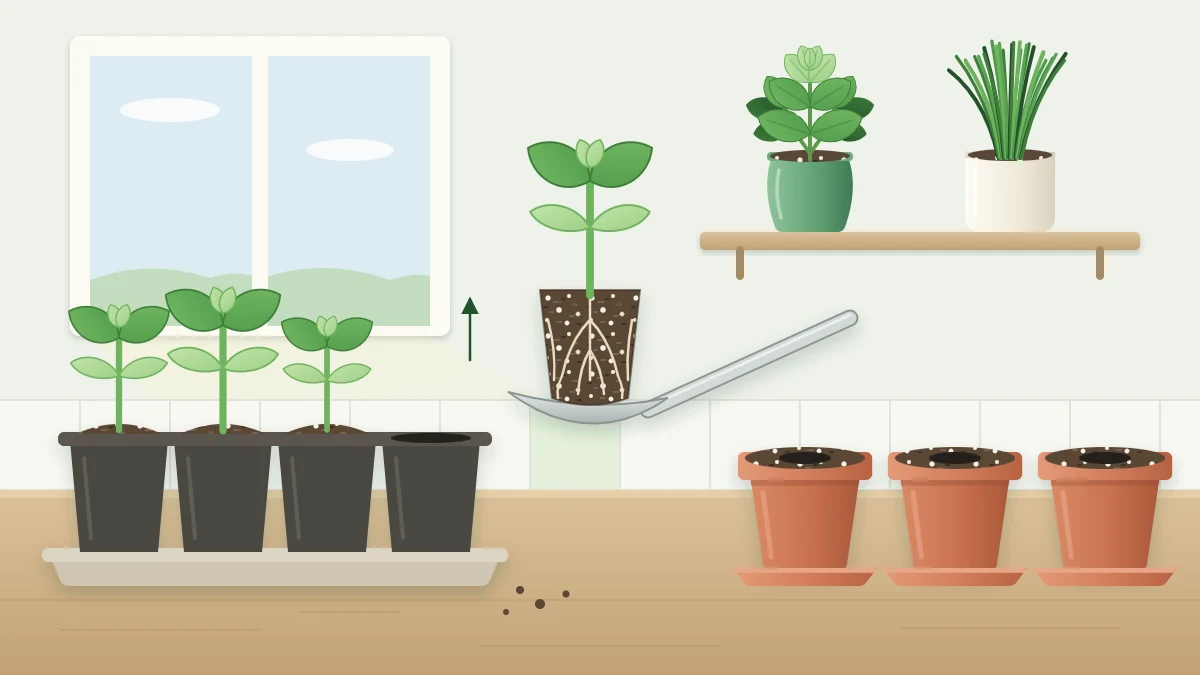
- Fill the new pots. Add moist potting mix to just below the rim and make a hole in the center deep and wide enough for the roots.
- Loosen from below. Slide the spoon or stick into the mix beside the seedling and lever gently upward so the plug lifts from underneath.
- Hold it by a leaf. Take a seed leaf between finger and thumb. Never grip the stem: a seedling can grow a new leaf, but a crushed stem ends the plant.
- Lower it into the hole. Let the roots hang down without folding them upward. Set the seedling at the same depth it was growing before.
- Firm gently. Push the mix in around the roots with your fingertips so the seedling stands up, without pressing hard.
- Water in. Pour slowly around the seedling until water runs from the drainage hole, then let the pot drain before it goes on a saucer.

Tip
Work on one seedling or clump at a time. Lifting a whole row first leaves the last ones lying with bare roots while you deal with the others.
Moving basil and chives as clumps
With these two herbs you can skip the fiddly work of singling out each plant. Lift a small group, about three to five seedlings with their shared plug of mix, and plant the group as one.
Chives grow as a clump anyway. If basil later looks crowded, snip the weakest stems at the base instead of pulling them.
Aftercare for the first few days
Newly moved seedlings have lost some of their finest roots, so for a short while they take up water less well than their leaves lose it. Two things help them through.
- Bright light without harsh midday sun. Keep them somewhere bright for a few days, but out of strong direct sun at the hottest part of the day. Under a grow light they can usually stay where they were.
- Even moisture. Check the mix with a fingertip and water when the surface begins to dry. Small pots dry quickly, but constantly wet mix is no kinder to new roots than dry mix.
A little drooping on the first day is common and often passes by the next morning. New growth from the center is the sign that roots have taken hold. Later, when roots fill these small pots, the plants will need more room again; the method is in the guide on how to repot herbs.
Moving seedlings outdoors or into stronger sun
Seedlings raised indoors are soft. Their leaves have never met wind, cool nights or full sun, and a sudden move can scorch them within a day. The same applies, to a lesser degree, when you shift them to a much sunnier window.
The answer is hardening off: a gradual introduction over a week or two. Start with an hour or two in a sheltered, lightly shaded spot, bring them back in, and lengthen the time and the amount of sun a little each day.
Good to know
Basil is cold-sensitive. As a rough guide, hold it indoors until nights stay reliably above about 50°F (10°C), and bring it back in if a cold night is forecast during hardening off.
Frequently asked questions
How big should herb seedlings be before transplanting?
Size matters less than stage. Wait until the first true leaves have opened above the plain seed leaves and the roots hold the potting mix together as a small plug when lifted. For basil that is often a couple of weeks after sprouting, while tiny thyme and oregano seedlings usually need longer before they can be handled.
Can I bury leggy herb seedlings deeper when I pot them on?
The dependable approach is to set each seedling at the same depth it was growing before. Burying soft stems in moist mix can lead to rot at the base. If seedlings have stretched, firm them in gently for support and then give them stronger light, which is the more usual reason they grew leggy.
Why are my seedlings wilting after transplanting?
Some drooping on the first day is common, because a few fine roots are always lost in the move. Keep the pots in bright light away from harsh midday sun and keep the mix evenly moist, not wet. If wilting continues for several days, check whether the mix is staying soggy or drying out completely.