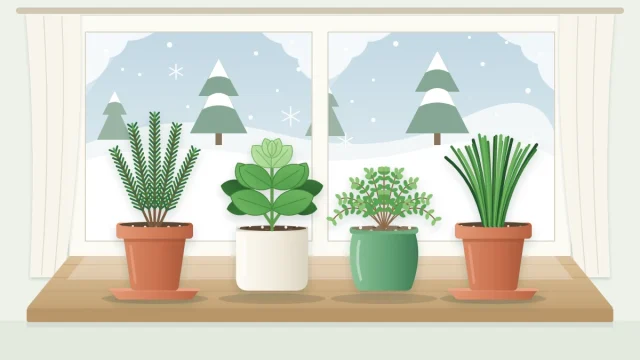
Bringing Outdoor Herbs Indoors for Winter
Which garden and balcony herbs are worth moving inside for winter, when to start, and the steps to pot up, check for pests and ease them into lower light.

At a glance
What you need
- Pots with drainage holes
- Fresh potting mix
- Hand fork or trowel
- Clean scissors or pruners
- Saucers
- A shaded outdoor spot
When the nights begin to cool, the herbs on a balcony or in a garden bed do not all have to be given up to the frost. Bringing outdoor herbs indoors lets you keep a few favorites going through the cold months and gives you something fresh to cut when the garden is bare.
It works best when you are selective, start early and make the move in stages. A plant hauled inside on the night of the first frost has a much harder time than one that was potted up and eased in over a couple of weeks.
Which herbs are worth bringing in
Not every plant repays the effort. Use this as a guide.
| Herb | Worth bringing in? | How |
|---|---|---|
| Rosemary | Yes, in cold-winter areas where it would not survive outside | Whole plant in its pot, or potted up |
| Chives | Yes | A division from the clump |
| Mint | Yes | A division or rooted runner in its own pot |
| Parsley | Often, if the plant is young | Dig deeply to keep the taproot intact |
| Thyme, oregano | Yes | Small plant or division |
| Basil | Usually not as an old plant | Restart from seed or cuttings |
Basil is frost-tender and, by fall, most plants are old, woody and close to flowering. An aging basil dug from the garden rarely settles indoors. Taking a few cuttings from healthy tips or sowing fresh seed gives you a younger plant that adapts far better.
Hardy perennials such as chives, mint, thyme and oregano do not need rescuing in many climates. Left outside, they simply rest over winter and regrow in spring. Bring in a piece for the kitchen and leave the rest where it is.
When to start
Begin before the first frost, while nights are still mild. That timing matters for two reasons: tender plants are not damaged by a cold snap, and the difference between outdoor and indoor conditions is smaller, so the change is less of a shock. Check the usual first frost date for your area and plan to start a few weeks ahead of it.
How to move herbs indoors, step by step
- Choose healthy plants. Pick compact, vigorous ones with no obvious pest or disease trouble. A weak plant will not improve in lower light.
- Pot up or divide. Lift garden plants with as much root as you can. For chives and mint, split off a section of the clump instead of moving the whole thing. Plant into a pot with a drainage hole, using fresh potting mix, not garden soil, which packs down in containers and can carry insects inside. The guide on how to repot herbs covers pot size and technique.
- Trim lightly. Remove dead, damaged or straggly growth and any flower stalks. A light trim is enough; the plant needs its leaves to adjust.
- Inspect closely. Look under leaves, along stem tips and over the surface of the mix for insects, webbing and eggs.
- Rinse the foliage. Run a gentle stream of water over the leaves, including the undersides, to dislodge anything you missed.
- Move in gradually. Set the pots in a shaded outdoor spot first, then bring them inside.
- Keep new arrivals apart. Give them a place away from your other houseplants for a couple of weeks.

Mint settles into a container readily but should always have a pot to itself, since it spreads and crowds other herbs. See the guide to growing mint indoors for how to keep it in check.
Why the gradual move matters
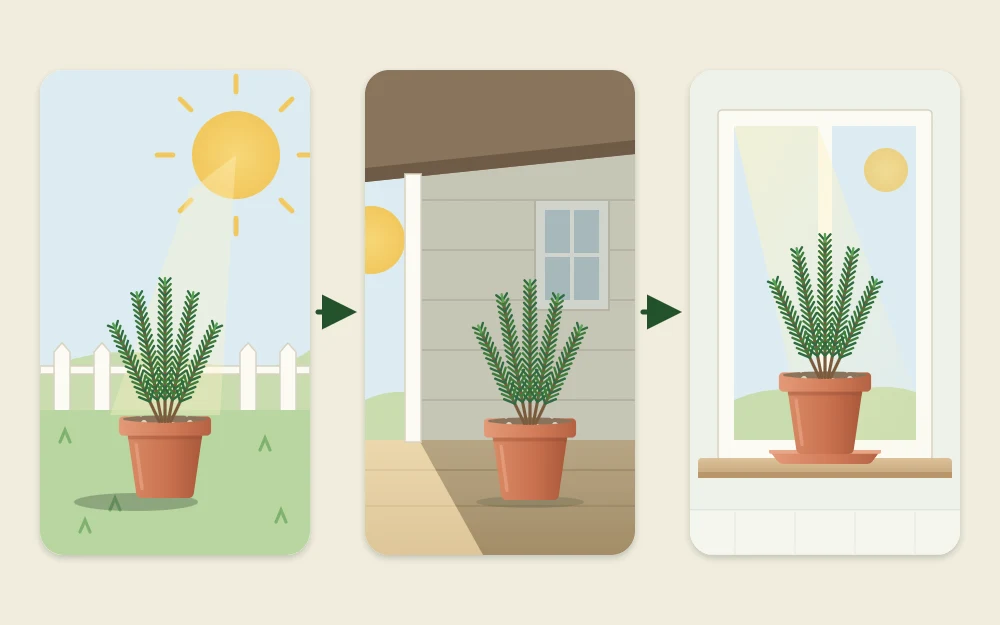
Even a bright room offers a fraction of the light a plant receives outside. Going straight from full sun to a windowsill is a sudden drop, and plants commonly respond by shedding leaves.
A halfway stage softens this. Place the potted herbs somewhere shaded outdoors, such as a covered porch or the north side of a wall, for a week or so. Then bring them in, at first only for the nights if that is practical, and finally for good.
Check for pests before and after
Outdoor plants almost always carry a few insects, and outside that causes little trouble. Indoors, with warmth and nothing to eat them, a few can quickly become many and spread to other plants. This is why the inspection, the rinse and the couple of weeks apart are worth doing even when a plant looks clean.
Keep checking during that period. If something does appear, the guide to pests on indoor herbs explains how to identify it and the physical first steps to take.
Tip
Pot up garden plants a week or two before the move and leave them outside in their pots. They recover from the root disturbance in familiar conditions, and you spread the stress over two smaller steps.
What to expect in the first weeks
Some leaf drop and yellowing are normal while a plant adjusts, and growth will be slower than it was outside. This does not mean the move has failed. Judge the plant by its new growth: small fresh leaves at the tips are a good sign.
Resist the urge to help with extra water or fertilizer. A plant in lower light uses less of both.
Good to know
Not every plant makes the transition, however carefully you do it. Rosemary in particular can be difficult indoors. Bringing in two or three plants, or a few extra divisions, gives you a margin.
Care once they are inside
Give the herbs your brightest window, or add a lamp if they begin to stretch. Water by checking the mix about an inch (2.5 cm) down, not by habit, since pots dry more slowly indoors than they did in sun and wind. Keep leaves off cold glass and away from heat vents.
From here the plants are in winter mode: slow growth, light harvesting and little or no feeding. The guide to growing herbs indoors in winter explains how to look after them until spring, when they can go back outside once frost has passed.
Frequently asked questions
When should I bring herbs inside for winter?
Start before the first frost, while nights are still mild. That protects tender plants from a sudden cold snap and keeps the gap between outdoor and indoor conditions small. Allow a couple of weeks for potting up, a spell in shade and a gradual move, so plan around the usual first frost date where you live.
Can I dig up basil and bring it indoors?
You can try, but it seldom goes well. By fall most garden basil is old, woody and ready to flower, and it is very sensitive to cold. A better route is to root a few cuttings from healthy tips or sow fresh seed, which gives a young plant suited to indoor conditions.
Why do herbs drop leaves after moving inside?
Some leaf drop is a common reaction to the much lower light indoors, and to root disturbance if the plant was dug up. Keep it at the brightest window, water only after checking the mix, and watch for fresh growth at the tips. Check under the leaves as well, to rule out pests.